
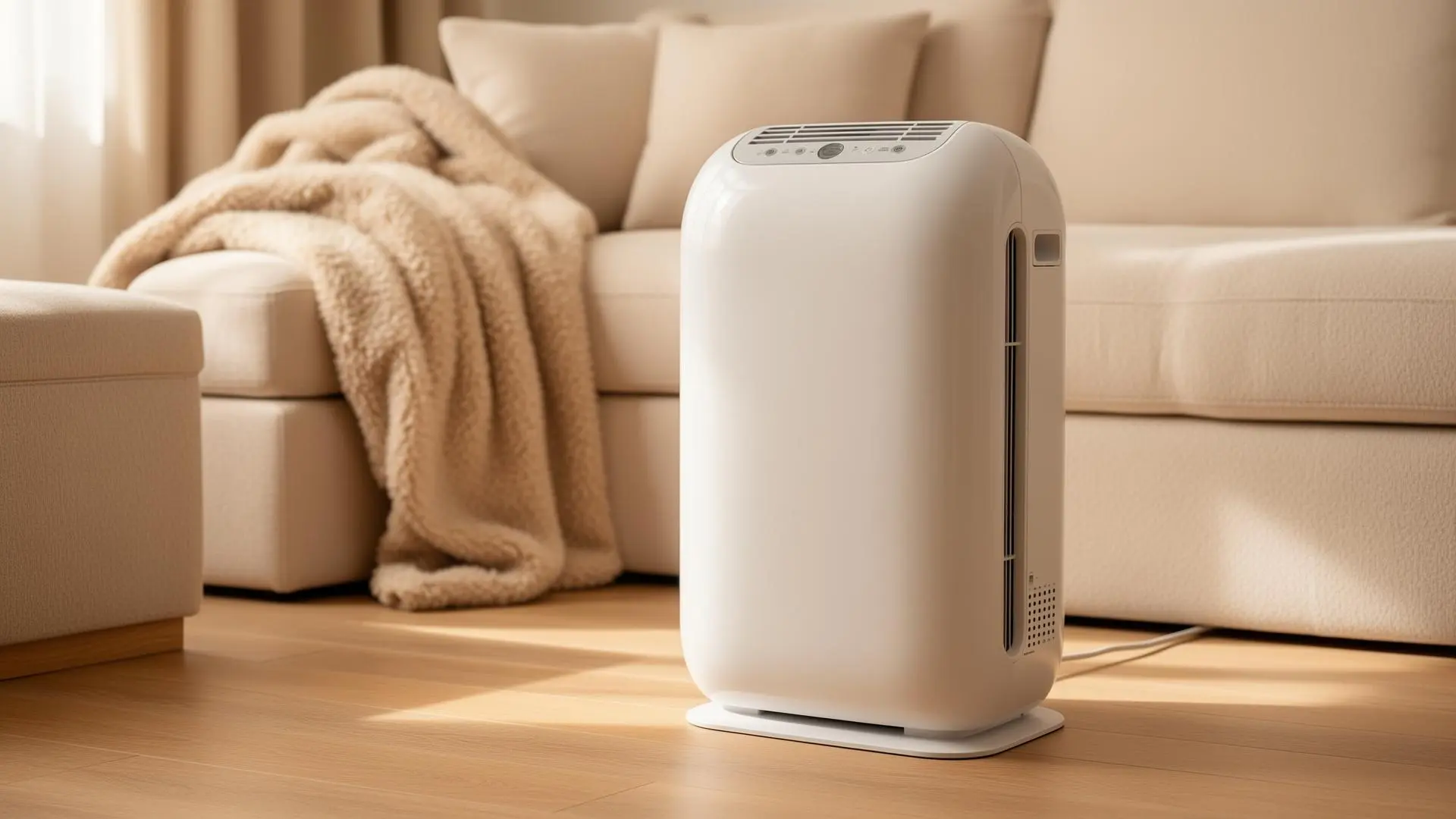


The best small space heaters are not necessarily the models with the biggest wattage number. In a bedroom, home office, dorm-style room, or other compact space, the better choice is usually the heater that gives you useful thermostat control, stable heat distribution, sensible noise levels, and safety features without taking over the floor.
For this 2026 update, we rechecked the current product lines and manufacturer documentation instead of carrying forward older recommendations. That matters because some well-known compact heaters have been discontinued, while newer models now offer better temperature control, timers, safety systems, and quieter fans.
TL;DR
- Dreo Atom 416 is the strongest compact all-round option here for a typical small bedroom or office because it combines a small footprint, thermostat control, timer, remote, and current manufacturer support.
- Dreo Heater 320 makes more sense when you want adjustable vertical airflow and very fine temperature control.
- Vornado VC-01 is a good fit when you want both close-range personal heat and a whole-room mode in one compact ceramic heater.
- DeLonghi HMP1500 is the fanless alternative. It is slim and wall-mountable, but DeLonghi positions it for medium and large rooms, so it is not our first choice for a truly tiny room.
Paid link. As an Amazon Associate, we earn from qualifying purchases at no extra cost to you.
Best Small Space Heaters at a Glance
| Heater | Best fit | Why it stands out | Main trade-off |
|---|---|---|---|
| Dreo Atom 416 | Small bedroom or office | Compact 1500W ceramic heater, thermostat, timer, remote, manufacturer-rated coverage up to 200 sq. ft. | Fan-forced heat is not silent |
| Dreo Heater 320 | Desk-to-room flexibility | 60° adjustable vertical tilt, precise 41–95°F control, 34 dB manufacturer noise claim | More controls than a basic heater needs |
| Vornado VC-01 | Personal + room modes | Separate personal and whole-room modes, timer, tilt, tip-over and overheat protection | Current availability can vary |
| DeLonghi HMP1500 | Fanless, slim placement | 750/1500W settings, adjustable thermostat, wall-mount kit, no heating fan | Larger panel; DeLonghi markets it for medium/large rooms |
How We Chose These Small-Room Heaters
This is a research-based buying guide, not a laboratory test. We compared current manufacturer specifications, product status, safety documentation, control options, dimensions or placement style, heat settings, and the way each heater is intended to distribute heat. We also checked whether a model is still supported and sold rather than assuming an older popular heater is still a sensible 2026 recommendation.
For a small room, we give more weight to control and placement than to raw maximum wattage. Most full-power plug-in room heaters top out around 1,500 watts in the U.S. The practical differences are how well they cycle around a target temperature, how the fan or radiant surface distributes heat, how much floor space they use, and whether their controls suit the room.

We also removed the Honeywell HCE200W from the current shortlist because Honeywell now marks that model as discontinued. Older reviews can still be useful for owners, but a discontinued product should not be presented as a primary current buying recommendation.
1. Dreo Atom 416: Best Compact All-Rounder
The Dreo Atom 416 is the most balanced current option for a small room. Dreo lists it as a 1,500W heater with coverage up to 200 square feet, a 41–95°F temperature range in 1°F increments, three heat settings, fan mode, a 12-hour timer, remote control, tip-over protection, overheat protection, and an enhanced safety plug.
That feature mix is useful in a compact bedroom or home office because you can use high heat for the initial warm-up, then let the thermostat cycle instead of leaving the element running continuously. Its compact format also makes more sense in a tight layout than a wide radiator or large cabinet heater.
Best for: a small enclosed room where you want a compact heater with a real thermostat, timer, and remote. See our Dreo Atom 416 review for a model-specific breakdown.
2. Dreo Heater 320: Best for Adjustable Airflow
The Dreo Heater 320 is another compact ceramic option, but its useful difference is the adjustable vertical tilt. Dreo lists 1,500W output, 0–60° vertical tilt, temperature control from 41–95°F, tip-over and overheat protection, and a manufacturer noise claim of 34 dB.
Vertical adjustment can matter more than oscillation in a tiny room. You can direct warm airflow lower toward your feet while working, or higher into the room without placing the heater on an unstable surface. Its body is also compact enough for bedrooms and offices where floor space is limited.
Best for: a small office, bedroom, or reading area where you want to aim the airflow rather than simply blowing straight ahead.
3. Vornado VC-01: Best Personal-to-Room Flexibility
The Vornado VC-01 is designed around two different jobs: focused personal heat and broader room heat. Vornado lists personal and whole-room modes, low/high settings, 15° manual tilt, a 2/4/8-hour timer, tip-over protection, overheat shutoff, a cool-touch case, and a reusable pre-filter.
This makes it more flexible than a basic desk heater. If you sit close to it during work, personal mode is the logical choice. If the whole small room needs supplemental heat, you can switch modes rather than replacing the heater. Availability has changed across Vornado listings, so check the current manufacturer or retailer stock before buying.


4. DeLonghi HMP1500: Best Fanless Slim Option
The DeLonghi HMP1500 takes a different approach. It is a 1,500W micathermic panel with 750W and 1,500W settings, an adjustable thermostat, tip-over protection, thermal shutoff, and hardware for either floor-standing or wall-mounted use.
The reason to consider it in a compact layout is not that it is a tiny heater. It is not. The advantage is its slim panel shape and lack of a heating fan. That makes it useful when fan noise bothers you or when a wall-mounted layout solves a floor-space problem. DeLonghi itself describes the HMP1500 as suitable for medium and large rooms, so buyers with a very small bedroom should not assume a larger panel is automatically better.
How Much Heater Do You Need for a Small Room?
A room around 100–150 square feet does not automatically need a heater running at 1,500W all the time. Heat loss changes with insulation, windows, ceiling height, drafts, outdoor temperature, and whether you are trying to warm the entire room or just the occupied area.
A 1,500W heater gives you maximum headroom, but a thermostat, lower heat setting, or ECO-style mode can reduce runtime once the room reaches the selected temperature. If you mainly need close-range warmth under a desk, a lower-watt heater may be enough. See our 500W space heater guide and 1,500W room-sizing guide for the trade-offs.
What Matters Most in a Small Room
- Thermostat control: A usable thermostat is more valuable than another marketing heat mode because it lets the heater cycle around your comfort target.
- Physical footprint: Measure where the heater can safely sit before you buy. A compact heater is useless if the only available spot is next to bedding or curtains.
- Noise: Fan heaters warm quickly but make some airflow noise. Fanless panel and oil-filled heaters suit people who prioritize quiet operation.
- Tip-over and overheat protection: These are important backup protections, not permission to place a heater carelessly.
- Timer and remote: Useful in a bedroom or office because you can limit a heating session and adjust the unit without moving it.
Small-Room Space Heater Safety
Small rooms create a special problem: there is less empty floor area around the heater. The U.S. Consumer Product Safety Commission says portable heaters should be kept at least three feet from bedding, curtains, furniture, and other combustible materials. Electric space heaters should be plugged directly into a wall outlet rather than an extension cord or power strip, and they should be turned off when you are sleeping.
Those rules matter more than a long feature list. A tip-over switch and overheat sensor are useful protections, but they do not replace safe placement. Read the exact manual for the heater you own because clearance and operating instructions can differ by model. For more detail, see our space heater safety guide and the CPSC portable-heater guidance.
Electricity Cost in a Small Room
Electric resistance heaters turn electricity into heat at the point of use, so choosing a ceramic, micathermic, or oil-filled design does not magically make the same 1,500W draw cost less while it is actively pulling 1,500W. The practical savings come from using less wattage, running for less time, heating only the occupied room, and using thermostat cycling effectively.
The basic calculation is watts ÷ 1,000 × hours used × your electricity rate. For example, a 1,500W heater running continuously for one hour uses 1.5 kWh. Your real usage may be lower when the thermostat cycles the heating element off. For a fuller explanation, see how much it costs to run a space heater.
Which Small Space Heater Should You Choose?
Choose the Dreo Atom 416 if you want the most balanced compact package with current manufacturer support. Choose the Dreo Heater 320 if adjustable airflow direction matters. Choose the Vornado VC-01 if you want to switch between close personal heat and broader room circulation. Choose the DeLonghi HMP1500 when fanless operation and a slim wall-mountable panel are more important than having the smallest heater body.
If price is the main constraint, compare our best space heaters under $100 and best space heaters under $50. If quiet operation is the priority, see our quiet space heater guide.
Frequently Asked Questions
What size space heater is best for a small room?
For many small bedrooms and offices, a compact heater with up to 1,500W of output provides enough heating headroom, but room insulation, windows, drafts, ceiling height, and outdoor temperature matter. A thermostat and lower heat settings are often more useful than simply choosing the highest wattage.
Is a 500W heater enough for a small room?
It can be enough for personal heat or a very small, well-insulated space, but it may warm a full room slowly in cold weather. A 500W heater is better treated as a lower-power personal or close-range option than a guaranteed whole-room solution.
Can I leave a small space heater on while sleeping?
No. CPSC advises turning portable heaters off when sleeping. Keep them at least three feet from bedding, curtains, furniture, and other combustible materials, and plug electric heaters directly into a wall outlet.
Are ceramic heaters better for small rooms?
Ceramic fan heaters are a strong fit when you want fast warm-up from a compact body. They are not automatically better for every situation. A fanless panel or oil-filled heater can be more comfortable when quiet operation matters more than fast airflow.
Should I use a space heater in a bathroom?
Only use a heater in a bathroom when the manufacturer specifically approves that use and follow its placement and electrical instructions. Water and portable electrical appliances are a dangerous combination, so do not assume a compact heater is bathroom-safe just because it fits the room.


