
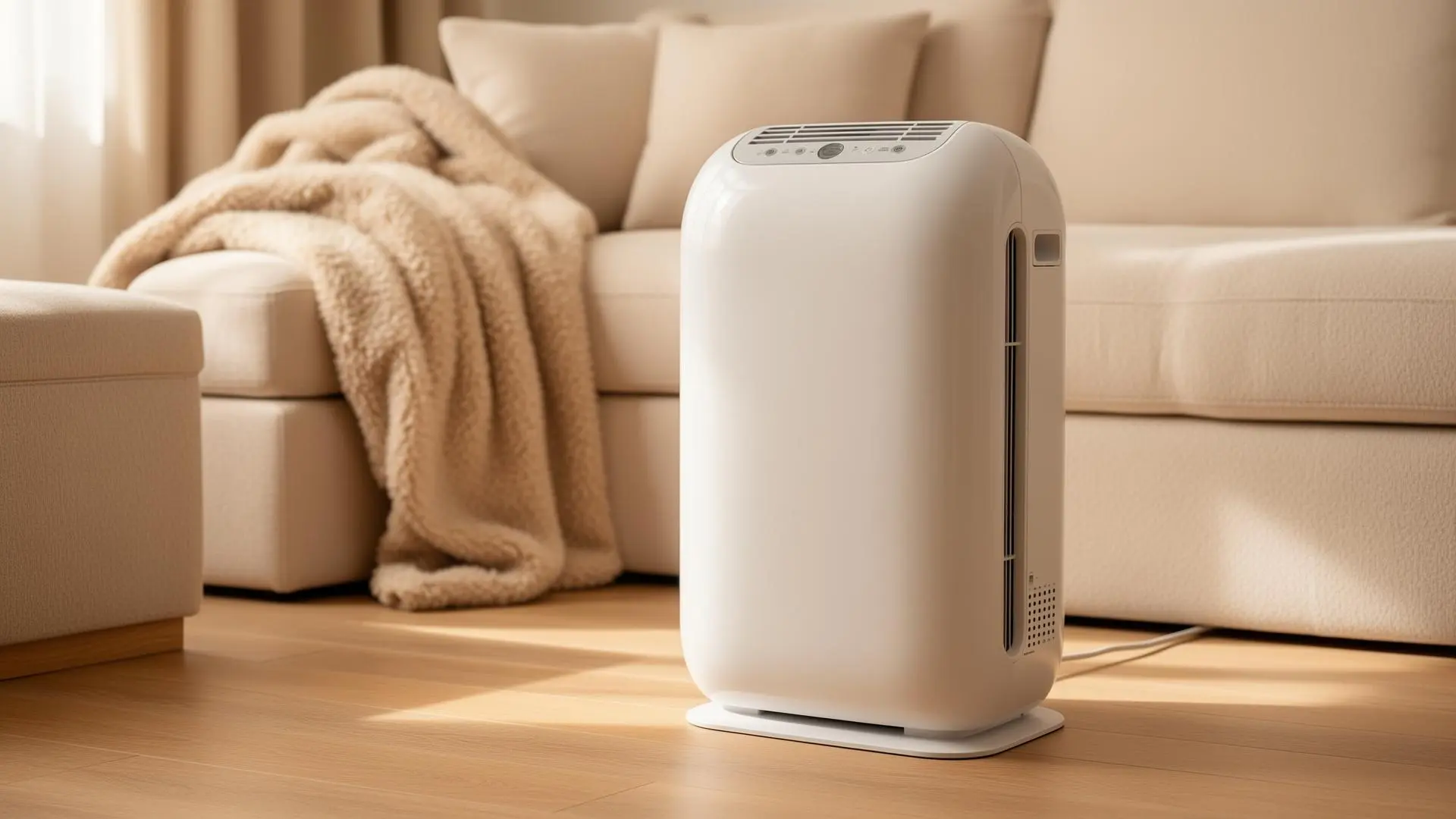


You are browsing for a new space heater to fix that freezing draft in your home office. One box screams about 5,120 BTUs while the one next to it proudly displays 1,500 Watts. It feels like trying to compare apples to skyscrapers. For the buying decision behind this topic, compare our What Size Space Heater Do I Need? (Room Size Guide).
Most shoppers get frustrated because they do not know which number actually matters for their comfort. If you choose a heater based on the wrong metric, you might end up with a high electric bill and a room that is still chilly. Developing a clear understanding BTU vs Watt in space heaters is the only way to ensure you buy a unit that actually works for your specific space.
Paid link. As an Amazon Associate, we earn from qualifying purchases at no extra cost to you.
TL;DR
- Watts measure the amount of electrical power a heater consumes from your wall outlet. BTUs measure the actual heat energy the unit produces.
- A 1,500W electric space heater uses 1.5 kWh for each hour it runs continuously at full power; actual use falls when a thermostat cycles the heating element off.
- Running cost depends on your electricity rate: multiply kWh used by your local price per kWh.
- Compare heaters by room fit, controls and runtime rather than assuming one electric resistance heater creates more heat from the same amount of electricity.
Quick Answer: BTU vs Watt Explained
Watts measure the amount of electrical power a heater consumes from your wall outlet. BTUs measure the actual heat energy the unit produces. For most electric space heaters, a 1,500-watt setting consistently produces about 5,118 BTUs of heat.


Why Both Metrics Matter for Your Home
When you look at a spec sheet, these two numbers tell different parts of the same story. The Wattage tells you if your home’s circuit can handle the load. The BTU rating tells you how much warmth will actually fill the air.

If you have an old house with sensitive wiring, the Wattage is your safety guide. If you have a large, high-ceiling room, the BTU count is your comfort guide. Balancing these two is the secret to efficient heating.
1. What is a Watt?
A Watt is a unit of power that measures the rate of energy consumption. When you see 1,500W on a heater, it means that the device pulls 1,500 units of electricity every second it runs on high.
Electricity Consumption
In the United States, most household outlets are on a 15-amp or 20-amp circuit. A 1,500-watt heater takes up a huge chunk of that capacity. This is why your lights might flicker if you run a hair dryer and a heater at the same time.
Costs and Efficiency
Watts are directly tied to your utility bill. Your power company charges you based on Kilowatt-hours. Understanding the wattage helps you predict exactly how much it will cost to stay warm during a blizzard.
2. What is a BTU?
BTU stands for British Thermal Unit. It is a traditional unit of heat. Specifically, it is the amount of heat needed to raise the temperature of one pound of water by one degree Fahrenheit.
Heat Output Intensity
While Watts tell you what goes into the heater, BTUs tell you what comes out. A higher BTU rating means the heater can tackle larger spaces or colder environments more effectively.
Why Gas Heaters Use BTUs
You will notice that propane or natural gas heaters almost always lead with BTU ratings. Since they do not use electricity to create heat, Wattage is irrelevant to them. If you are comparing an electric heater to a gas one, the BTU is your only common ground.
3. The Mathematics of Warmth
There is a fixed relationship between these two numbers in the world of electric heating. This is a key part of understanding BTU vs Watt in space heaters.
The Conversion Formula
The math is simple: 1 Watt equals approximately 3.41 BTUs.
- 500 Watts = 1,705 BTUs
- 1,000 Watts = 3,412 BTUs
- 1,500 Watts = 5,118 BTUs
Why Do Manufacturers Use Both?
Marketing teams use whichever number sounds more impressive. 5,000 sounds much bigger than 1,500. By listing both, they appeal to people who understand electrical loads and those who focus on heating capacity.
4. How to Use These Numbers to Size Your Room
Most people buy a heater that is either too small or way too powerful. You can use your new knowledge of Watts and BTUs to get the perfect fit.
The Standard Room Calculation
For a standard room with 8-foot ceilings and decent insulation, you need about 10 watts of power per square foot.
- A 150 square foot room needs 1,500 Watts.
- In BTU terms, that same room needs about 5,120 BTUs.
Dealing with High Ceilings or Poor Insulation
If your room has drafty windows or vaulted ceilings, the standard 10-watt rule fails. You should look for a heater with a higher BTU rating than the square footage suggests. This is where specialized infrared heaters often shine, as they provide higher perceived warmth without increasing the electrical draw.
5. Comparison Insights: Electric vs. Combustion
Understanding the difference becomes vital when you look at different fuel sources.
Electric Heaters
These are limited by the wall outlet. You will rarely find an indoor electric space heater that goes above 1,500 Watts or 5,120 BTUs. If a box claims 10,000 BTUs for a standard plug-in electric heater, they are likely exaggerating or using a 240V plug.
Propane and Kerosene Heaters
These units can easily reach 10,000 to 20,000 BTUs. They are much more powerful than electric units. However, they do not have a Wattage rating because they do not pull power from your grid. They are better for garages or very large open spaces.

6. Real World Performance Factors
Numbers on a box are measured in perfect laboratory conditions. Your home is not a lab. Several factors can change how those Watts and BTUs feel in real life.
Humidity Levels
Dry air is harder to heat than humid air. If your house is very dry in the winter, a 5,000 BTU heater might feel weaker than it should. Using a humidifier can actually help your heater feel more effective.
Heater Placement
If you place a high-BTU convection heater under a window, much of that heat is lost immediately. A lower-wattage infrared heater pointed directly at you might actually feel warmer because it is heating your body instead of the air.
7. Expert Tips for Buying
- Check the low setting: Most 1,500W heaters have a low setting of 750W. This produces about 2,500 BTUs. This is perfect for maintaining heat without tripping breakers.
- Look for “Eco” modes: These heaters switch between high and low wattage to maintain a BTU output that matches your thermostat setting.
- Prioritize safety over power: A high BTU output is useless if the heater lacks a tip-over switch. Always check safety specs first.
Practical Tips for Readers
- Measure your room first: Do not guess the size. A quick tape measure check can save you from buying a heater that is too weak.
- Check your circuit breaker: Look at your breaker panel. If your room is on a 15-amp circuit, keep your heater on the medium setting if you are also using a computer or TV.
- Use the “Hand Test”: If you want instant heat, look for high BTU radiant heaters. If you want the whole room warm, look for high Wattage convection heaters.
- Read the fine print: Some manufacturers list “Peak BTUs,” which is only achievable for a few seconds. Look for “Continuous” or “Rated” output.
Common Mistakes to Avoid
- Assuming more Watts equals better heat: Some poorly designed heaters use 1,500 Watts but have terrible fans. They use the power but don’t distribute the BTUs effectively.
- Using extension cords: A 1,500-watt heater will melt a standard household extension cord. Always plug directly into the wall.
- Ignoring insulation: No amount of BTUs can fix a hole in your wall or a window that won’t close. Fix the drafts first.
- Mixing up AC units and heaters: People often think of BTUs only for air conditioners. In heating, the logic is the same but the goal is the opposite.
Conclusion
Gaining a solid understanding BTU vs Watt in space heaters changes the way you shop. You no longer have to guess if a heater is powerful enough for your home. You can look at the 1,500W label and know exactly how much heat energy (BTUs) you are getting for your money.
Remember that while Watts tell you about your electric bill, BTUs tell you about your comfort. Always match the power of the unit to the size and insulation of your room. By paying attention to both metrics, you can stay warm all winter without any surprises when the utility bill arrives. Use this guide to choose a heater that perfectly balances power and performance.
Frequently Asked Questions
Is 1500 Watts a lot for a space heater?
It is the standard maximum for indoor portable heaters in the US. It is enough to heat a medium-sized bedroom or office comfortably. It is high enough that you should avoid running other large appliances on the same circuit.
How many BTUs do I need for a 200 sq ft room?
For a 200 square foot room, you generally need about 2,000 Watts or roughly 6,800 BTUs. Since most plug-in heaters stop at 5,120 BTUs, you might need two smaller units or one very efficient model if the room is poorly insulated.
Does a higher BTU heater use more electricity?
If it is an electric heater, yes. Since Watts and BTUs are directly linked by a mathematical constant, you cannot increase the heat output without increasing the power draw. For gas heaters, higher BTUs mean more fuel consumption.
Why does my heater only show Watts and not BTUs?
Many brands focus on Watts because that is how electricity is sold and measured. If your heater only shows Watts, just multiply that number by 3.41 to find your BTU output.
Can a small heater have a high BTU rating?
Yes, if it uses ceramic heating elements or infrared technology. These can feel more intense even if the physical size of the unit is small. The heat output is about the density of the energy, not the size of the box.
Are infrared heaters more efficient in BTUs?
Infrared heaters are not “more efficient” at creating heat, but they are more efficient at delivering it to you. They don’t waste BTUs heating the ceiling. They send the warmth directly to your skin and furniture.
What is the best BTU rating for a basement?
Basements are usually colder and damp. You should aim for at least 5,000 to 6,000 BTUs for a small finished area. If the basement is large and unfinished, you may need a specialized heavy-duty heater.


