
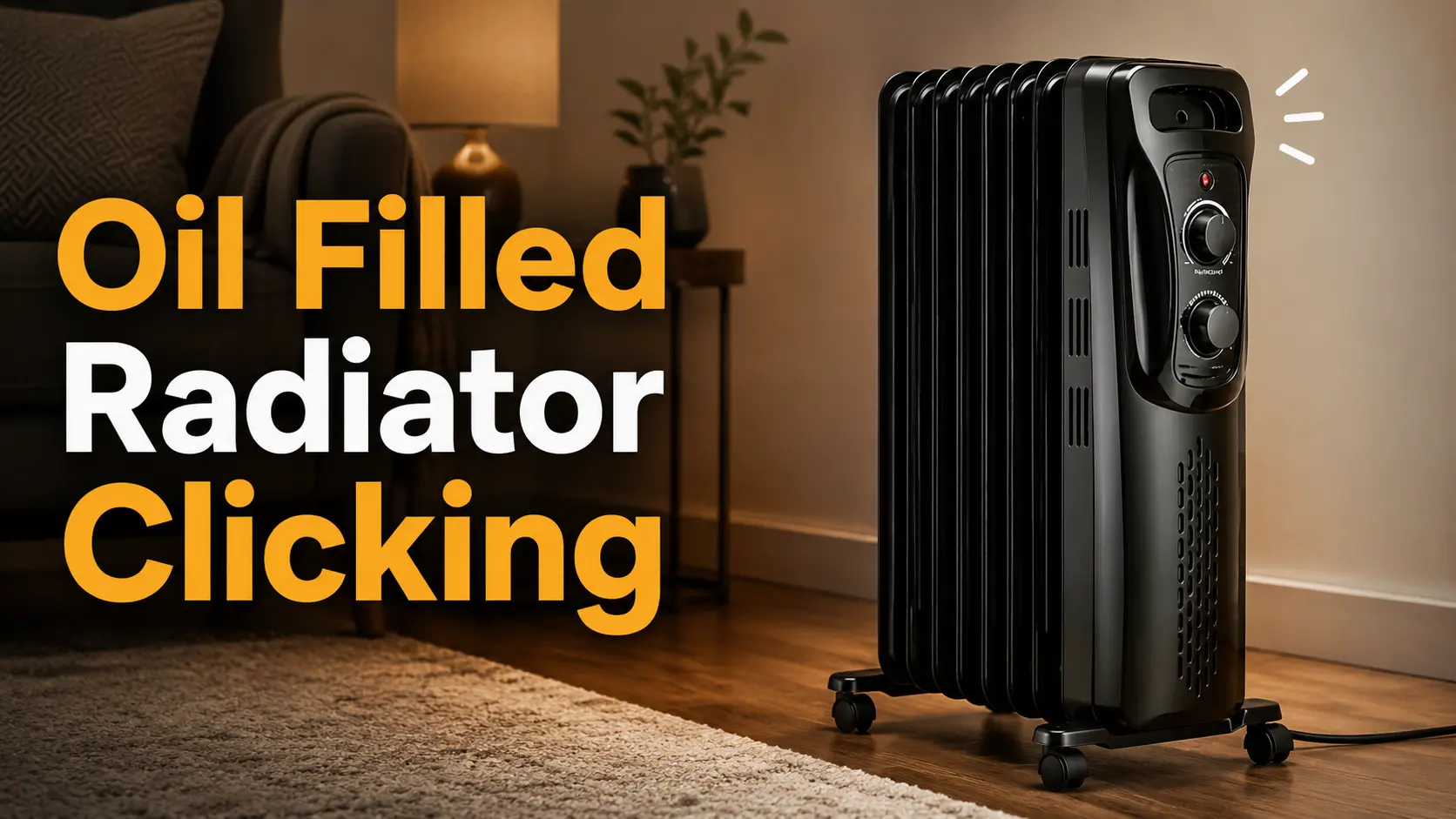


An oil heater making a clicking noise is usually normal. The metal fins expand as the radiator warms and contract as it cools, while the thermostat can make a distinct click when it switches the heating element on or off.
If your oil heater is making a crackling noise, popping sound or ticking sound, pay attention to the pattern and to any other warning signs. Occasional clicks and light pops are common; sizzling, electrical buzzing, a burning-plastic smell, leaking oil or an unusually hot plug are reasons to stop using the heater.
This guide explains why an oil-filled radiator clicks, why some DeLonghi oil heaters crackle while heating, and how to tell normal expansion noise from a fault.
Paid link. As an Amazon Associate, we earn from qualifying purchases at no extra cost to you.
TL;DR
- An oil heater making a clicking noise is usually normal. The metal fins expand as the radiator warms and contract as it cools, while the thermostat can make a distinct click when it switches the heating element on or off.
- Noise that settles as the radiator reaches temperature is generally less concerning than rapid electrical clicking, sizzling, buzzing or noise accompanied by odor or leakage.
- Keep the radiator upright on a stable surface and give it normal clearance from combustible materials.
- If the heater leaks oil, sparks, smells electrical or overheats at the plug or outlet, unplug it and stop using it.
Why Is My Oil Heater Clicking or Crackling?
The most common cause of clicking in an oil filled radiator is the thermal expansion and contraction of the metal fins as they heat up and cool down. A single, distinct click is usually the thermostat turning the heating element on or off. These sounds are a normal part of the heater’s operation and do not indicate a safety risk.



How an Oil Filled Radiator Works
To understand the noise, you need to understand the internal process. These heaters do not actually burn oil. Instead, they use electricity to heat a reservoir of thermal oil sealed inside metal columns.
The oil acts as a heat reservoir. It stays hot for a long time, even after the power shuts off. As the oil gets hot, it transfers that energy to the metal casing. The metal then warms the air in your room. This process involves a lot of temperature changes in a very short amount of time.
Why Oil-Filled Heaters Click, Crackle or Pop
Most people are surprised by how loud a metal heater can be. Here are the primary reasons why is my oil filled radiator clicking during your evening rest.
1. Thermal Expansion and Contraction
This is the number one cause of clicking. Metal expands when it gets hot and shrinks when it cools down. The fins of your radiator are made of thin steel. As the oil inside warms up, the metal stretches slightly.
When the metal moves, it can create a clicking or popping sound. This is very similar to the “ticking” sound a car engine makes after you turn it off on a hot day. It is simply the physics of metal reacting to heat.
2. The Thermostat Relay
Do you hear a single, sharp click every few minutes? That is likely the thermostat relay. When the air in the room reaches your target temperature, the thermostat cuts the power to the heating element.
When the room cools down by a degree or two, the thermostat clicks again to turn the heat back on. This mechanical switch is often quite loud in a silent room. It is a sign that your heater is successfully managing your energy bill.
3. Air Bubbles in the Oil
If your heater is new or has been sitting on its side, you might hear a gurgling or rapid clicking sound. This is caused by tiny air bubbles moving through the thermal oil.
As the oil heats up, it becomes less thick. This allows trapped air to rise to the top of the columns. Once the heater has been running in an upright position for a few hours, these bubbles usually settle, and the noise disappears.
4. Loose Plastic Housing
Sometimes the clicking isn’t coming from the metal at all. Many radiators have a plastic control panel on the front. If the screws holding this panel are a bit loose, the vibrations from the heating process can cause the plastic to click against the metal frame.
When Oil-Heater Clicking Is a Warning Sign
While most clicks are harmless, you should never ignore every sound. Part of knowing why is my oil filled radiator clicking is knowing when the unit is failing.
Continuous Rapid Clicking
If the heater is clicking rapidly like a clock and never stops, the thermostat might be failing. This means the heater could stay “on” forever and overheat. If the room is getting much hotter than your setting, the unit needs to be replaced.
Sizzling or Frying Sounds
If you hear a sound like bacon frying, unplug the heater immediately. This can mean that moisture has found its way into the oil reservoir or that there is an electrical short near the heating element.
Electrical Buzzing
A low hum is normal for some models. However, a loud, angry buzzing or crackling sound is a sign of an electrical arc. This is a major fire hazard. Check your wall outlet and the heater’s plug for any signs of melting or discoloration.
How to Reduce Normal Oil-Heater Noise
- The Level Floor Test: Ensure your heater is on a perfectly flat, hard surface. If it is leaning slightly, the oil won’t circulate evenly, which can cause more popping sounds.
- Warm Up Period: Let a new heater run on high for two hours in a garage or living room before moving it to a bedroom. This helps the oil and metal settle.
- Check the Control Panel: If the clicking is coming from the front, try gently tightening the screws on the plastic housing. Do not over-tighten, as you could crack the plastic.
- Positioning: Don’t place the heater directly against a wall or furniture. The reflected heat can cause the metal to expand more aggressively, leading to louder pops.
Comparison Insights: Oil vs. Ceramic Noise
If you are very sensitive to noise, you might wonder if you chose the right type of heater.
Oil Filled Radiators
These are generally the quietest heaters because they have no fans. The clicking is intermittent. Once the unit reaches a steady temperature, it often stays silent for long periods.
Ceramic Fan Heaters
These have a constant “whoosh” sound from the fan. While they don’t click or pop as much, the background noise is always there. Many people find the rhythmic clicking of a radiator less distracting than the constant drone of a fan.
If the clicking is normal but you are comparing quieter replacements, see our best oil-filled radiator heaters, DeLonghi oil-filled radiator review, and Pelonis oil-filled radiator review.
Frequently Asked Questions
Is it normal for a new oil heater to click a lot?
Yes. A new heater often clicks more during its first few uses. The metal is being exposed to high heat for the first time, and the oil is settling. The noise should decrease after a few days of regular use.
Will the clicking sound ever stop?
It will never stop completely because metal will always expand and contract. However, as the room reaches a steady temperature, the clicks will happen much less frequently.
Can an oil filled radiator explode from the pressure?
Normal clicking or popping does not mean an oil-filled radiator is about to explode. Stop using the heater if the casing is damaged or bulging, the sealed oil leaks, the cord or plug overheats, or you notice smoke or a persistent electrical smell.
Why does my heater gurgle when I turn it on?
This is the sound of the oil moving through the columns. It is common if the heater has been moved or stored on its side. It is perfectly safe and usually stops once the unit is fully warmed up.
How do I know if the thermostat is broken?
If the clicking sound is accompanied by the heater never turning off, or if the room stays cold even when the unit is on “High,” the thermostat may be faulty. In most cases, this means the heater should be replaced.
Are some brands quieter than others?
Yes. Premium brands often use thicker steel and better-insulated thermostat relays. This can significantly dampen the clicking and popping sounds during use.
Should I worry if the clicks are very loud?
Loud pops can be surprising but are usually just a sign of a high heat setting. If the noise is followed by a smell of smoke or a visible oil leak, you should stop using the unit immediately.


