
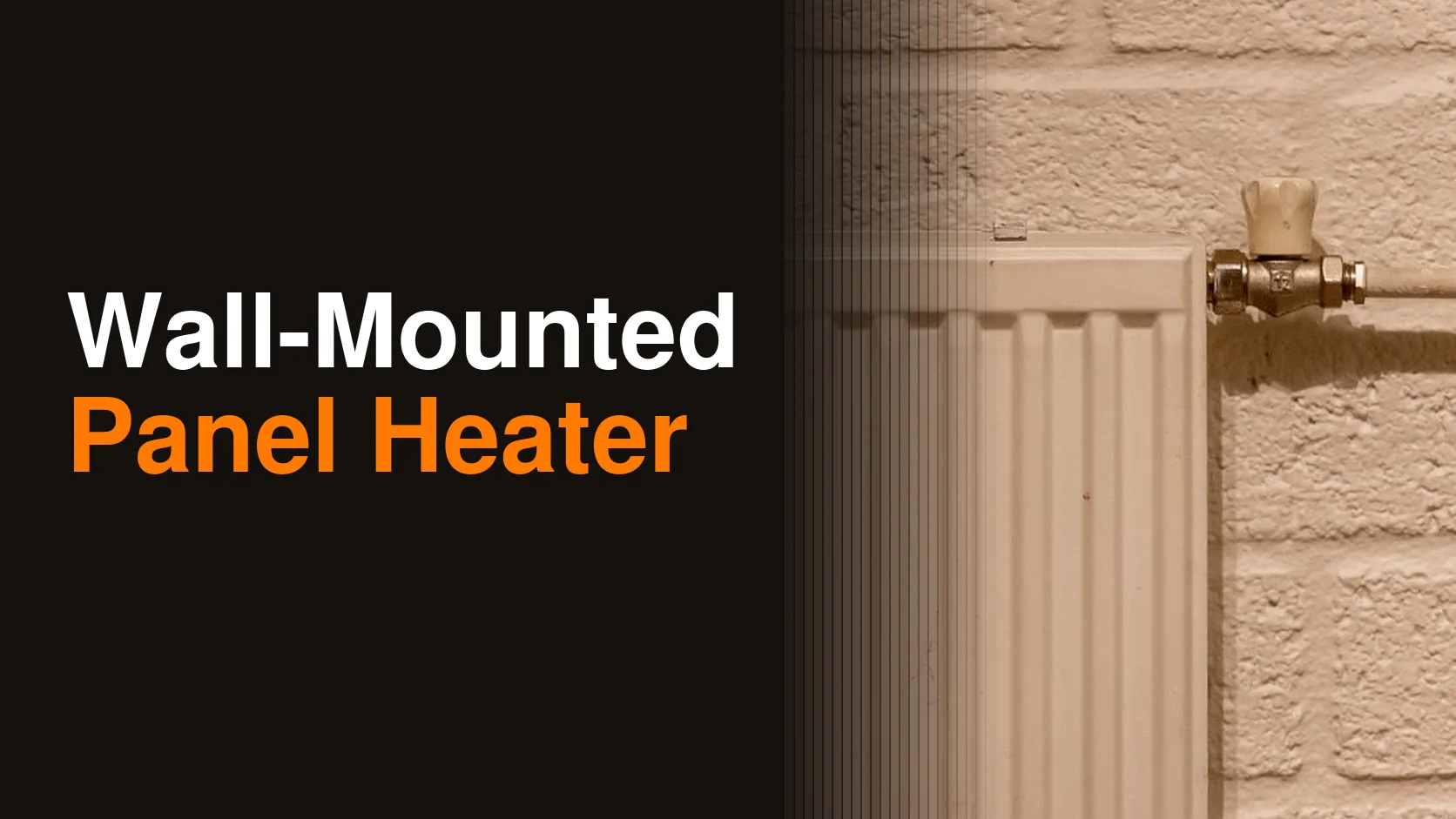


You are standing in your small home office or a narrow hallway, shivering because the central heat just doesn’t reach this corner. You want to add a heater, but there is simply no floor space for a bulky radiator or a round ceramic fan. You don’t want a noisy machine blowing dust around, and you certainly don’t want a glowing orange coil near your curtains.
This is exactly why many homeowners are turning to sleek, flat heating solutions. If you have seen these thin, white boards attached to walls and wondered what is a panel space heater for wall mounting, you are looking at one of the most discreet ways to stay warm. These units are designed to blend into your decor like a piece of art while providing a steady, gentle heat that doesn’t eat up your living space. For the buying decision behind this topic, compare our Best Panel Heaters for Wall Mount.
As a seasoned reviewer of home heating tech, I have seen how these panels solve the “no-room-for-a-heater” problem in apartments and modern homes. They are a semi-permanent solution that offers safety and style. Let’s look at how they work and if they are the right choice for your specific drafty spot.
For a model-specific example within wall-mounted heater designs, see our Ontel Handy Heater Turbo 800 Review for controls, safety features, heating style, and practical fit.
Paid link. As an Amazon Associate, we earn from qualifying purchases at no extra cost to you.
TL;DR

- A panel space heater for wall mounting is a slim, flat electric heater designed to be fixed directly to a wall to save floor space.
- Match the heater to the room size, insulation and the kind of warmth you want instead of choosing by wattage alone.
- Prioritize appropriate safety features, stable placement, direct wall-outlet use and clear manufacturer instructions.
- Check the exact model specifications before purchase because features and retailer listings can change.
Quick Answer: Wall Mounted Panel Heaters
A panel space heater for wall mounting is a slim, flat electric heater designed to be fixed directly to a wall to save floor space. These units primarily use natural convection to circulate warm air silently throughout a room. They are ideal for providing consistent background heat in small to medium spaces like bedrooms, offices, and hallways.

How a Wall Mounted Panel Heater Works
To understand what is a panel space heater for wall mounting, you have to look at how it moves heat without a fan. Most of these units rely on a process called natural convection.
Inside the slim panel, there is an electric heating element. As this element gets hot, it warms the air trapped inside the casing. Because hot air is lighter than cold air, it naturally rises and flows out through vents at the top of the panel.
This creates a “vacuum” effect at the bottom of the heater. Cold air from the floor is pulled into the bottom vents to replace the rising warm air. This creates a silent, invisible loop of moving warmth that slowly fills the room. Some modern panels also use a bit of radiant heat, warming the front surface of the panel so it radiates heat directly onto objects and people nearby.
Key Features of Wall Mounted Panels
These heaters are built for a very specific look and function. When you are shopping in 2026, you will see these common traits across most quality brands.
Ultra-Slim Profile
The most obvious feature is the thickness. Most panel heaters are only three to four inches deep. This allows them to sit flush against the wall, making them much less noticeable than a portable box heater.
Silent Operation
Because they do not have fans, these heaters are 100% silent. This makes them the gold standard for bedrooms and nurseries where the “whooshing” sound of a fan heater might keep you awake.
Paintable Surfaces
Many ceramic or fiber-cement panel heaters come with a matte finish that can be painted. You can use standard latex wall paint to match the heater exactly to your wall color. This makes the heater almost invisible to the naked eye.
Smart Controls and Timers
In 2026, many wall mounted panels come with Wi-Fi connectivity. You can set heating schedules on your phone so the hallway is warm when you wake up, but the heater stays off while you are at work. For the buying decision behind this topic, compare our Best Wall-Mounted Space Heaters in.
Pros and Cons of Wall Mounting
No heater is perfect for every home. Understanding the trade-offs is a big part of knowing what is a panel space heater for wall mounting.
The Pros
- Saves Floor Space: Keeps your walkways clear and furniture arrangements flexible.
- Child and Pet Safe: Being mounted on the wall keeps the hot surfaces out of reach of curious toddlers and wagging tails.
- Low Maintenance: With no moving parts like fans or motors, there is very little that can break or wear out.
- Gentle Heat: They don’t dry out the air or blow allergens around the room.
The Cons
- Slower Warm-Up: Because they don’t have fans, it takes longer to feel the warmth compared to a ceramic fan heater.
- Fixed Location: Once you drill the holes and mount the bracket, you can’t easily move it to another room.
- Lower Peak Heat: They are designed for “maintenance” heat rather than blasting a freezing room with a sudden burst of warmth.
Cost Breakdown: Electricity and Value
Most wall mounted panels in 2026 are rated between 400 watts and 1,500 watts. A 400-watt panel is very cheap to run, costing only pennies per hour. It is perfect for a small bathroom or a walk-in closet.
A larger 1,500-watt panel uses the same amount of power as a standard portable heater. However, because panels are often paired with precise digital thermostats, they tend to be more efficient. They click off the moment the room hits the target temperature, preventing the “overheating” that often happens with cheap portable units.
Safety Considerations for Wall Panels
Safety is a major reason people choose wall-mounted units. They eliminate the most common heater risks.
No Tripping Hazards
Portable heaters have cords that run across the floor. In a dark room or a busy hallway, these are a major trip risk. A wall-mounted panel has a cord that usually drops straight down to the outlet, keeping it out of the way.
Overheat Protection
Even though they are fixed to the wall, they still have internal safety sensors. If a curtain falls over the top of the heater and blocks the vents, the unit will shut down instantly to prevent a fire.
Distance from Flammables
When you mount a heater, you are making a permanent decision about its location. This is actually a safety benefit. You won’t accidentally push it too close to a sofa or a pile of laundry like you might with a portable unit.
Comparison Insights: Panel vs. Portable
If you are torn between a wall panel and a standard portable heater, think about the room’s purpose.
Choose a Portable Heater if: You rent your home and cannot drill holes in the walls. Or, if you need a “blast” of heat for 20 minutes while you get dressed in the morning.
Choose a Wall Mounted Panel if: You own your home and want a permanent, tidy look. Or, if you need a heater that can stay on a low setting all day to keep a home office comfortable without any noise.
Step-by-Step Guidance: Basic Installation
Most panel heaters are “DIY friendly.” You do not need an electrician because they simply plug into a standard outlet.
- Find the Stud: Use a stud finder to locate the wooden beams behind your drywall. Mounting to a stud ensures the heater won’t pull out of the wall.
- Check Clearances: Most manufacturers require at least 6 inches of space below the heater and 12 inches above it for proper airflow.
- Level the Bracket: Use a spirit level when marking your screw holes. A crooked panel heater is very obvious and can affect the convection loop.
- Secure and Plug In: Screw the mounting brackets into the wall, hang the panel, and plug it in. It is that simple.
Common Mistakes to Avoid
The biggest mistake is mounting the panel too high. Heat rises naturally. If you mount the panel halfway up the wall, your feet will stay cold while the ceiling gets all the warmth. Always aim for about 6 to 10 inches above the floor.
Another mistake is painting a panel that isn’t rated for it. Only paint ceramic or fiber-cement panels. Painting a metal or plastic heater can create dangerous fumes and might be a fire hazard. Finally, never cover the panel with a towel to dry it. This will trip the overheat sensor and could damage the internal elements.
Frequently Asked Questions
Can I install a panel heater myself?
Yes. Most wall-mounted panels come with a mounting kit and a standard plug. As long as you can use a drill and a level, you can install one in about 15 minutes. No professional electrical work is usually required.
Are wall-mounted panel heaters energy efficient?
Yes, especially when used for “zone heating.” Because they often have very accurate thermostats and timers, they only run when necessary. A 400W or 600W panel can keep a room comfortable for pennies a day.
Can I paint my panel heater?
Only if it is specifically labeled as “paintable.” These are usually made of ceramic or a special fiber-cement. Use high-quality latex paint that matches your walls. Never paint a metal or plastic heater.
Is it safe to leave a panel heater on all night?
No portable space heater should be treated as safe to leave running while you sleep or when it is unattended. CPSC recommends turning portable heaters off when sleeping, plugging electric heaters directly into a wall outlet, and keeping them at least three feet from bedding, curtains, furniture, and other combustible materials.
Do panel heaters have fans?
Most do not. They rely on natural convection, which makes them 100% silent. Some “hybrid” models might have a tiny, optional fan for faster warm-up, but the standard panel is a fan-less design.
How high should I mount the heater?
For the best results, mount the heater about 6 to 12 inches above the floor. This allows it to pull in the coldest air and warm the room from the bottom up. Mounting it too high will leave your feet cold.
Can I put furniture in front of a wall heater?
You should leave at least two to three feet of space in front of the heater. If you put a sofa or a desk right against it, you will block the heat from circulating and the heater might overheat.


