


You are sitting in a drafty garage or a large basement office on a freezing morning. You turn on a standard heater, and for twenty minutes, you just wait. You watch the warm air rise straight to the ceiling while your feet stay like blocks of ice. It feels like you are paying to heat the empty air above your head rather than your own body.
This is a common frustration with traditional heating. If you want to stop waiting for the air to warm up and start feeling toasty immediately, you need to understand what is a quartz space heater explained simply. Unlike heaters that blow hot air around, quartz units use a specific type of light technology to keep you comfortable.
As a seasoned reviewer of heating technology, I have seen how quartz heat can transform a cold workshop into a favorite retreat. It is the closest thing we have to bringing a piece of the sun indoors. Let’s dive into the mechanics of this technology so you can decide if it is the right tool for your winter survival kit. For closely related guidance, see our What Is a Radiant Space Heater and How It Works.
Paid link. As an Amazon Associate, we earn from qualifying purchases at no extra cost to you.
TL;DR
- A quartz space heater is a type of infrared heater that uses quartz tubes to house heating elements.
- Match the heater to the room size, insulation and the kind of warmth you want instead of choosing by wattage alone.
- Prioritize appropriate safety features, stable placement, direct wall-outlet use and clear manufacturer instructions.
- Check the exact model specifications before purchase because features and retailer listings can change.
Quick Answer: Quartz Heaters Defined
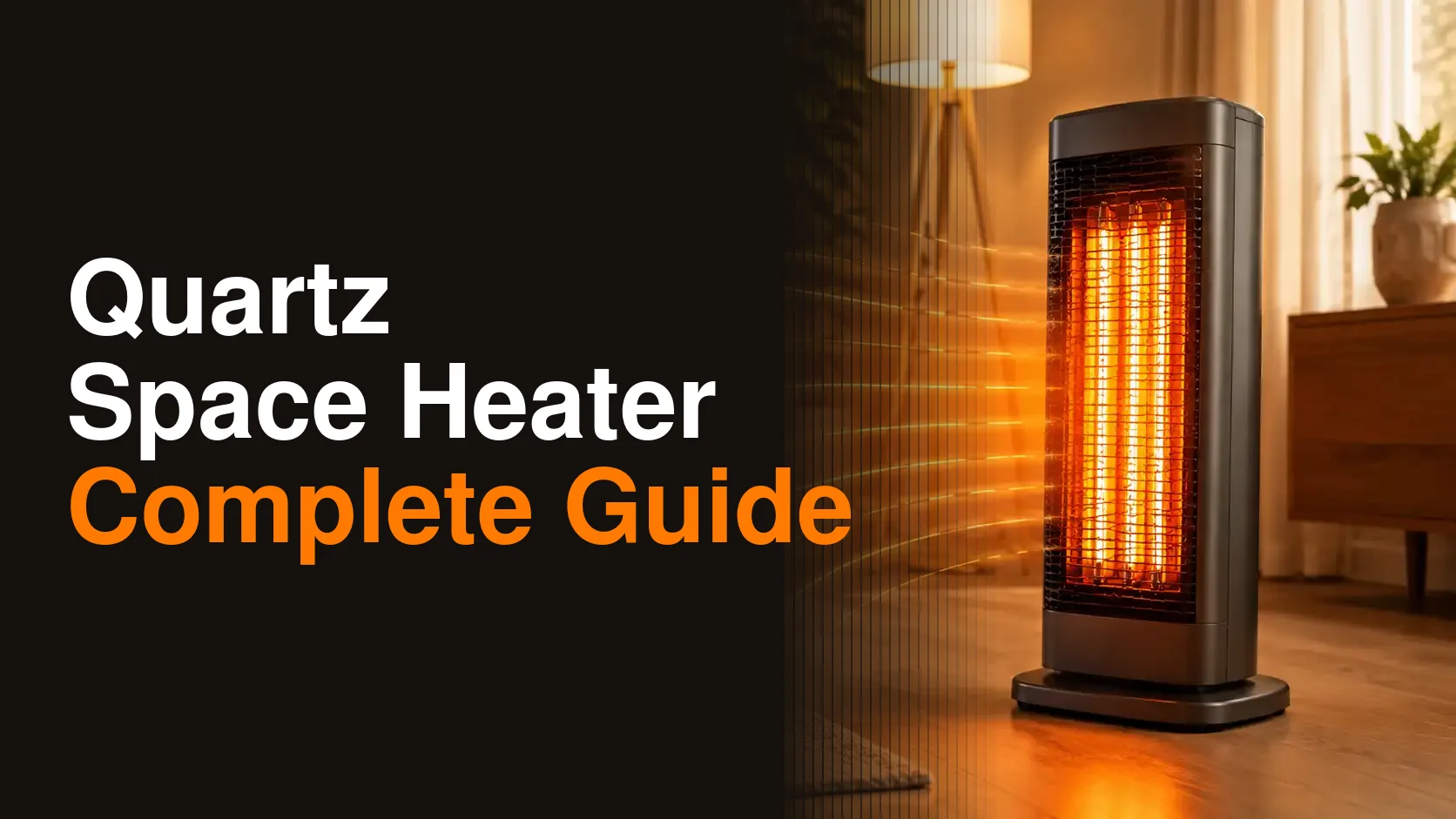
A quartz space heater is a type of infrared heater that uses quartz tubes to house heating elements. It provides instant warmth by emitting infrared waves that heat objects and people directly rather than warming the surrounding air. It works similarly to the sun, making it highly efficient for “spot heating” in large or drafty rooms.


How It Works: The Science of Radiant Heat
To understand what is a quartz space heater explained simply, you have to forget about blowing hot air. Traditional heaters use “convection.” They heat up a wire or plate, and a fan pushes air over it. That air then has to travel across the room to find you.
Quartz heating is different. It uses “radiation,” specifically infrared light. Inside the heater, there are one or more tubes made of quartz. These tubes contain a heating element, usually made of tungsten or nichrome wire. When electricity flows through the wire, it reaches extreme temperatures and glows orange. For closely related guidance, see our Infrared Space Heater Range What It Can and Cannot Do.
The quartz tube protects the element and helps focus the energy into infrared waves. These waves travel in straight lines through the air. They do not stop to heat the air molecules. Instead, they keep traveling until they hit a solid object, like your body or your chair. When the waves hit you, you feel the heat instantly.
Key Features of Quartz Space Heaters
Quartz units have a very distinct look and feel. When you are shopping in 2026, you will notice these specific design traits.
Quartz Glass Tubes
The most obvious feature is the glowing tubes. Quartz glass is used because it can handle intense heat without cracking. It is also “transparent” to infrared light, allowing the heat waves to pass through into the room without being trapped inside the machine.
Reflective Backing
Behind the tubes, you will usually see a polished metal reflector. This acts like a mirror for heat. It catches any infrared waves moving toward the back of the heater and bounces them forward. This allows you to “aim” the heat exactly where you need it.
Instant Heat Output
Because there is no liquid to heat up and no large metal fins to warm, quartz heaters provide warmth the second you flip the switch. This “instant-on” capability is the hallmark of quartz technology.
Pros and Cons of Quartz Technology
No heater is perfect for every single scenario. Understanding the trade-offs is a big part of knowing what is a quartz space heater explained simply.
The Pros
- Instant Warmth: You feel the heat immediately. There is zero waiting time.
- Silent Operation: Most models do not have fans, making them 100% silent.
- Draft Resistant: Since it heats objects and not air, a drafty window won’t blow your heat away.
- Energy Efficient for Individuals: You can stay warm without heating the whole house, saving money.
- Lower Maintenance: With no moving parts like fans, there is less that can break or wear out.
The Cons
- Directional Heat: If you move out of the “beam,” you will feel the chill quickly.
- Hot Exterior: The front grille gets extremely hot. It is not always the best choice for toddlers.
- Light Output: The glowing tubes can be quite bright in a dark bedroom at night.
- Delicate Tubes: The quartz glass is tough, but it can break if the heater is dropped or hit hard.
Cost Breakdown: Electricity and Value
Almost all portable electric heaters in 2026 use 1,500 watts of power on their highest setting. This means a quartz heater uses the same amount of electricity as a ceramic one. However, the value comes from how you use that power.
Because quartz heat is instant, you might find you only need to run it while you are at your workbench or desk. A convection heater might need to run for 30 minutes before you even feel comfortable. This “targeted heating” allows you to use the heater for shorter bursts, which lowers your monthly utility bill.
Safety Considerations for Quartz Units
Because quartz heaters reach very high temperatures, safety is a top priority. Modern 2026 standards have made these units much safer than the older models.
Tip-Over Protection
This is a must-have feature. If a quartz heater falls face-down on a rug, it can cause a fire very quickly because the heat is so intense. Look for a unit with a sensitive tip-over switch that kills the power the moment the unit isn’t upright.
Overheat Sensors
If the unit is covered by a blanket or if its internal components get too hot, an automatic shut-off should trigger. This prevents the internal wiring from melting and reduces the risk of an electrical fire.
The 3-Foot Rule
This is the most important rule for quartz heaters. Because they emit intense, direct heat, you must keep them at least three feet away from anything flammable. This includes curtains, bedding, paper, and furniture.
Step-by-Step Guidance: Getting the Most Out of Quartz Heat
- Find the Direct Line: Place the heater so it is pointing directly at your chest or legs. Quartz waves don’t “bend” around obstacles.
- Avoid High-Traffic Areas: Place the heater in a corner where you won’t accidentally brush against the hot grille.
- Use it for “Task” Heating: Use the quartz heater when you are sitting still at a desk, on the sofa, or at a workbench.
- Clean the Tubes: If dust settles on the tubes while the heater is off, it can smell when you turn it on. Once the unit is cold and unplugged, use compressed air to keep the tubes clean.
Comparison Insights: Quartz vs. Ceramic
If you are still on the fence, think about your specific space.
Choose Ceramic if: You want to heat a whole small bedroom for the entire night. Ceramic heaters are better at warming the “bubble” of air around you.
Choose Quartz if: You are working in a drafty garage, sitting in a large living room by yourself, or you need heat right now and don’t want to wait for the air to warm up.
Buying Factors: What to Look For
When you are ready to purchase, don’t just look at the price tag. Check for these specific details.
- Safety Labels: Ensure the unit has a UL (Underwriters Laboratories) or ETL seal. This proves it has passed rigorous 2026 safety tests.
- Multiple Heat Settings: Look for a unit that has a 750-watt and a 1,500-watt setting. This gives you more control over your comfort and your electric bill.
- Adjustable Base: A heater that can tilt up or down allows you to aim the heat beam exactly where you need it.
Frequently Asked Questions
Is a quartz space heater safe for pets?
Yes, but you must be careful. The front grille of a quartz heater gets very hot to the touch. If you have a curious pet, place the heater on a raised surface or in a corner behind a pet gate. Never leave a pet alone in a room with a running quartz heater.
Do quartz heaters use more electricity than other heaters?
No. Almost all portable electric heaters use 1,500 watts on high. However, because quartz heat is instant and directed at the person, you may find you can run it for shorter periods, which saves money.
Can I leave a quartz heater on while I sleep?
No portable space heater should be treated as safe to leave running while you sleep or when it is unattended. CPSC recommends turning portable heaters off when sleeping, plugging electric heaters directly into a wall outlet, and keeping them at least three feet from bedding, curtains, furniture, and other combustible materials.
Why does my quartz heater glow orange?
The orange glow is a natural result of the heating element reaching the high temperatures needed to emit infrared waves. It is perfectly normal and shows the heater is working.
What is the difference between quartz and infrared?
Quartz is the material used to create the infrared waves. All quartz heaters are infrared heaters, but not all infrared heaters use quartz. Quartz tubes are generally better at providing “near-infrared” heat, which feels more intense and sun-like.
Will a quartz heater work in an outdoor garage?
Yes, quartz heaters are the best choice for garages and workshops. Since they don’t heat the air, the wind won’t “blow away” the heat. You will feel the warmth as long as the infrared waves can reach you.
Can I touch the quartz tubes?
No. Never touch the quartz tubes, even when they are cold. The oils from your skin can create “hot spots” on the glass, which can cause the tube to crack or fail when the heater is turned on.


