
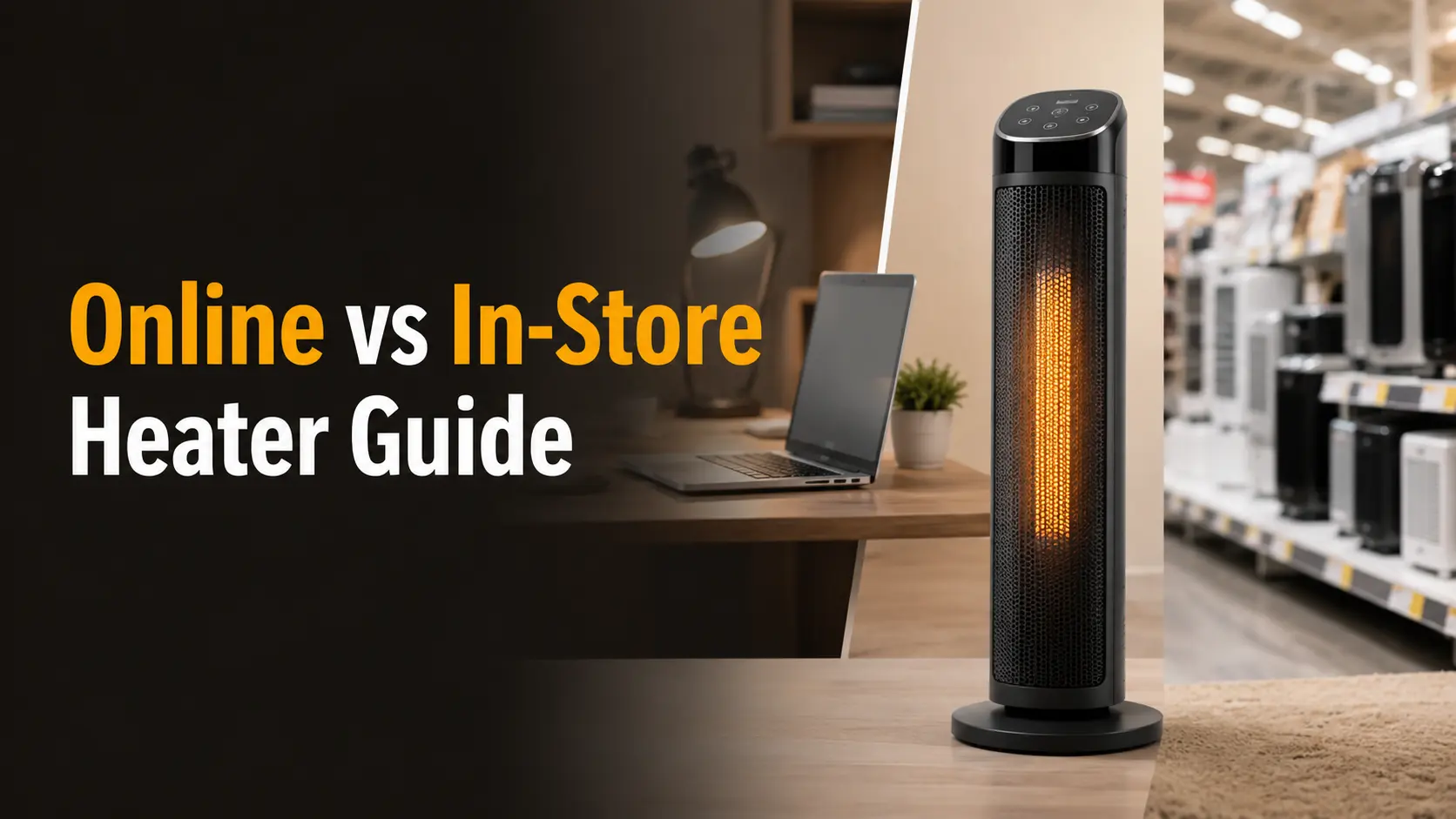

The choice of a supplemental heating source is a critical decision for any homeowner. It involves a balance between comfort, cost, and safety. As temperatures drop, the urgency to find the perfect heater increases. This decision often begins with where to buy. The modern marketplace offers two distinct paths. Consumers can browse vast digital catalogs from home. For the buying decision behind this topic, compare our Where to Buy Space Heaters With Extended Warranty Coverage.
Alternatively, they can visit a physical retailer to inspect units in person. Both options have unique benefits and significant drawbacks. This Online vs In Store Space Heater Buying Guide examines every factor involved in this procurement process. The goal is to provide a clear framework for making the safest and most economical choice.
Paid link. As an Amazon Associate, we earn from qualifying purchases at no extra cost to you.
TL;DR
- Buying a space heater online provides a wider selection and more competitive pricing but carries risks of shipping damage and restocking fees of 15% to 25%.
- Start with the simple checks first: wall power, controls, thermostat setting, tip-over switch, overheat reset, blocked airflow and dust buildup.
- Unplug the heater before cleaning or inspecting it, and follow the model’s manual for reset or maintenance steps.
- Stop using the heater if you notice sparks, melting, a persistent electrical or burning-plastic smell, a damaged cord, an oil leak or an overheated plug/outlet.
Quick Overview
Buying a space heater online provides a wider selection and more competitive pricing but carries risks of shipping damage and restocking fees of 15% to 25%. Purchasing in store allows for immediate build quality and noise level testing while ensuring easier, fee-free returns. Consumers should shop online for niche features and specialized models. They should shop in person if they need a unit immediately or want to verify safety marks and fan noise before committing.


Analyzing the Online vs In Store Space Heater Buying Guide Factors
The procurement of a space heater is influenced by logistics and consumer protection. Online marketplaces like Amazon and Walmart offer thousands of choices. However, these platforms introduce variables that physical stores eliminate. For the buying decision behind this topic, compare our Best Places to Buy a Space Heater Online.
The Breadth of Online Selection
The digital marketplace is unmatched in terms of variety. Online shoppers can find specialized wall-mounted units or smart-enabled towers that local stores may not stock. This channel is superior for buyers with specific aesthetic or technical needs. For example, a buyer looking for a heater with a HEPA air purifier or a 3D fireplace display can find these niche items easily online.
Online platforms also allow for extensive research. Buyers can compare wattage, BTU ratings, and safety features across dozens of brands simultaneously. This level of data density is rarely available on a retail shelf. Many online listings also include digital manuals. This allows the buyer to read safety instructions before the product even arrives.
Tactile Feedback in Physical Stores
Physical shopping provides a sensory experience that digital screens cannot replicate. The weight of a heater is an indicator of its stability. A heavy oil-filled radiator is less likely to be knocked over by a pet. In a store, a buyer can test the sturdiness of the handle and the smoothness of the wheels.
Noise testing is perhaps the most significant in-store advantage. Fan-forced heaters can produce a range of sounds. These include clicking, whirring, or flapping. Some people are sensitive to high-pitched motor hums. Others might find the sound of a “vortex” fan soothing. Hearing the unit in person ensures the noise level is acceptable for a bedroom or office.
Immediate Gratification and Local Stock
Buying in a store provides immediate access to warmth. This is crucial during a cold snap or a furnace failure. There is no waiting for a courier. There is also no risk of the package being stolen from a porch. Furthermore, local retailers like Home Depot or Lowe’s often stock brands that are known for reliability in the local climate.
Technical Components of the Online vs In Store Space Heater Buying Guide
Safety is the primary concern when selecting a heating device. These units consume a high amount of electricity. They are also a leading cause of home fires. Verifying safety standards is a critical step in the buying guide.
The Role of Safety Certifications
Every space heater should have a certification from a recognized testing laboratory. These include Underwriters Laboratories (UL), Intertek (ETL), and the Canadian Standards Association (CSA). These marks prove the unit has passed rigorous electrical and fire hazard tests.
In a physical store, these logos are clearly printed on the box and the unit itself. In an online environment, verifying these marks is more difficult. Some marketplace sellers may use “UL” as a keyword without actually having the certification. Buyers should look for high-resolution photos of the unit’s rating plate to confirm the mark.
| Certification | Testing Authority | Geographic Recognition |
| UL Mark | Underwriters Laboratories | Worldwide; primary in USA |
| ETL Listed | Intertek | Worldwide; primary in North America |
| CSA Mark | Canadian Standards Association | Canada and USA |
| Energy Star | EPA/DOE | Not applicable to most space heaters |
Advanced Safety Features
Modern heaters include technology to prevent accidents. Consumers should look for these features regardless of the shopping channel.
- Tip-Over Switches: This mechanical or electronic switch cuts power if the unit is not upright.
- Overheat Protection: A thermal sensor shuts the unit down if internal temperatures exceed a safe threshold.
- Cool-Touch Exteriors: Specialized housing prevents the outer surface from becoming hot enough to cause burns.
- ALCI Plugs: These are essential for heaters used in damp areas like bathrooms to prevent electrical shocks.

Sizing Your Space Heater Correctly
A common mistake is buying a heater that is too small for the room. This causes the unit to run constantly. It leads to higher energy bills and a shorter lifespan for the heater.

The 10-Watt Rule of Thumb
The standard sizing guideline is 10 watts of heating power per square foot of space. This applies to rooms with standard 8-foot ceilings.
- 100 Square Feet: 1,000 watts.
- 150 Square Feet: 1,500 watts.
- 250 Square Feet: 2,500 watts (Requires multiple heaters or high-voltage units).
For rooms with high ceilings, the buyer should calculate the cubic footage. This is the length times the width times the height. It takes 0.24 BTUs to raise one cubic foot of air by one degree Fahrenheit. Converting BTUs to watts is done by dividing the BTU count by 3.41. For more detail on this topic, see our guide to when is the best time to buy a space heater.

Primary vs. Secondary Heating
The shopping channel may vary depending on the heating goal. If the heater is the primary source of warmth for a garage, a high-BTU industrial unit is needed. These are often easier to find through specialized online retailers. If the heater is a secondary source to boost comfort in a bedroom, a quiet oil-filled radiator is best. These are standard items at any local hardware store.
Identifying and Avoiding Common Buying Mistakes
Many consumers fall into traps when shopping for space heaters. Awareness of these mistakes ensures a better purchase experience.
Mistake 1: Focusing Solely on Price
Cheap heaters often lack essential safety sensors. They may also use lower-quality plastic that can emit smells when heated. Investing in a mid-range or premium unit usually pays off in durability and peace of mind.
Mistake 2: Ignoring Noise Ratings
A heater that sounds fine in a busy retail store might be too loud for a quiet bedroom. Online buyers should look for specific decibel ratings. In-store buyers should try to find a quiet corner of the store to listen to the unit if it is plugged in.
Mistake 3: Overlooking Portability
If the plan is to move the heater from the living room to the bedroom daily, portability is key. Heaters with caster wheels and recessed handles are much easier to manage. Online photos can be deceiving. It is important to check the weight of the unit in the technical specifications.
Mistake 4: Not Checking for Second-Hand Wear
Buying a used space heater is generally discouraged by experts. Older units may lack modern safety features like tip-over protection. They may also have frayed internal wiring or dust buildup on the heating elements. If buying second-hand, a thorough inspection of the cord and plug is mandatory.
Making the Final Decision: A Strategic Summary
The final choice between online and in-store shopping depends on the specific needs of the household.
Shop Online If:
- You need a specific technical feature like Wi-Fi control or a HEPA filter.
- You want to compare hundreds of models to find the absolute lowest price.
- You have a reliable delivery location and a high tolerance for potential shipping delays.
Shop In Store If:
- You are sensitive to noise and need to hear the fan before you commit.
- You want to verify the physical safety marks and build quality in person.
- You need the heater immediately and want the security of free local returns.
By following this Online vs In Store Space Heater Buying Guide, consumers can navigate the complexities of the modern market. Safety must always be the top priority. Energy efficiency and purchase price are secondary but important considerations. A well-informed buyer is a warm and safe buyer.
Frequently Asked Questions
Is it better to buy a ceramic heater or an oil-filled radiator?
This depends on the room. Ceramic heaters are better for quick, directional heat in offices. Oil-filled radiators are better for consistent, silent heat in bedrooms where they can run for longer periods safely.
Do I really need to avoid extension cords?
Yes. Space heaters draw a heavy electrical load. Standard extension cords and power strips can easily overheat and melt. This creates a severe fire risk.
How do I verify a UL mark online?
You can look for the UL holographic label in product photos. You can also search the UL Product iQ database using the heater’s model number to confirm the certification is current.
What is a restocking fee?
A restocking fee is a charge applied by some online sellers when you return an item. It covers the cost of shipping and the labor required to inspect and repack the unit. It is usually a percentage of the purchase price.
Can I leave a space heater on overnight?
No portable space heater should be treated as safe to leave running while you sleep or when it is unattended. CPSC recommends turning portable heaters off when sleeping, plugging electric heaters directly into a wall outlet, and keeping them at least three feet from bedding, curtains, furniture, and other combustible materials.
Does a higher price mean the heater is more efficient?
Not necessarily. All electric heaters convert electricity to heat at the same efficiency rate. A higher price usually pays for better build quality, quieter fans, more safety sensors, or smart home features.


