
Your child is playing on the floor, deeply focused on building a tall tower of blocks. The winter wind is rattling the window glass, and the room feels a bit too chilly for comfort. You want to keep them warm, but as you look at your portable heater, a wave of worry hits you. You picture a blanket falling onto the grille or a curious toddler touching the hot surface.
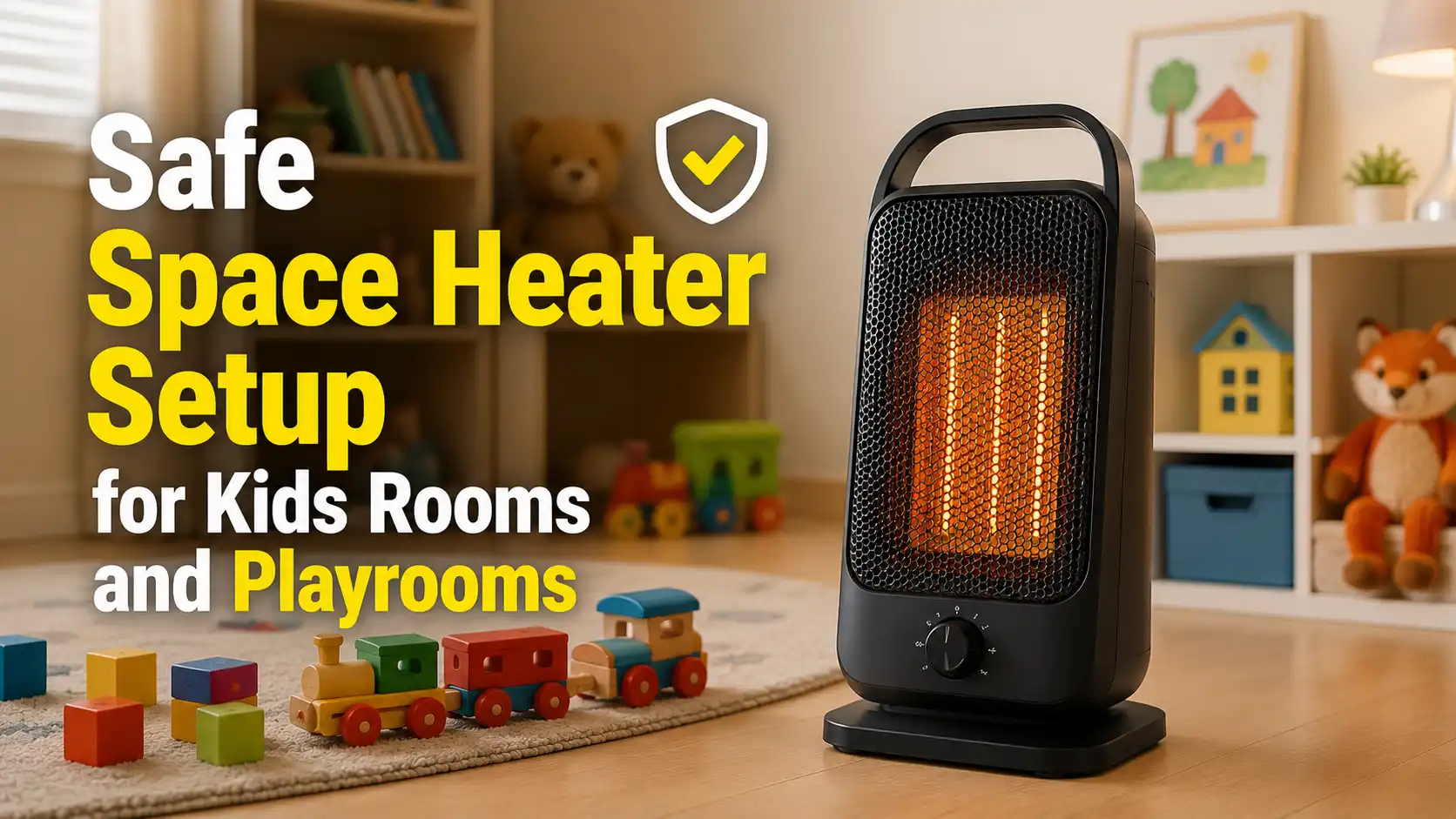
It is a classic parent struggle. You want a cozy environment for sleep and play, but safety is your number one priority. Most standard heaters are not built with “zoomie-prone” pets or active children in mind. This is why a Safe Space Heater Setup for Kids Rooms and Playrooms is something you need to plan carefully before the first cold snap arrives. For the related safety issue, our Safe Space Heater Setup for Pets Cats and Dogs covers the specific risks and safer checks.
As an experienced reviewer of heating technology, I have looked at hundreds of units with a “safety-first” lens. In a child’s environment, the rules are different. You cannot just plug a heater in and walk away. Let’s look at how to create a warm sanctuary that protects your little ones while keeping the frost at bay.
Paid link. As an Amazon Associate, we earn from qualifying purchases at no extra cost to you.
TL;DR
- A safe setup requires choosing a heater with a cool-to-the-touch exterior and a reliable tip-over switch.
- Keep a portable heater on a stable surface with about 3 feet (0.9 m) of clearance from bedding, curtains, furniture and other combustible materials.
- Plug portable electric heaters directly into a suitable wall outlet; stop using a heater if the plug, cord or outlet becomes unusually hot, damaged or discolored.
- Safety features reduce risk but do not replace correct placement, supervision and the manufacturer’s instructions.
Quick Answer: Child-Safe Heating Setup
A safe setup requires choosing a heater with a cool-to-the-touch exterior and a reliable tip-over switch. Place the heater on a flat, hard surface at least three feet away from bedding or toys, and use a physical barrier like a pet gate to keep curious hands at a distance. Never leave a heater running while a child is sleeping or unsupervised.

Why Kids Rooms Need a Different Strategy
To understand a Safe Space Heater Setup for Kids Rooms and Playrooms, you have to think about how children interact with their world. They are fast, they are curious, and they often don’t understand that “hot” can mean “danger.”
Standard heaters often have exposed coils or metal grilles that reach high temperatures. In a living room, an adult knows to keep their distance. In a playroom, a stray stuffed animal or a falling cape can land on that heater in a second. Children also move more air around when they run, which can blow lightweight curtains or papers toward a heat source.
1. Choosing the Right Technology
The first step in your setup is picking the right type of heater. Not all technologies are equal when it comes to nursery or playroom safety. For the buying decision behind this topic, compare our Best Space Heater for Nursery and Baby Room.
Oil-Filled Radiators
These are often the best choice for a child’s bedroom. They don’t have a fan, so they are silent. They also don’t have exposed glowing coils. While the surface gets warm, it usually won’t cause an instant burn like a ceramic heater might. They provide a steady, gentle heat that keeps the room comfortable all night.

Micathermic Panel Heaters
These are thin, lightweight, and can often be mounted on the wall. Wall mounting is a huge safety win. It gets the heater off the floor and away from the “action zone.” Most have a cool-touch housing that adds an extra layer of protection.

Ceramic Tower Heaters
If you need quick heat for a morning play session, a ceramic tower is a good tool. However, you must choose one with a “cool-touch” grille. These units use a plastic lattice that stays at a safe temperature even while the internal plates are hot.

2. Essential Safety Features
When shopping for a unit for your Safe Space Heater Setup for Kids Rooms and Playrooms, look for these non-negotiable features.
- Tip-Over Switch: This is the most important sensor. If the heater is knocked over by a stray ball or a running child, the power must cut out instantly.
- Overheat Protection: If a blanket is dropped over the top, the heater will get too hot inside. This sensor detects the rise in temperature and kills the power before a fire starts.
- Child Lock: Modern smart heaters often have a button lock. This prevents a toddler from turning the heat up to 90 degrees while you aren’t looking.
- Timer Functions: A heater that turns itself off after two hours is much safer than one that runs indefinitely.
3. Placement: The Three Foot Rule and Beyond
Where you put the heater is just as important as the heater itself. In a child’s room, you have to be even more strict with your spacing.
Creating a Buffer Zone
Always maintain at least three feet of clear space around the heater. In a playroom, this means three feet away from toy boxes, bean bags, and bookshelves. Use the “arm’s length” test. If a child can reach the heater from their bed or their play mat, it is too close.
Hard Surfaces Only
Never place a heater on a plush rug or a foam play mat. These surfaces are uneven and can be flammable. Use a hard, level area of the floor. If the entire room is carpeted, use a large ceramic tile or a fire-resistant heater mat as a base to provide stability. If you are comparing options, see our guide to the best space heater for nursery and baby room.
Avoid the “Draft Path”
Do not put the heater directly under a window where curtains hang. A sudden breeze can blow the fabric into the heater. Also, keep it away from the door. You don’t want the heater to be in the path of anyone entering or exiting the room quickly.
4. Using Physical Barriers
Even the safest heater can be a hazard if a child is determined to touch it. This is where physical barriers come into play for a Safe Space Heater Setup for Kids Rooms and Playrooms.
Playroom Fencing
Many parents use a sturdy metal playpen or a fireplace screen to create a “no-go” zone around the heater. This allows the heat to circulate through the room while keeping the child and their toys a safe distance away. Ensure the fence is heavy enough that it cannot be easily pushed over.
Outlet Covers
Heaters pull a lot of power. This can make the wall outlet warm. Use high-quality outlet covers for any plugs not in use. For the heater itself, ensure the plug is pushed all the way into the wall. A half-plugged-in heater creates a sparking risk that children might find fascinating.
5. Step-by-Step Guidance: The Nightly Routine
If you use a heater to warm a bedroom before sleep, follow this safe routine.
- Pre-Heat the Room: Turn the heater on 30 minutes before bedtime while you are still in the room.
- Clear the Area: Check for any stray socks, books, or toys that might have been dropped near the unit during the day.
- Turn it Off: Once the child is in bed and ready for sleep, turn the heater off and unplug it.
- Trust the Bedding: It is much safer to use a warm wearable blanket or sleep sack than to run a portable heater all night in an unsupervised room.
Common Mistakes to Avoid
A very common mistake is putting a heater on a high shelf to keep it “out of reach.” This is actually very dangerous. If the heater falls from a height, it can cause much more damage and is more likely to land on something flammable.
Another mistake is leaving a heater on while a child is napping. Even if they are in a crib, they can throw a blanket or a toy out. If that object lands on the heater, a fire can start before you even wake up from your own nap. Finally, do not use a heater as a way to dry damp clothes or mittens. This is a leading cause of home fires.

Frequently Asked Questions
What is the safest type of heater for a nursery?
An oil-filled radiator is generally the safest choice. They are silent, they don’t have exposed heating elements, and they provide a very steady temperature. They are also heavy and harder to tip over than lightweight plastic fans.
Can I leave a space heater on all night in a child's room?
No portable space heater should be treated as safe to leave running while you sleep or when it is unattended. CPSC recommends turning portable heaters off when sleeping, plugging electric heaters directly into a wall outlet, and keeping them at least three feet from bedding, curtains, furniture, and other combustible materials.
Is it safe to put a heater on a carpeted floor in a playroom?
It is not ideal. Carpets are uneven and can be flammable. If you must use a heater on a carpet, place it on a large, flat ceramic tile or a dedicated fire-resistant heater mat to ensure it stays level and stable.
Why does my child's heater smell like burning?
This is usually just dust burning off the internal parts. If the heater is new, it might be the factory coating. However, you should always unplug it and check for any toys or fabric that might be stuck in the vents.
Are "cool-touch" heaters really cool?
The outer plastic shell is designed to stay at a safe temperature, but the front grille where the heat comes out will still be hot. “Cool-touch” is a safety layer, but it does not mean the child should be allowed to play with the heater.
Should I use a smart plug with a child's heater?
No. Smart plugs are often not rated for the high power draw of a space heater and can melt. It is much safer to buy a heater with built-in smart features and safety sensors rather than adding a separate plug.
Can a space heater cause dry skin for babies?
Yes, any heater that blows air can lower the humidity in a room. This can lead to dry skin or itchy eyes. If you use a heater, consider using a humidifier in the room as well to keep the air comfortable for your little one.
If locked controls are a priority, compare our best space heaters with child lock, while still following the supervision and clearance guidance on this page.


