
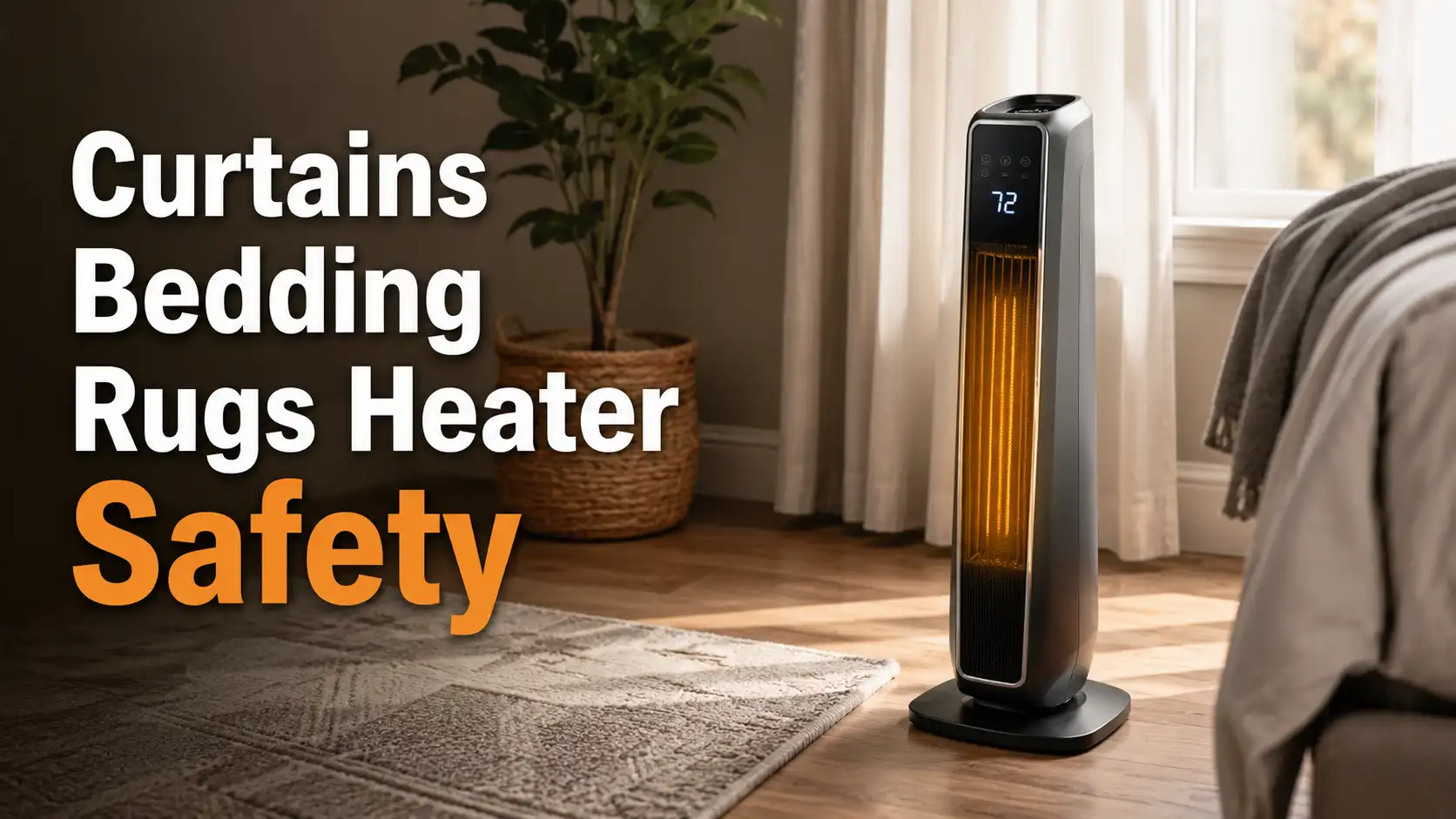


You are finally tucked into bed on a freezing winter night. The room is icy, so you reach over and click on your portable heater. You pull it close to the edge of your bed so the warmth hits you perfectly. Maybe your curtains are hanging just an inch above the unit, or you have placed the heater on a plush rug to keep the floor warm. It feels cozy now, but you are actually sitting in a high-risk zone.
Most home fires caused by portable heating start because the unit was placed too close to flammable items. Fabric, fluff, and fibers are the perfect fuel for a fire. When you are asleep or distracted, a small mistake in placement can lead to a disaster. This is why mastering Space Heater Safety for Curtains Bedding and Rugs is the most important skill for any homeowner this winter.
As an experienced reviewer of space heaters, I have seen how quickly things can go wrong. Real homes are not empty laboratories. They have laundry piles, flowing drapes, and thick carpets. Let’s look at how to navigate these common household items while staying warm and safe.
Paid link. As an Amazon Associate, we earn from qualifying purchases at no extra cost to you.
TL;DR
- To ensure maximum safety, always keep your space heater at least three feet away from curtains, bedding, and rugs.
- Keep a portable heater on a stable surface with about 3 feet (0.9 m) of clearance from bedding, curtains, furniture and other combustible materials.
- Plug portable electric heaters directly into a suitable wall outlet; stop using a heater if the plug, cord or outlet becomes unusually hot, damaged or discolored.
- Safety features reduce risk but do not replace correct placement, supervision and the manufacturer’s instructions.
Quick Answer: The 3-Foot Rule
To ensure maximum safety, always keep your space heater at least three feet away from curtains, bedding, and rugs. Use a hard, level, non-flammable surface for the base of the heater and ensure there is a clear “buffer zone” where no fabric can accidentally touch the hot grille or intake vents.

Why Fabric is a Major Fire Risk
To understand Space Heater Safety for Curtains Bedding and Rugs, you have to think about how heat interacts with fibers. Most curtains and bedsheets are made of thin materials like cotton or polyester. These materials do not need to touch an open flame to catch fire. They only need to reach a high enough temperature to ignite.
Space heaters produce intense, concentrated heat. If a curtain is sitting too close, the heat dries out the fibers. Over time, the material can begin to scorch or smolder. A sudden draft from a window can blow that curtain directly onto the heater grille, causing it to burst into flames in seconds. The same applies to bedding that might slide off your bed while you sleep.
1. Managing Curtains and Window Treatments
Windows are the coldest part of any room. It is natural to want to put your heater right under them. However, this is one of the most dangerous spots in the house if you have long drapes.
The Draft Factor
Even if you think your curtains are a safe distance away, a draft can change everything. When your heater is running, it creates rising air currents. This movement can pull nearby fabric toward the intake or the exhaust. Always secure your curtains or choose a heater location that is far away from any hanging fabric.
Choosing the Right Location
If your room is small, try to place the heater against an interior wall. This keeps it away from window treatments entirely. If you must place it near a window, ensure the curtains are tied back securely. Never let a heater sit directly below a window with flowing drapes.
2. Bedding Safety in the Bedroom
The bedroom is where the most accidents happen because people are asleep and cannot react to a problem. Space Heater Safety for Curtains Bedding and Rugs is vital for a peaceful night.
Bedspreads and Blankets
Bedding is often bulky and prone to moving. You might kick a blanket off the bed in your sleep. If your heater is tucked right next to the bed frame, that blanket could land right on top of it. This blocks the airflow, causes the unit to overheat, and can ignite the fabric.
The Proper Distance
Always keep your heater at least three feet away from the edge of your mattress. This “circle of safety” ensures that even if you move around in your sleep, your bedding stays clear of the heat. It also allows the air to circulate better, which actually helps the room stay warmer anyway.
3. The Problem with Rugs and Carpets
Many people want to put their heater on a rug to keep their toes warm. This is a bad idea for several reasons.

Stability Issues
Heaters need a flat, hard surface to stay upright. A plush rug is soft and uneven. This makes it much easier for a heater to tip over if a pet or a person bumps it. While most heaters have tip-over switches, they are not always 100% reliable on soft surfaces because the switch might get stuck in the carpet fibers. For related troubleshooting, see why does my space heater smell like plastic when new.
Trapped Heat
Rugs are insulators. If a heater sits on a thick rug, the heat can build up underneath the unit. This can damage the rug or cause the internal safety sensors of the heater to trip unnecessarily. Always use a hard surface like tile, wood, or a specialized fire-resistant heater mat.
4. Safety Considerations: Features that Protect You
When shopping for a unit, look for specific features that help manage the risks associated with Space Heater Safety for Curtains Bedding and Rugs.
Tip-Over Protection
This is a non-negotiable feature. If your dog catches a blanket on the heater and pulls it over, the unit must shut off instantly. This prevents the hot element from touching the floor or nearby fabric for more than a second.
Overheat Sensors
If a piece of clothing or bedding accidentally covers the intake vents, the internal temperature will spike. An overheat sensor detects this “thermal runaway” and kills the power before the plastic housing melts or a fire starts.
Cool-Touch Housings
Some heaters have double-walled plastic shells. This means the outside of the heater stays cool even when the inside is blazing hot. While this doesn’t mean you can put curtains on it, it provides an extra layer of protection if something briefly brushes against the side.
Practical Tips for Immediate Safety
- Plug Directly into the Wall: Never use an extension cord. They add to the clutter and can overheat under rugs.
- Keep it Level: If your floor is slightly slanted, use a level to ensure the heater is perfectly upright.
- Turn it Off When Leaving: If you leave the room for more than a minute, turn the heater off. Accidents happen fast.
- Use a Timer: Set your heater to turn off after an hour. This ensures it won’t run all night while you are in a deep sleep.
Common Mistakes to Avoid
A very common mistake is using a heater to dry damp clothes or mittens. Draping anything over a heater is the fastest way to start a fire. Another mistake is “hiding” the heater behind a sofa or chair to make the room look nicer. This blocks the airflow and creates a massive fire hazard.
Finally, don’t assume a “cool” looking heater is safe. Even if the outside feels fine, the air coming out of the grille is hot enough to scorch fabric. Always treat the front of the heater like an open flame.
Frequently Asked Questions
Can I put a space heater on a low-pile carpet?
It is not recommended. Even low-pile carpet can be flammable and can trap heat under the unit. It is always safer to place the heater on a hard, non-flammable surface or a dedicated fire-resistant mat.
Is 3 feet really enough distance for curtains?
Three feet is the minimum safety standard. If you have very light, flowing curtains that move easily with a breeze, you should probably give them even more space or tie them back securely.
What should I do if my heater tips over on a rug?
If your heater tips over, the safety switch should kill the power. Unplug the unit immediately. Check the rug for any signs of scorching or heat damage. Do not turn the heater back on until it has cooled completely.
Are some heaters safer for bedrooms than others?
Oil-filled radiators are often considered safer for bedrooms. They don’t have exposed glowing elements and they stay warm for a long time after being turned off. However, the three-foot rule still applies to them.
Can I use a space heater in a room with a lot of clutter?
No. Clutter is fuel for a fire. If your room is full of paper, clothes, or boxes, you must clear a large area before using a space heater. Safety requires a clear “buffer zone” around the unit.
Why does my heater smell like burning when it's near my rug?
This could be a sign that the rug is getting too hot or that dust from the carpet is being sucked into the heater. Move the heater to a hard surface immediately and check the intake vents for dust.
Is it safe to leave a heater on while I sleep if it's far from my bed?
No portable space heater should be treated as safe to leave running while you sleep or when it is unattended. CPSC recommends turning portable heaters off when sleeping, plugging electric heaters directly into a wall outlet, and keeping them at least three feet from bedding, curtains, furniture, and other combustible materials.


