
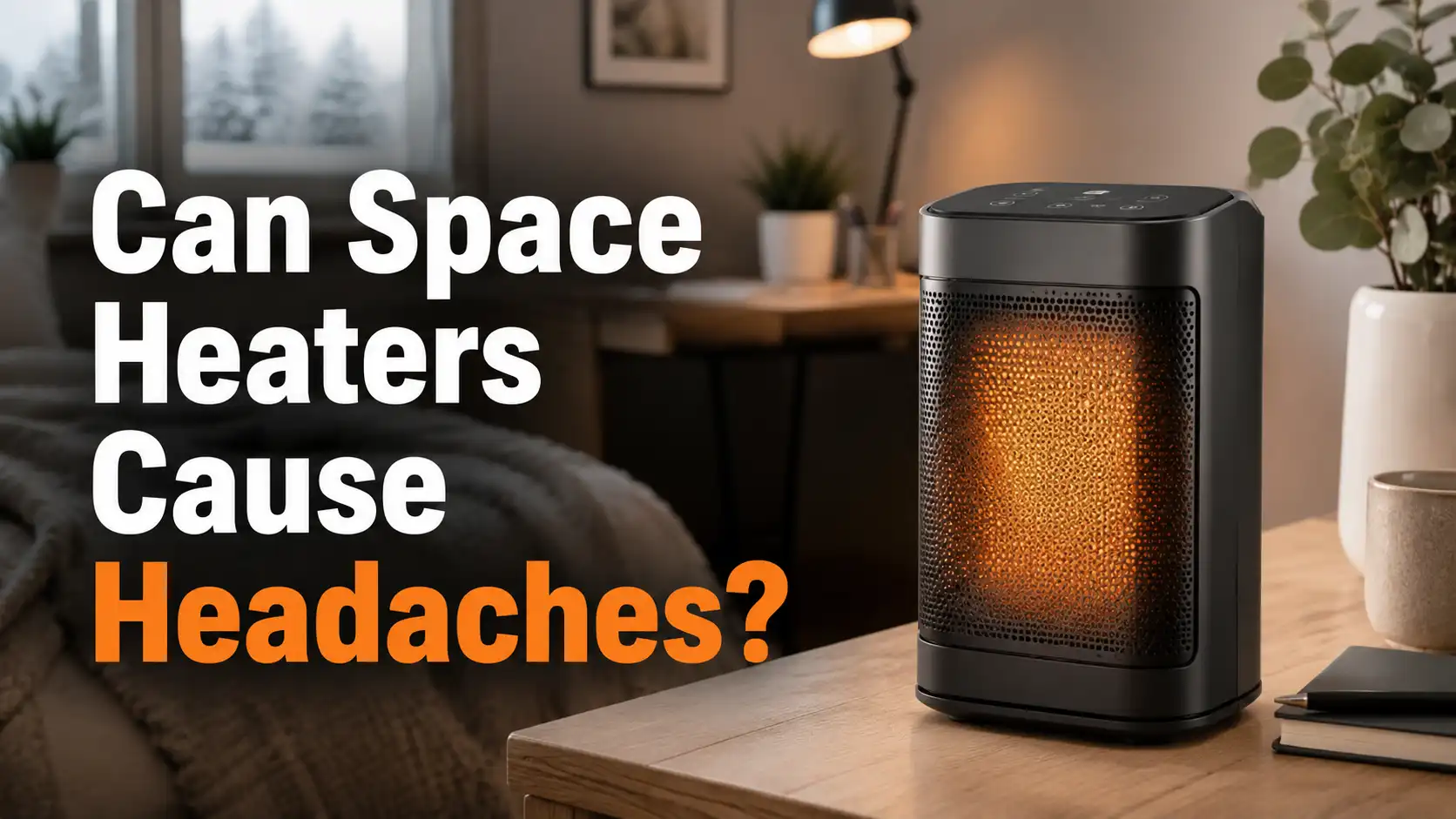


You wake up on a cold morning with a dull throb in your temples. Your throat feels like you swallowed a handful of sand. You look over at the portable heater humming away in the corner of your bedroom. It kept you warm all night, but now you feel worse than when you went to sleep.
This is a very common winter experience. Many people find that staying warm comes with a physical price. If you have ever wondered Can Space Heaters Cause Headaches or Sore Throat, you are not imagining things. These symptoms are real and usually tied to how the air in your room changes when the heat turns on.
As an experienced reviewer of home heating products, I have seen these complaints time and again. The good news is that these issues are rarely caused by the heater being “broken.” Instead, they are usually a result of dry air or poor ventilation. Let’s look at why your heater might be making you feel under the weather and how you can fix it.
Paid link. As an Amazon Associate, we earn from qualifying purchases at no extra cost to you.
TL;DR
- Space heaters can cause headaches or a sore throat by significantly lowering the humidity in a room and circulating dust or allergens.
- Match the heater to the room size, insulation and the kind of warmth you want instead of choosing by wattage alone.
- Prioritize appropriate safety features, stable placement, direct wall-outlet use and clear manufacturer instructions.
- Check the exact model specifications before purchase because features and retailer listings can change.
Quick Answer: Heating and Health
Space heaters can cause headaches or a sore throat by significantly lowering the humidity in a room and circulating dust or allergens. In rare and dangerous cases involving fuel-burning heaters, these symptoms can also be a sign of carbon monoxide buildup, though most electric models simply cause irritation through extreme air dryness.

How Space Heaters Affect Your Environment
To answer the question Can Space Heaters Cause Headaches or Sore Throat, we have to look at what happens to the air molecules in your room. Most heaters don’t actually “remove” water from the air, but they change the relative humidity.
The Problem of Dry Air
When you heat cold air, it expands. This makes the moisture in the room become much thinner. If you use a fan-forced ceramic heater, the air is pushed over red-hot coils. This can make the humidity drop below thirty percent very quickly.
Dry air is a thief. It steals moisture from your eyes, your nose, and your throat. When your throat dries out, it becomes irritated and scratchy. This is why you wake up with that classic “heater sore throat.”
Dust and Sinus Irritation
Heaters with fans are notorious for kicking up dust mites, pet dander, and pollen. These particles have been sitting on your floor or inside the heater vents all year. When the fan turns on, it sends these allergens right into your breathing zone. For many people, this leads to sinus pressure and a “sinus headache” that lasts all day.
Common Causes of Heater-Related Headaches
While dry air is the main culprit, there are several specific reasons why your heater might be triggering a headache.
1. Oxygen Depletion and Ventilation
In a small, sealed room, a heater can make the air feel “stuffy.” If you are in a tiny office with the door closed and the heater on high, the air can become stale. While electric heaters do not “burn” oxygen, the lack of fresh air circulation can cause a tension headache for many users.
2. Carbon Monoxide (Fuel-Burning Heaters Only)
This is the most serious concern. If you are using a propane or kerosene heater indoors without proper venting, you are at risk. Carbon monoxide is a colorless, odorless gas. A dull headache is often the first warning sign. If you use a fuel-burning unit, you must have a working detector in the room.
3. Noise Sensitivity
Some budget-friendly heaters have high-pitched fans or buzzing motors. While it sounds minor, sitting next to a constant “hum” for eight hours a day can cause significant mental fatigue. This often leads to a headache by the end of the workday.
4. Dehydration
It is a strange fact, but people often drink less water in the winter. When you add a space heater to the mix, you lose moisture through your skin and your breath more quickly. Dehydration is one of the most common causes of headaches. If your heater is on, you need to be drinking more water than usual. For closely related guidance, see our How to Use a Space Heater Without Drying Out Your Skin.
Why a Sore Throat Happens Every Morning
If you only feel the “sandpaper throat” when you wake up, your nighttime heating habits are likely to blame.
Mouth Breathing in Dry Air
When the air is very dry, your nose can become congested. This forces you to breathe through your mouth while you sleep. Without the natural filtration and humidification of your nose, the dry air hits your throat directly. This dries out the delicate tissues, leading to pain and inflammation by morning.
Burning Dust Particles
Have you ever noticed a “burnt” smell when you first turn on your heater? That is dust and hair burning off the heating elements. These microscopic particles can be very irritating to your respiratory tract. If you have sensitive lungs or allergies, this “burnt dust” air can cause a lingering sore throat.
Comparison Insights: Which Heaters are Best for Your Health?
If you are shopping for a new unit and want to avoid these issues, consider these options:
Infrared Heaters: These are excellent for people with allergies. They heat objects and people directly rather than blowing air around. They preserve much more of the room’s natural humidity.
Ceramic Fan Heaters: These are the most likely to cause dry eyes and throats because they move air quickly over very hot surfaces. If you use one, keep it on a low setting and far away from your face.
Oil-Filled Radiators: These are the “skin and throat friendly” choice. They are silent and don’t move dust. They are the best option for overnight use in a bedroom.

Real World Performance: What Users Report
Most people who experience these symptoms find relief almost immediately once they stop sitting directly in the “path” of the hot air. If the heater is blowing right at your face, your eyes and throat will suffer.
Users also report that “Eco” modes help. By cycling the heater on and off, the air has a chance to settle. This prevents the “extreme” dryness that happens when a heater runs on high for several hours without a break.
Buying Factors for Sensitive Users
When looking for a new heater, look for these features:
- Adjustable Thermostat: Being able to set a specific temperature prevents the room from getting too hot and dry.
- No-Fan Design: Look for radiant or natural convection units.
- Built-in Humidifier: Some high-end 2026 models now include a small water tank to help mist the air as they heat.
- Air Filtration: Look for units with washable dust filters to keep the air cleaner.
Practical Tips
- Hydrate Constantly: Drink a glass of water for every hour the heater is on.
- Nasal Saline Spray: Use a simple saline spray before bed to keep your nasal passages moist. This helps prevent mouth breathing.
- Check Your Detector: If you use any fuel-burning heater, check your carbon monoxide detector today.
- The 3-Foot Rule: Keep the heater three feet away. This isn’t just for fire safety; it prevents the most intense dry air from hitting your skin and throat.
Common Mistakes to Avoid
A common mistake is sleeping with a fan heater pointed directly at your head. This is a guaranteed way to wake up with a headache and a sore throat. Another mistake is never opening a window. Even in the winter, your home needs a “breath” of fresh air once a day to clear out stale CO2.
Finally, don’t ignore a persistent headache. While the heater is usually the cause, if you feel dizzy or nauseous, turn off the heater and get fresh air immediately. Safety always comes before warmth.
Conclusion
So, Can Space Heaters Cause Headaches or Sore Throat? Yes, they certainly can, but it doesn’t mean you have to be cold. Most of these health issues are caused by the environmental changes that come with artificial heat. Dry air and dust are the enemies, not the heater itself.
By switching to a radiant heater, using a humidifier, and staying hydrated, you can enjoy a cozy home without the morning-after misery. Trust your body’s signals. If you feel dry or tired, turn the heat down and let some fresh air in.
If you are ready to upgrade to a more health-conscious heating solution, check out our latest reviews on oil-filled and infrared models. We have tested the top units for 2026 to see which ones are the most “throat-friendly.” Stay warm, stay hydrated, and enjoy a comfortable winter.

Frequently Asked Questions
Can an electric heater cause carbon monoxide poisoning?
No. Electric heaters do not burn fuel, so they cannot produce carbon monoxide. If you have a headache from an electric heater, it is likely due to dry air, dehydration, or a lack of fresh air circulation.
Why does my throat hurt only in the morning?
This is usually because the humidity in your bedroom dropped overnight. The dry air causes your nasal passages to swell, making you breathe through your mouth. This dries out your throat tissues while you sleep.
Can a space heater cause a sinus infection?
A heater won’t cause an infection directly, but it can make one more likely. Dry air dries out the mucus in your sinuses. This makes it harder for your body to flush out bacteria and viruses, which can lead to an infection.
Is it safe to use a humidifier and a space heater together?
Yes, and it is highly recommended. Just make sure the humidifier is not blowing mist directly into the heater’s electrical components. Keep them a few feet apart for safety.
Do infrared heaters dry out your skin less?
Yes. Infrared heaters heat objects and people rather than the air itself. This helps maintain the natural moisture levels in the room much better than fan-forced ceramic heaters.
What should I do if my heater smells like it's burning?
Unplug it and clean the vents with compressed air or a vacuum. If the smell persists after cleaning, the internal wiring may be failing. In that case, you should replace the unit to avoid fire or health risks.
Can the "new heater" smell cause headaches?
Yes. New heaters often have a protective coating that burns off during the first few hours of use. This “off-gassing” can cause headaches or nausea. It is best to run a new heater in a garage or a room with open windows for two hours before using it normally.


