
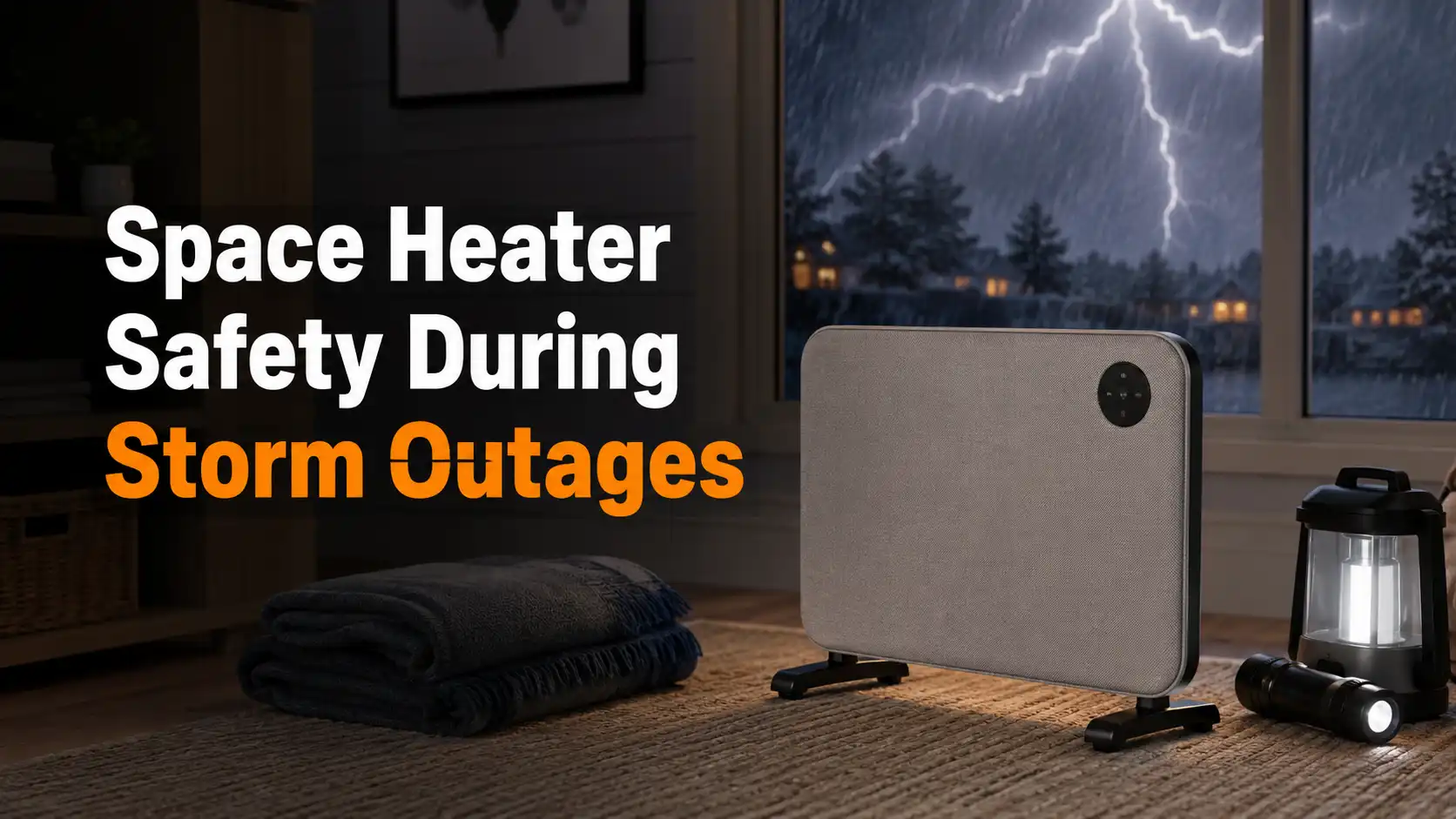
You are sitting in your living room when the lights suddenly flicker and go out. Outside, the wind is howling and snow is piling up against the door. Within minutes, the temperature in your house begins to drop. You reach for your emergency supplies and realize that staying warm is now a matter of safety, not just comfort.
During a winter storm, a power outage can turn a cozy home into a freezer very quickly. Many people turn to portable heating sources they rarely use. This is when accidents happen. If you are preparing for a blizzard, knowing Space Heater Safety Tips for Power Outages and Storms can save your life and your home from a devastating fire.
As an experienced reviewer of heating technology, I have seen how people react during emergencies. Stress often leads to small mistakes with big consequences. Let’s look at how to use your equipment safely when the grid goes down and what you need to know about alternative power sources.
Paid link. As an Amazon Associate, we earn from qualifying purchases at no extra cost to you.
TL;DR
- In a power outage, never use outdoor propane or kerosene heaters inside your home as they cause deadly carbon monoxide buildup.
- Keep a portable heater on a stable surface with about 3 feet (0.9 m) of clearance from bedding, curtains, furniture and other combustible materials.
- Plug portable electric heaters directly into a suitable wall outlet; stop using a heater if the plug, cord or outlet becomes unusually hot, damaged or discolored.
- Safety features reduce risk but do not replace correct placement, supervision and the manufacturer’s instructions.
Quick Answer: Emergency Heating Safety
In a power outage, never use outdoor propane or kerosene heaters inside your home as they cause deadly carbon monoxide buildup. Only use indoor-rated catalytic heaters or electric heaters powered by a correctly sized portable generator. Always maintain a three-foot clearance from all objects and ensure you have working battery-operated carbon monoxide detectors in every room.


The Danger of Desperation During Storms
To understand Space Heater Safety Tips for Power Outages and Storms, we have to look at why people take risks. When the temperature hits 40 degrees inside your bedroom, you might be tempted to bring the patio heater inside or use the gas oven for warmth. These are the most dangerous choices you can make.
Most indoor-rated electric heaters are useless during a power outage unless you have a generator. Without power, the “safety” moves from electrical concerns to ventilation concerns. If you are using any fuel-burning device, the risk is no longer just fire. It is the invisible threat of carbon monoxide (CO) poisoning.
1. Using Portable Generators with Electric Heaters
If you have a portable generator, you might think you can just plug in your standard electric tower heater. While this is possible, it requires a very specific setup to be safe.
Wattage Math is Critical
A standard electric space heater pulls 1,500 watts of power. Many small “tailgating” generators only produce 2,000 watts. If you plug in a heater and a refrigerator at the same time, you will overload the generator. This can damage the heater’s sensitive electronics or cause the generator to stall.
Extension Cord Safety
In a storm, you must never run a generator inside your house or garage. This means you will need an extension cord to bring power inside. Most cheap orange extension cords are not rated for 1,500 watts over long distances. They will get hot, melt, and potentially start a fire. Do not power a portable electric space heater through an extension cord as a workaround. Use a suitable direct connection recommended for the power source and follow the heater and generator manufacturer instructions.
2. Choosing the Right Emergency Fuel-Burning Heater
If you do not have a generator, you might choose a heater that runs on propane or kerosene. You must be extremely careful about the model you pick.
Indoor-Rated Catalytic Heaters
Some propane heaters are specifically labeled for indoor use. They use a catalytic pad to create heat without a flame. These units have an Oxygen Depletion Sensor (ODS). This sensor automatically shuts the heater off if the oxygen levels in the room drop too low. If a heater is not labeled “Indoor Safe,” do not bring it inside your home.
The Risks of Kerosene
Kerosene heaters provide massive amounts of heat, but they are very finicky. They require a specific type of clear 1-K kerosene. If you use the wrong fuel, the heater will produce thick black smoke and dangerous fumes. Always fill these units outside and never while they are hot.
4. Carbon Monoxide: The Invisible Killer
During a storm, people often seal their homes tight to keep the cold out. This is exactly when carbon monoxide becomes most deadly.
Ventilation is Non-Negotiable
If you are using a propane or kerosene heater, you must crack a window at least half an inch. It feels wrong to let cold air in, but you need that fresh oxygen to prevent CO buildup. Without ventilation, the heater will consume the oxygen you need to breathe.
Battery-Powered Detectors
Standard plug-in CO detectors will not work during a power outage. You must have battery-operated detectors. Place one in the room where you are using the heater and one in the area where people are sleeping. If the alarm sounds, get everyone outside immediately, even if it is snowing.
5. Safety Considerations: Fire Prevention
Storms make it harder for fire trucks to reach your house. This means you have to be your own fire marshal.
- Never Leave Heaters Unattended: If you are going to sleep, turn the heater off. Rely on heavy blankets and sleeping bags for warmth overnight.
- Stable Surfaces Only: Storms can cause houses to shake or vibrate. Ensure your heater is on a perfectly flat, hard surface. A heater on a plush rug or a wobbly table is a disaster waiting to happen.
- Check the Fuel: Only store extra propane or kerosene outside in a shed or garage. Never store fuel cans inside the room with a running heater.
6. Buying Factors for Emergency Heaters
If you are building an emergency kit, look for these features in a heater:
- Oxygen Depletion Sensor (ODS): Mandatory for any indoor propane unit.
- Tip-Over Switch: This should be a heavy-duty mechanical switch.
- Piezo Ignition: This allows you to start the heater without matches or electricity.
- BTU Range: Look for a unit that has a “Low” and “High” setting so you can conserve fuel.
Practical Tips for Storm Warmth
- Dress in Layers: Use wool and synthetic fabrics. This allows you to keep the heater on a lower, safer setting.
- Block the Drafts: Use towels or “door snakes” to stop cold air from coming under the door.
- Keep a Fire Extinguisher Nearby: Ensure it is rated for both electrical and liquid fuel fires (Class ABC).
- Conserve Fuel: Only run the heater for 20 minutes every hour to take the chill off. This stretches your fuel supply and reduces the risk of long-term fume buildup.
Common Mistakes to Avoid
A very common mistake is using a charcoal grill or a camping stove for indoor heat. These produce massive amounts of carbon monoxide and are never safe for indoor use. Another mistake is forgetting to clear snow away from your home’s exterior vents. If your furnace or water heater vents are blocked by snow, carbon monoxide can back up into your house.
Finally, do not sleep with a fuel-burning heater on. It is simply too risky. The air quality can change while you are unconscious, and you may not wake up to hear the alarm. Use the heater to get the room to 65 degrees, then shut it off and climb into your sleeping bags.
Frequently Asked Questions
Can I use a propane camp heater inside my house?
Only if it is specifically labeled “Indoor Safe” and has an Oxygen Depletion Sensor (ODS). Most camping heaters are meant for tents or well-ventilated outdoor areas. Always read the manual and the labels on the unit before bringing it inside.
How do I know if I have carbon monoxide poisoning?
The most common symptoms are a dull headache, dizziness, weakness, nausea, and confusion. If you or anyone in your family feels “flu-like” while using a heater during an outage, turn the heater off and get into fresh air immediately.
Is it safe to use a space heater with a portable power station?
Yes, but most power stations cannot handle a 1,500-watt load for very long. A standard power station might only run a heater for 30 to 60 minutes. They are better suited for low-wattage electric blankets or small 200-watt personal heaters.
Will my smoke detector alert me to carbon monoxide?
No. Smoke detectors and carbon monoxide detectors are two different things. Some “dual” units exist, but a standard smoke alarm will not detect CO gas. You must have a dedicated CO detector for fuel-burning heaters.
Can I use my gas stove to heat the kitchen?
No. Using a gas stove for heat is extremely dangerous. It creates a high risk of carbon monoxide poisoning and is also a major fire hazard. Stoves are designed for cooking, not for heating a room for hours at a time.
How much fuel should I keep for an emergency?
For a propane heater like a “Mr. Heater Buddy,” one 1-pound cylinder usually lasts about 3 to 6 hours on low. For a multi-day storm, it is best to have a 20-pound tank with a filter and a hose adapter stored safely outside.
Are kerosene heaters safer than propane?
Both have risks. Propane is “cleaner” but comes in pressurized tanks. Kerosene provides more heat but is more likely to produce odors and smoke if not maintained. The safest heater is always the one you are most familiar with and that is properly rated for indoor use.


