
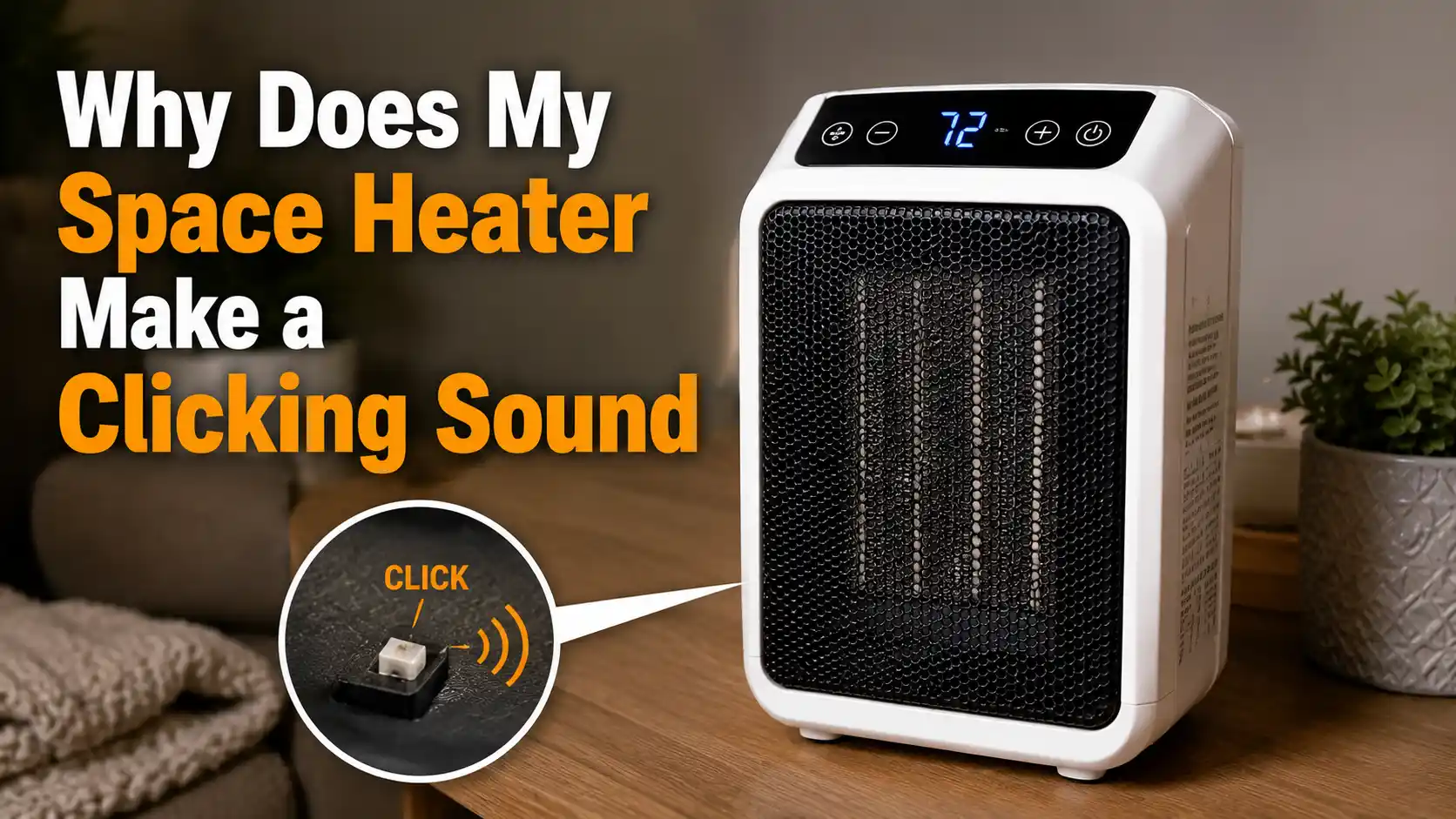


A space heater making a clicking sound is often normal. The thermostat or electrical relay can click as the heater cycles on and off, and metal parts can make light clicking, popping or crackling noises as they expand and contract with temperature changes.
What matters is the sound and what happens with it. A regular click during thermostat cycling is usually expected. Repeated electrical chatter, sizzling, sparks, a burning smell, a hot plug or a heater that stops producing heat needs closer attention.
Use the steps below to identify whether the clicking is normal thermal movement, a thermostat cycle, a tip-over switch or a sign that the heater should be unplugged.
Paid link. As an Amazon Associate, we earn from qualifying purchases at no extra cost to you.
TL;DR
- A space heater making a clicking sound is often normal. The thermostat or electrical relay can click as the heater cycles on and off, and metal parts can make light clicking, popping or crackling noises as they expand and contract with temperature changes.
- Light popping or crackling can come from normal expansion and contraction of heated parts.
- Clean blocked vents and place the heater on a stable, level surface before assuming an internal part has failed.
- Unplug the heater if clicking comes with sparks, smoke, persistent burning-plastic odor or an overheated cord, plug or outlet.
Why Is My Space Heater Making a Clicking or Crackling Sound?
A space heater usually clicks because the internal thermostat is turning the heating element on or off to maintain a set temperature. You may also hear clicking or popping sounds caused by the metal parts of the heater expanding and contracting as they heat up and cool down.

How It Works: The Thermostat Click
To understand why does my space heater make a clicking sound, you have to look at how it manages heat. Most modern heaters are not just “on” or “off.” They use a thermostat to monitor the air temperature in your room.
Inside the heater, there is a small component called a relay or a bimetallic strip. When the room reaches the temperature you set, this component physically moves to break the electrical circuit. This movement creates a distinct mechanical “click.”
When the room cools down, the component moves back to restart the heat. This creates another click. If your heater is clicking every few minutes, it usually just means the thermostat is doing its job perfectly. It is a sign that the machine is successfully regulating the temperature to save you energy.

Common Causes of Heater Clicking, Popping and Crackling
While the thermostat is the main reason, there are other physical things happening inside the housing.
1. Thermal Expansion and Contraction
Heaters are made of metal, plastic, and ceramic. These materials react to heat by expanding slightly. When the heater turns on, the metal fins or internal plates grow. When it turns off, they shrink.
As these parts move against each other, they can produce clicking, popping, or creaking sounds. This is very common in oil-filled radiators and older metal fan heaters. It is just like the “settling” sounds you might hear in an old house at night.
2. The Tip-Over Switch
Almost all heaters sold today have a safety tip-over switch. This is usually a small weighted ball or a physical plunger on the bottom of the unit. If you move the heater or bump it, you might hear this switch “click” as it shifts. This is a safety feature and is completely normal.
3. Fan Issues
If the clicking is fast and constant, like a playing card in bicycle spokes, the problem might be the fan. A stray piece of plastic or a buildup of dust can hit the fan blades as they spin. This is a mechanical issue that usually needs cleaning rather than a repair.
When a Clicking Heater May Be Unsafe
Knowing why does my space heater make a clicking sound helps you relax, but you should still watch for “red flag” noises.
- Sizzling or Cracking: If the noise sounds like frying bacon, it could be a sign of an electrical arc. This means a wire is loose or damaged.
- Loud Humming: A loud, vibrating hum often means the fan motor is failing. This can lead to the unit overheating.
- Rapid, Constant Clicking: If the heater clicks ten times in a row without turning on, the relay might be stuck or failing.
- Smell of Burning: Any noise accompanied by a plastic or chemical smell is a major warning. Unplug the unit immediately.
Real-World Performance: Oil-Filled vs. Ceramic
In my years of testing, I have noticed that different types of heaters make different noises.
Oil-Filled Radiators: These are the “loudest” when it comes to popping and clicking. The metal fins have a lot of surface area. As the oil gets hot, the metal makes distinct sounds. This is normal and expected for this technology.
Ceramic Fan Heaters: These are usually much quieter. You will mostly hear the thermostat click. If you hear a lot of popping in a ceramic unit, check to see if the intake vents are dusty.
Infrared Heaters: These are often the quietest. They don’t have many moving parts or large metal fins. If an infrared heater clicks loudly, it is almost always the thermostat relay.

Expert Tips for a Quieter Heater
If the clicking is driving you crazy, there are a few things you can do to minimize the noise.
- Lower the Temperature Setting: If your thermostat is set to 75 but the room is 74, the heater will cycle on and off constantly. Setting it a few degrees lower can reduce the frequency of the clicks.
- Ensure it is Level: A heater that is tilted can make the internal safety switches move around. Always use your heater on a flat, hard surface.
- Clean the Vents: Use a can of compressed air to blow out the dust. This helps the heater stay at a steady temperature, so the thermostat doesn’t have to work as hard.
- Check the Plug: Ensure the plug is pushed all the way into the wall. A loose connection can cause electrical fluctuations that make the relay behave strangely.
Safety Considerations
Safety is the most important part of any space heater review. If you ever feel like the clicking is abnormal, trust your instincts.
Always maintain a three-foot clearance around your heater. This isn’t just for fire safety. It ensures the heater gets enough airflow. Good airflow prevents the unit from getting too hot, which reduces the “popping” sounds from thermal expansion.
Never use an extension cord with a space heater. High wattage through a cheap cord can cause the heater’s internal components to struggle. This can lead to a failing relay and dangerous clicking sounds.
How to Troubleshoot a Clicking Space Heater
If you want to make sure your heater is safe, follow this quick checklist.
- Unplug and Inspect: Look at the cord and the plug for any signs of melting or discoloration.
- The Shake Test: Gently shake the heater while it is unplugged. You should hear the tip-over switch move. If you hear loose parts rattling, the unit is broken.
- Check for Dust: Look inside the grilles. If you see thick blankets of dust, clean them out.
- Observe the Cycle: Plug the heater back in and watch it. If it clicks and then the heat starts, everything is likely fine. If it clicks and nothing happens, the element may be burnt out.

If the heater is safe but the noise is distracting, see how to fix a noisy space heater. If you are replacing it, compare our best quiet space heaters and best space heaters under 0.
Frequently Asked Questions
Is it normal for an oil heater to pop?
Yes. Popping sounds in an oil-filled radiator are very common. It is caused by the metal fins expanding as the oil inside reaches high temperatures. It usually stops once the heater has been running for about twenty minutes.
Why is my heater clicking but not turning on?
If you hear a click but the fan or heat doesn’t start, the internal heating element might be burnt out. It could also mean the tip-over switch is stuck. Try moving the heater to a perfectly flat surface and restarting it.
Can a clicking heater cause a fire?
A normal thermostat click will not cause a fire. However, if the clicking is accompanied by sparks, a burning smell, or a hot power cord, you should stop using it immediately. These are signs of a dangerous electrical fault.
Why does my heater click when I move it?
That is the tip-over safety switch. It is a small part inside that moves when the heater is tilted. It is designed to cut the power instantly if the heater falls over. It is a sign that your safety features are working.
Do infrared heaters make clicking sounds?
Yes, but they are usually quieter. They still use a thermostat to cycle the heat, so you will hear a small click as the relay engages. Since they don’t have fans, the click might seem louder in a quiet room.
How do I stop the clicking noise?
You cannot completely stop the clicking in a heater with a thermostat. However, keeping the room at a steady temperature and ensuring the heater is clean can help the unit cycle less often.
Are digital heaters quieter than manual ones?
Generally, yes. Digital heaters use electronic relays that tend to have a softer click than the mechanical bimetallic strips found in cheaper manual models.


