
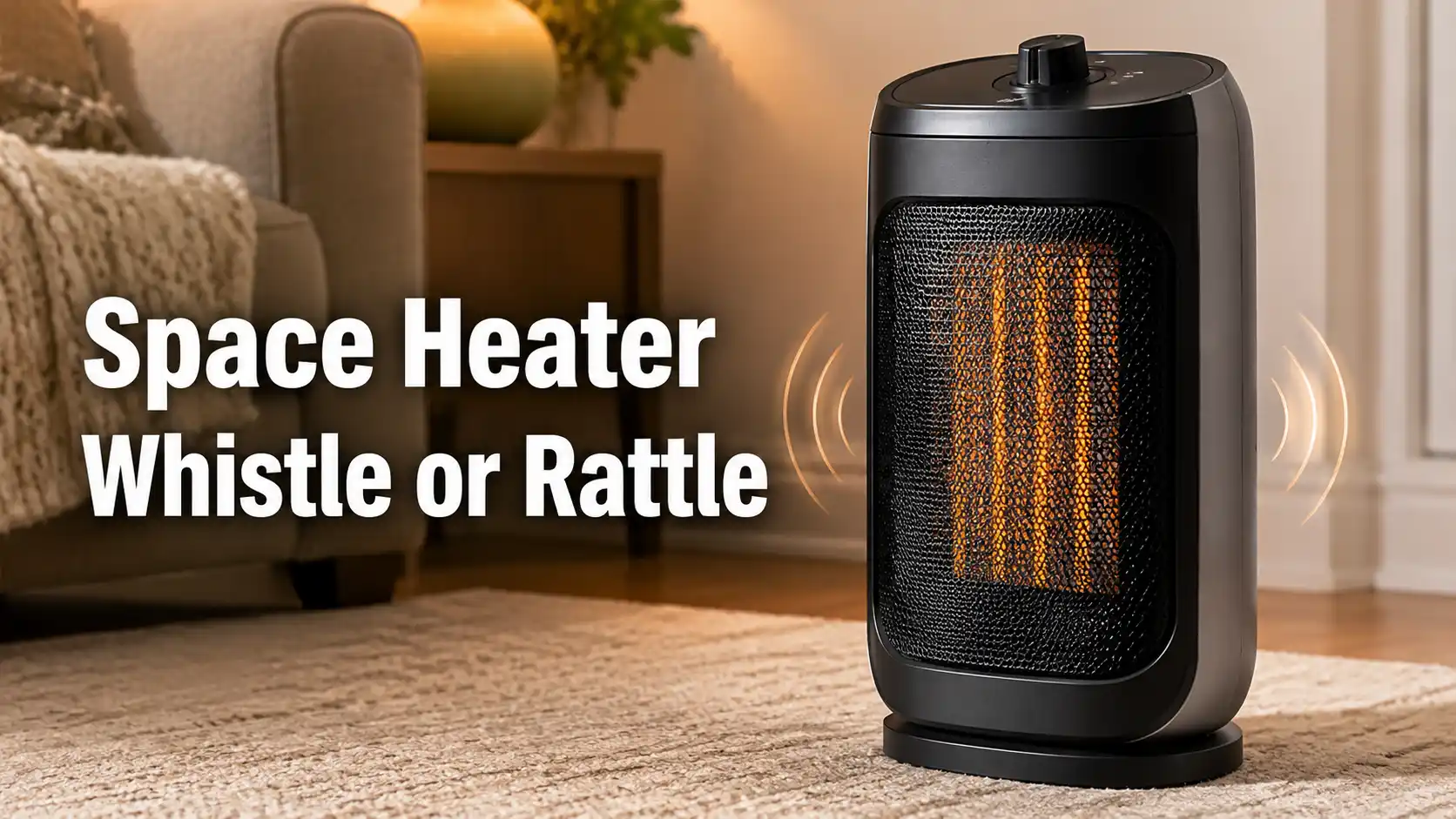


You are finally ready to relax in your cozy living room after a long day of work. You click on your portable heater to take the chill off the air. Just as you settle into your sofa, you hear a strange, high-pitched whistle coming from the unit. Or perhaps it is a steady, annoying rattle that sounds like a loose screw bouncing around inside.
Instead of enjoying the warmth, you are now staring at the heater with worry. You wonder if the motor is failing or if the device is becoming a fire hazard. It is a frustrating situation that thousands of homeowners face every winter. If you are asking why does my space heater whistle or rattle, you want to know if it is a simple fix or a sign that you need a new unit.
As an experienced reviewer of space heaters, I have spent years troubleshooting these noisy machines. Most of the time, these sounds are caused by air flow issues or loose parts that have shifted over time. Let’s look at the most common causes for these sounds and how you can get your peace and quiet back.
Paid link. As an Amazon Associate, we earn from qualifying purchases at no extra cost to you.
TL;DR
- A space heater usually whistles when dust or debris blocks the air intake, forcing air through a narrow gap.
- Start with the simple checks first: wall power, controls, thermostat setting, tip-over switch, overheat reset, blocked airflow and dust buildup.
- Unplug the heater before cleaning or inspecting it, and follow the model’s manual for reset or maintenance steps.
- Stop using the heater if you notice sparks, melting, a persistent electrical or burning-plastic smell, a damaged cord, an oil leak or an overheated plug/outlet.
Quick Answer: Space Heater Whistling and Rattling
A space heater usually whistles when dust or debris blocks the air intake, forcing air through a narrow gap. A rattling sound is typically caused by a loose fan blade, a vibrating internal component, or the heater sitting on an uneven surface. Most of these issues can be fixed by cleaning the vents or tightening the housing screws.

Common Causes for a Whistling Sound
Whistling is almost always an airflow problem. Think of it like a person whistling with their lips. You are hearing air moving through a tight space at high speed.
1. Clogged Air Intake
The most frequent reason for whistling is a buildup of dust or pet hair on the back of the heater. When the intake is clogged, the fan has to work much harder to pull in air. This creates a vacuum effect that produces a high-pitched whistling or “whooshing” sound.
2. Obstructions in the Grille
Sometimes, a small object can get stuck in the front grille of the heater. It could be a piece of lint, a stray thread, or even a tiny bit of plastic. As the hot air blasts out, it vibrates against this object. This vibration creates a whistle that can be very piercing in a quiet room.
3. Internal Air Leaks
Over time, the seals inside a cheap plastic heater can begin to warp from the heat. If air escapes through a tiny crack in the internal housing rather than through the main vent, it will whistle. This is often a sign of a lower-quality build or an aging unit.
Common Causes for a Rattling Sound
A rattle is usually a mechanical issue. It means something that should be still is moving, or something that should be moving is hitting something else.
1. Loose Fan Blades
Most portable heaters use a small fan to push air across the heating elements. If the fan becomes unbalanced or the screw holding it to the motor loosens, it will wobble. This wobble creates a rhythmic rattling or clicking sound that usually gets louder as the fan speeds up.
2. Vibrating Housing
The outer shell of a space heater is often held together by a few small screws. As the heater runs, the motor creates a natural vibration. If the screws are loose, the plastic panels will vibrate against each other. This creates a persistent rattle that can often be stopped just by pressing your hand against the side of the unit.
3. Uneven Surfaces
This is the simplest cause. If your heater is sitting on a hard floor that isn’t perfectly level, the vibration of the motor will cause the base to “chatter” against the floor. This can sound like a loud rattle coming from inside the unit when it is actually just a placement issue.
When to Worry: Dangerous Noises
Knowing why does my space heater whistle or rattle helps you stay calm, but some noises are genuine red flags. You should turn off and unplug your unit immediately if you hear any of the following.
- Grinding or Screeching: This usually means the motor bearings have failed. A failing motor can overheat and start a fire.
- Sizzling or Popping: These are electrical sounds. They mean a wire is loose or electricity is jumping across a gap.
- Loud Bangs: A loud bang followed by the heater shutting off usually means a capacitor has blown or a heating element has snapped.
- Buzzing Accompanied by Smell: If the rattle comes with a scent of burning plastic, the motor or wiring is likely melting.
Step-by-Step Guidance: How to Fix the Noise
Before you throw your heater in the trash, follow these steps to see if you can silence the whistle or rattle.
Step 1: The Stability Test
Move the heater to a different surface. If you were using it on a hardwood floor, try a different spot or place it on a very thin, firm mat. If the rattle stops, you simply had a balance problem.
Step 2: Deep Cleaning
Unplug the heater and wait for it to cool completely. Use a vacuum with a brush attachment to clean the intake vents on the back. Then, use a can of compressed air to blow out any dust from the front grille. This is the most common fix for a whistling heater.
Step 3: Tighten the Screws
Check the outer housing of the heater. If you see visible screws, use a screwdriver to ensure they are snug. Do not over-tighten them, as you don’t want to crack the plastic. Often, a half-turn on a single screw can stop a rattling panel.
Step 4: Check for Loose Parts
While the unit is unplugged, gently shake it. If you hear something large sliding around inside, a component like a safety tip-over switch or a wire clip may have broken off. If you are not an electrician, it is usually safer to replace the unit at this point rather than opening it up.
Comparison Insights: Which Heaters are Quietest?
If you are sensitive to noise, the type of heater you buy matters. Some designs are much less likely to whistle or rattle than others.
Oil-Filled Radiators: These are almost always the quietest. They have no fans and no moving parts. They might click or pop as the metal expands, but they never whistle or rattle.
Infrared Heaters: Many infrared units use a silent radiant system. However, some have small fans. These are usually much quieter than ceramic fan heaters and have a lower pitch.
Ceramic Fan Heaters: These are the most common and the most prone to noise. Because they rely on high-speed air and moving fans, they are the most likely to develop a whistle or rattle over time.

Safety Considerations
Safety is the most important part of any heater review. A noisy heater can be an annoyance, but a neglected heater is a hazard.
Always follow the three-foot rule. Keep your heater three feet away from curtains, bedding, and furniture. A whistling heater that is working harder due to a clog will run hotter than normal. This increases the risk of the unit triggering its overheat protection or, in extreme cases, starting a fire.
Never use a heater with a frayed cord or a hot plug. If the rattling is accompanied by flickering lights in the room, you are pulling too much power from your circuit. This is an electrical issue that no amount of cleaning will fix.
Buying Factors for a Quiet Home
If you are shopping for a new unit and want to avoid the why does my space heater whistle or rattle headache, look for these features.
- Brushless Motors: These fans are much quieter and last longer than standard motors. They are less likely to develop a rattle.
- Solid Housing: Look for heaters that feel sturdy. If the plastic feels thin and “creaky” in the store, it will definitely rattle once the heat starts moving.
- Digital Thermostats: Heaters that cycle on and off smoothly are less likely to experience the vibrations that lead to loose screws.
- No-Fan Designs: If you want total silence, an oil-filled radiator is your only real choice.


Frequently Asked Questions
Can a whistling space heater explode?
No, a whistling heater will not explode. Whistling is simply a sign of restricted airflow. However, it can cause the heater to overheat, which might trigger the safety shut-off or, in very rare cases, melt the plastic components.
Is it normal for a new heater to rattle?
A small amount of “clicking” is normal as the plastic expands. However, a loud rattle in a brand-new unit is usually a sign of a manufacturing defect or damage during shipping. You should return it for a replacement.
How do I stop my oil heater from rattling?
Oil heaters don’t have fans, so they shouldn’t rattle. If you hear a noise, check the wheels or the base. Often, a loose wheel is vibrating against the floor. Tighten the bolts on the wheel assembly to fix it.
Why does my heater whistle only on the high setting?
On high settings, the fan spins faster and draws in more air. If there is a slight blockage in the intake, it might only be audible when the air is moving at its maximum speed. Cleaning the vents usually solves this.
Can dust cause a rattling sound?
Usually, dust causes whistling. However, if a large “dust bunny” gets caught in the fan blades, it can unbalance the fan and cause a light rattling or thumping sound.
Should I take my heater apart to fix a rattle?
Unless you are a trained technician, you should not open the housing of a space heater. Doing so voids the warranty and puts you at risk of electrical shock. Stick to external cleaning and tightening external screws.
Do all fan heaters eventually get noisy?
Over time, all mechanical fans experience some wear. However, high-quality heaters with brushless motors and sturdy cabinets can stay quiet for many years if they are kept clean and free of dust.


