
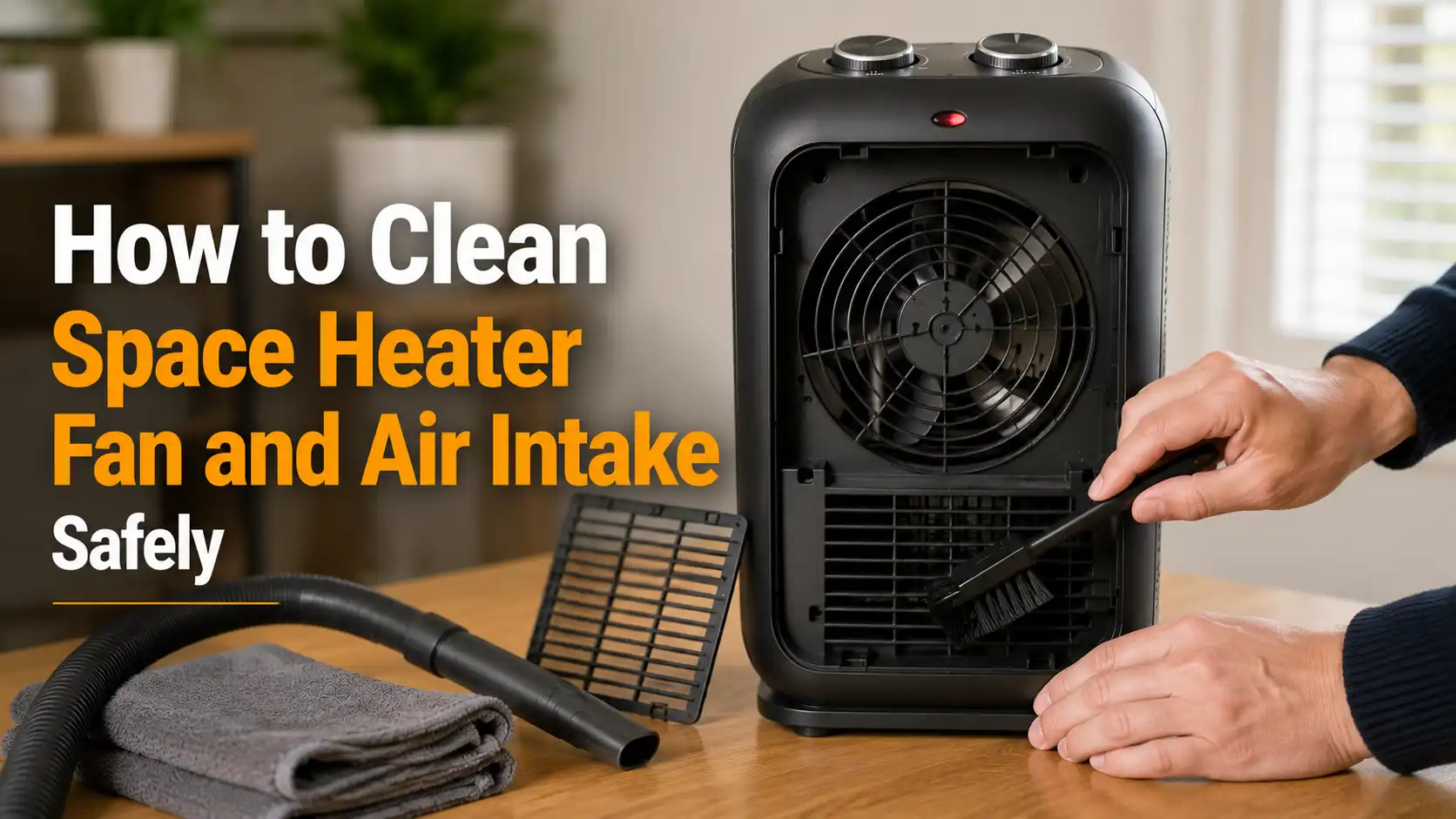


You are finally ready to relax on a freezing winter evening. You reach for your portable heater and click it on. Instead of a fresh wave of warmth, you notice a strange, burnt smell. You look closer and see thick blankets of dust clinging to the back grille. The fan sounds like it is struggling to breathe.
This is a common frustration for every homeowner. We rely on these devices to stay cozy, but we often forget they are like giant vacuum cleaners for dust and pet hair. If you have been wondering how to clean space heater fan and air intake safely, you are taking a vital step toward protecting your home and your health.
As an experienced reviewer of space heaters, I have seen many units fail simply because they were never cleaned. A dirty heater is not just inefficient. It can become a serious fire hazard. Let’s look at how to give your unit a deep clean without damaging the internal parts or putting yourself at risk.
Paid link. As an Amazon Associate, we earn from qualifying purchases at no extra cost to you.
TL;DR
- To clean a space heater safely, first unplug the unit and let it cool completely. Use a vacuum with a brush attachment to remove loose dust from the air intake and outer grilles.
- Keep a portable heater on a stable surface with about 3 feet (0.9 m) of clearance from bedding, curtains, furniture and other combustible materials.
- Plug portable electric heaters directly into a suitable wall outlet; stop using a heater if the plug, cord or outlet becomes unusually hot, damaged or discolored.
- Safety features reduce risk but do not replace correct placement, supervision and the manufacturer’s instructions.
Quick Answer: Cleaning Your Heater
To clean a space heater safely, first unplug the unit and let it cool completely. Use a vacuum with a brush attachment to remove loose dust from the air intake and outer grilles. For the internal fan blades, use a can of compressed air to blow out debris through the vents rather than opening the heater housing.

Why Cleaning Matters for Performance
To understand how to clean space heater fan and air intake safely, you have to look at how these machines move energy. Most portable heaters use a fan to pull cold air across a heating element. This air then blasts out into your room.
When the air intake is clogged with dust, the motor has to work twice as hard. This creates extra heat inside the machine that can damage the internal wiring. Dust also acts as an insulator. It traps the heat on the coils instead of letting it escape into the room. This makes your heater run longer and work harder, which spikes your electric bill.
Even worse, that “burnt dust” smell is actually microscopic particles of hair and lint reaching high temperatures. For people with allergies or asthma, breathing in this parched, dusty air can cause respiratory irritation. Regular cleaning ensures your air stays fresh and your heater stays efficient.
Step-by-Step Guidance: The Cleaning Process
You do not need to be a professional electrician to maintain your heater. You just need the right tools and a little bit of patience. Follow these steps to ensure you do it correctly.
1. The Safety First Rule
Never clean your heater while it is plugged in. This sounds obvious, but it is the most important rule. Even if the unit is “off,” electricity is still present at the circuit board. Unplug it and wait at least 30 minutes. This gives the heating elements time to cool so you don’t burn yourself or melt your vacuum attachments.
2. Vacuum the Air Intake
The air intake is usually located at the back or the sides of the heater. This is where the most dust accumulates. Use a vacuum with a soft brush attachment. Gently run the brush over the intake grilles. Move the brush in the direction of the slots to pull out the most debris. Do not push hard, as you don’t want to bend the plastic or metal mesh.
3. Clear the Exhaust Grille
Now move to the front of the heater. Dust often settles on the front vents when the heater is not in use. Vacuum this area thoroughly. If you see stubborn clumps of dust inside the grille, do not use a screwdriver or a knife to poke them. You could damage the delicate ceramic plates or wire coils inside.
4. Using Compressed Air for the Fan
This is the “pro secret” for how to clean space heater fan and air intake safely. Since you should not open the heater housing, you need a way to reach the fan blades. Use a can of compressed air. Point the straw into the vents and give it short, sharp bursts of air.
5. Wipe Down the Exterior
Finally, use a damp (not dripping) microfiber cloth to wipe the outer plastic or metal shell. This removes the “film” of dust that a vacuum might miss. Do not use cleaning sprays or chemicals. These can leave a residue that will smell terrible and potentially catch fire the next time you turn the heater on. If this symptom or maintenance issue applies, How to Remove Dust Smell from a Space Heater covers the likely causes and safe checks.
Common Causes of Dust Buildup
Understanding why your heater gets dirty can help you prevent it. If you find yourself cleaning your unit every week, you might have one of these common household issues.
Pets and Fur
If you have a dog or a cat, your space heater is a magnet for fur. The intake suction pulls in floating hair very easily. If your pet likes to sleep near the heater, the buildup will be much faster. You may need to clean your unit twice as often during the shedding season.
Placement on Carpets
Placing a heater directly on a plush rug or carpet is a mistake. Carpets hold a massive amount of dust and fibers. Every time the fan turns on, it pulls those fibers directly from the rug into the intake. Always place your heater on a hard surface like tile or wood for the cleanest operation.
Off-Season Storage
Many people leave their heaters sitting out all summer without a cover. Dust settles deep into the motor and the coils during these months. When you turn it on in the winter, you get a “dust bomb” in your room. Always store your heater in a plastic bag or its original box during the warmer months.
Safety Considerations During Maintenance
While learning how to clean space heater fan and air intake safely, you must respect the dangers of the device.
- Never Open the Housing: Most heaters are held together by special “tamper-proof” screws. This is for a reason. Inside are high-voltage capacitors that can hold a charge even when the unit is unplugged. Stick to external cleaning.
- Avoid Wet Cleaning Internal Parts: Never spray water or cleaners into the vents. If moisture gets onto the heating elements or the circuit board, the unit will short circuit and could cause a fire.
- Inspect the Cord: While you are cleaning, take a moment to look at the power cord. If it looks frayed or if the prongs are discolored, cleaning won’t help. The unit is dangerous and should be replaced.
Buying Factors: Why Easy-to-Clean Designs Matter
If you are shopping for a new unit and want to avoid the how to clean space heater fan and air intake safely headache, look for these design features.
- Removable Grilles: Some modern heaters have a front or back grille that snaps off easily for cleaning. This is a massive time-saver.
- Washable Filters: Heaters with built-in air filters keep the internal parts much cleaner. You just wash the filter instead of trying to blow air into the motor.
- Tower Designs: Tall tower heaters often have their intake vents higher off the ground, which pulls in less floor dust and pet hair.
- Oil-Filled Radiators: If you hate cleaning fans, buy a radiator. They have no fans and no moving parts. You just wipe down the fins once a year.

Conclusion
Now that you know how to clean space heater fan and air intake safely, you can keep your home warm and your family safe. It is a simple task that pays for itself in lower energy bills and a longer life for your heater. A little bit of maintenance goes a long way in preventing fires and improving air quality.
Remember that your safety is the priority. If your heater looks like it is falling apart or if the cleaning doesn’t stop the “burnt” smell, it is time to invest in a new unit. Portable heaters are affordable, but your peace of mind is priceless.
Check out our latest reviews to find the easiest-to-clean heaters for the 2026 season. We have tested the top models to see which ones have the best filters and most accessible vents. Stay warm, stay smart, and enjoy a cozy, dust-free winter.

Frequently Asked Questions
Can I use water to clean my space heater?
You can use a slightly damp cloth on the exterior plastic housing only. Never get water inside the vents, on the heating elements, or on the fan motor. This creates a high risk of electric shock and fire.
How often should I clean my space heater?
If you use it daily, you should vacuum the air intake at least once a month. If you have pets that shed a lot, you should check for fur buildup every two weeks to ensure the unit stays efficient.
My heater still smells like burning after I cleaned it. Why?
There might be dust trapped deep inside the ceramic plates or the motor that the vacuum couldn’t reach. Try using a can of compressed air for a deeper clean. If the smell persists, there may be an electrical fault inside.
Is it safe to use a hairdryer to blow out dust?
A hairdryer is not recommended. It doesn’t have a focused enough stream of air to dislodge deep dust. It also might not be powerful enough to move the fan blades. Use a dedicated can of compressed air instead.
Can I open the heater to clean the fan?
No. Opening a space heater voids the warranty and is dangerous due to internal electrical charges. You should be able to clean the fan blades effectively using compressed air through the existing vents.
What happens if I don't clean my space heater?
A dirty heater will run hotter, use more electricity, and eventually trigger the overheat protection sensor. Over time, the dust can ignite, leading to a fire. It also puts more strain on the motor, leading to an early failure.
Do infrared heaters need cleaning?
Yes. While many infrared heaters don’t have large fans, they still have air intakes to cool the internal electronics. These grilles can get clogged with dust just like any other heater and should be vacuumed regularly.


