
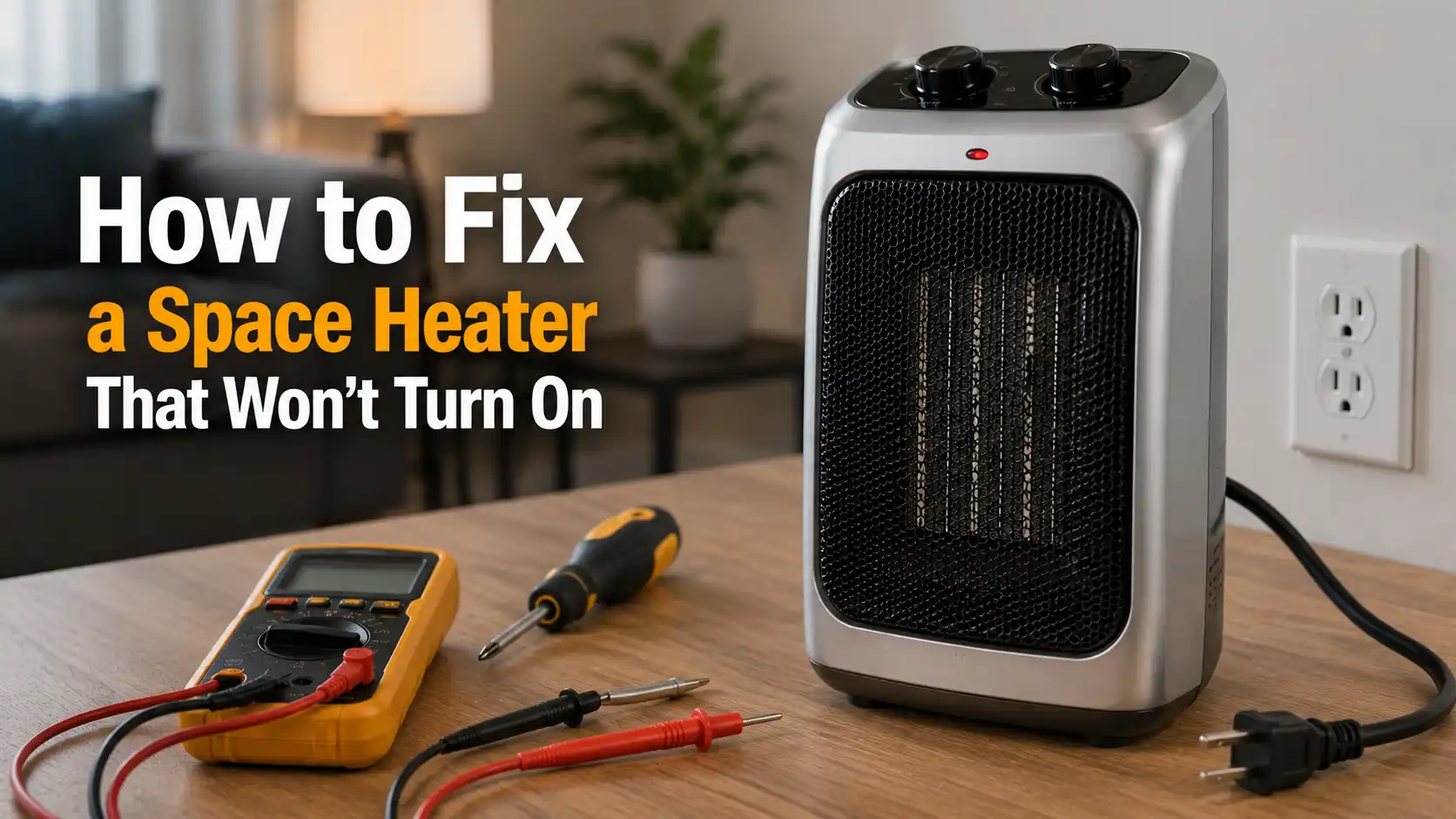


If your space heater won’t turn on, start with the power source and the heater’s built-in safety switches before assuming the unit is broken. A dead heater is often caused by a tripped breaker, a thermostat setting, an overheat shutdown or a tip-over switch that is not fully engaged.
Plug the heater directly into a known working wall outlet, place it upright on a firm level surface, set the thermostat above room temperature and check the manual for the correct reset procedure. Many portable heaters reset after they are unplugged and allowed to cool.
This troubleshooting guide covers the common reasons an electric or portable heater will not turn on and the warning signs that mean you should stop troubleshooting and replace or service the unit.
Paid link. As an Amazon Associate, we earn from qualifying purchases at no extra cost to you.
TL;DR
- If your space heater won't turn on, start with the power source and the heater’s built-in safety switches before assuming the unit is broken.
- Make sure the heater is upright on a firm level surface so the tip-over switch is engaged.
- If overheat protection tripped, unplug the heater, let it cool and follow the manufacturer’s reset instructions before restarting it.
- Do not open or bypass safety devices on a portable heater; stop using it if the cord, plug, outlet or casing is damaged or overheated.
Why Won’t My Space Heater Turn On?
To fix a space heater that will not turn on, first check that it is plugged directly into a working wall outlet and not a power strip. Ensure the unit is on a flat, hard surface to engage the tip-over safety switch. Finally, try resetting the internal sensors by unplugging the heater for 30 minutes to clear any overheat protection errors.

Common Reasons a Space Heater Will Not Turn On
To understand how to fix a space heater that wont turn on, you have to look at the “safety logic” inside the machine. Most modern heaters are designed to shut down at the first sign of trouble.
1. The Tip-Over Switch is Disengaged
This is the number one cause of “broken” heaters. Almost all portable heaters have a small button or plunger on the bottom. If the heater is tilted or placed on a thick, plush rug, this button isn’t pressed down. The heater thinks it has fallen over and will refuse to start.
2. Tripped Overheat Protection
If your heater was running and suddenly stopped, it likely got too hot. Dust buildup or blocked vents can trigger a thermal safety switch. This switch cuts the power to prevent a fire. Many heaters require a “hard reset” before they will allow the heating elements to start again.
3. Blown Fuses or Circuit Breakers
Space heaters pull a massive amount of electricity. They usually run at 1,500 watts, which is the limit for most home circuits. if you have a lamp or a TV on the same line, you might have tripped the breaker in your main electrical panel without realizing it.
4. Faulty Power Strips and Extension Cords
Heaters should never be plugged into power strips. These strips are not built to handle the constant, high-draw load of a heater. The strip might look like it is on, but its internal fuse could be blown, or it might be intentionally restricting power to prevent melting.
How to Fix a Space Heater That Won’t Turn On
Follow this checklist in order. We will start with the easiest fixes and move toward more technical issues.
Step 1: Verify the Power Source
Unplug the heater and plug a lamp into the same outlet. If the lamp doesn’t turn on, you have a tripped breaker. Go to your electrical panel and look for a switch that is out of line. Flip it all the way off and then back on. For related safety guidance, read our guide on how to reset a space heater safely.
Step 2: The Hard Surface Test
Move your heater to a kitchen tile or a hardwood floor. If you were using it on a carpet, the tip-over switch might have been the culprit. Once on a hard surface, try the power button again. You should hear a small “click” from the bottom of the unit when the switch is pressed.
Step 3: Perform a System Reset
Unplug the heater from the wall. Leave it alone for at least 30 minutes. This allows the internal “thermal fuse” or safety sensors to cool down and reset. Many digital heaters will not restart until this cooling period has passed.
Step 4: Check the Thermostat Settings
On digital heaters, the unit will not turn on if the “target” temperature is lower than the current room temperature. If your room is 70 degrees and the heater is set to 68, it will stay in standby mode. Turn the thermostat up to 80 degrees to see if the heating element kicks in.

Step 5: Clean the Air Intake
If you see thick blankets of dust on the back of the heater, use a vacuum with a brush attachment to clear it. A clogged intake prevents the fan from cooling the internal parts. If the internal sensor feels too much heat, it will prevent the unit from starting as a safety precaution.
Safety Considerations: When to Stop
Knowing how to fix a space heater that wont turn on also means knowing when a heater is dangerous. You should stop troubleshooting and replace the unit if you see any of the following:
- Melted Plastic: If any part of the housing looks warped or discolored.
- Burnt Smell: A sharp, chemical smell that doesn’t go away after cleaning.
- Frayed Cords: Any visible wires or cracks in the power cord.
- Hot Plug: If the prongs of the plug are hot to the touch or look charred.
- Internal Rattling: If you hear loose parts sliding around inside the unit.
When to Stop Troubleshooting and Replace the Heater
If you have followed every step and the heater is still dead, it is time to shop for a new one. Repairing a $50 space heater is rarely worth the cost. Professional repair shops will often charge more than the price of a new unit.
When buying a replacement, look for these features to avoid future headaches:
- Top-Mounted Controls: These are less likely to get dusty and fail.
- Washable Filters: These keep the internal sensors clean and prevent overheat trips.
- Heavy-Duty Cords: Look for “14-gauge” or thicker wiring for better durability.
- Resettable Thermal Switches: Some high-end models have a physical reset button you can press if the unit overheats.
If the heater fails these checks and replacement makes more sense, compare our best space heaters under 0 or best budget space heaters under .
Frequently Asked Questions
Why did my heater stop working suddenly?
The most common reason is an overheat trip. If the internal temperature gets too high, the safety sensor cuts the power. This can happen because of dust, a blocked vent, or the heater being too close to a sofa.
How do I reset my space heater?
To reset most heaters, unplug the unit from the wall outlet. Wait at least 30 minutes for the internal components to cool. This allows the safety sensors to clear. Plug it back in directly to a wall outlet and try the power button.
Can a blown fuse inside the heater be fixed?
Some heaters have an internal fuse that can be replaced by a professional. However, for most portable units, this fuse is “thermal” and permanent. If it blows, the unit is designed to be replaced for safety reasons.
Why is my heater's power light blinking but it won't heat?
A blinking light usually indicates an “error code.” It often means the tip-over switch is not fully pressed or the thermostat thinks the room is already warm enough. Check the surface level and your temperature settings.
Will a space heater work on an extension cord?
It is not recommended. Most extension cords cannot handle the 15-amp draw of a heater. This causes a “voltage drop,” which can prevent the heater’s motor from starting or cause the cord to melt.
Is it worth repairing an old space heater?
Generally, no. The cost of parts and labor for a portable heater often exceeds the cost of a brand-new, safer model. Modern heaters also have better safety features than units made ten years ago.
What should I do if my outlet is charred?
If the wall outlet looks black or melted, stop using it immediately. Do not try to fix the heater. You need to call a licensed electrician to replace the outlet and check the wiring in your wall.


