
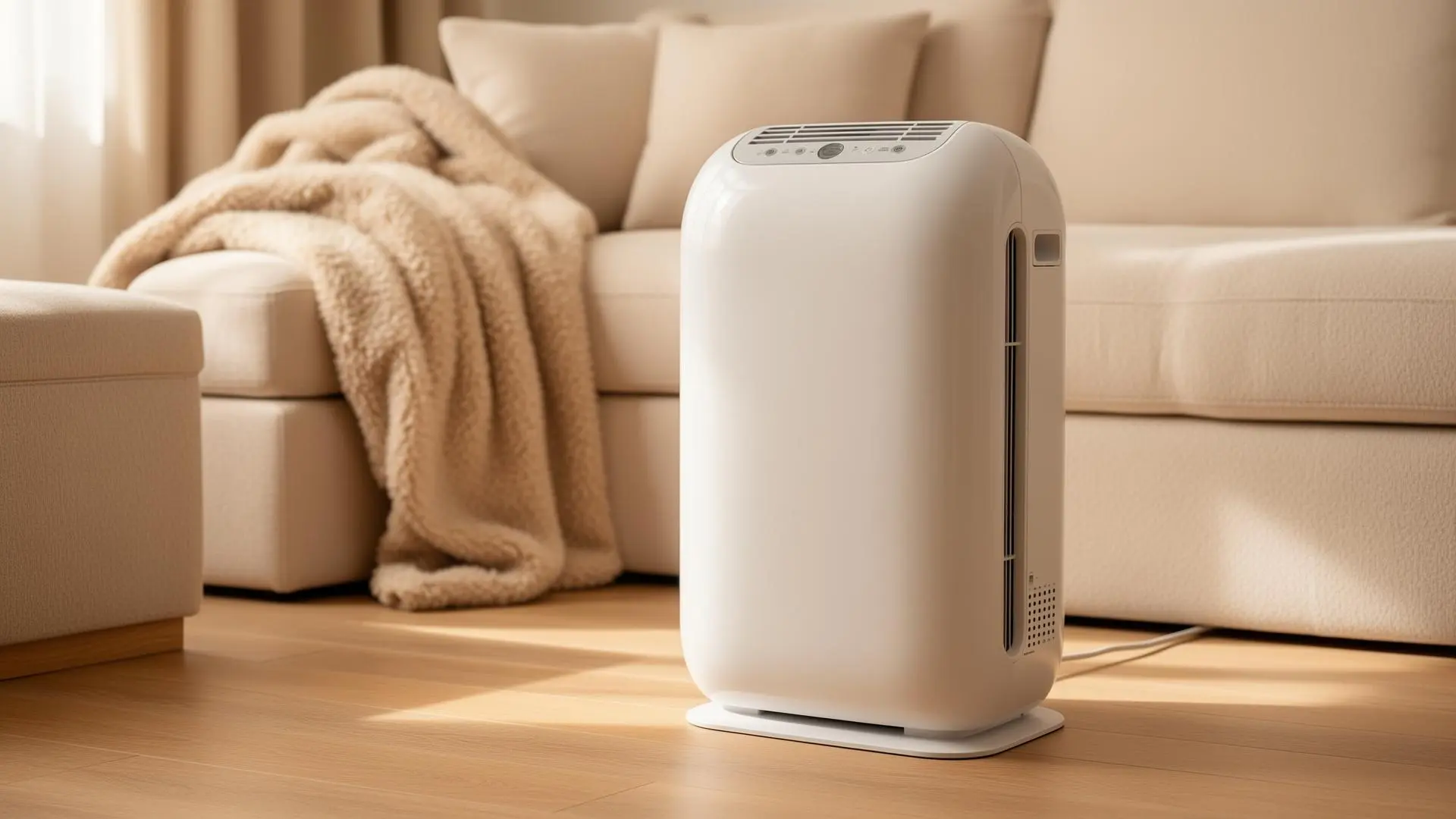

Dreo Whole-Room Heater 714 vs 715: these two 1500W models share Dreo’s 3D oscillating design, 34 dB claimed low-noise operation, 41–95°F thermostat range and multi-layer safety system. The important difference is coverage behavior: Dreo documents wider 90° horizontal and 60° vertical oscillation for the 714, versus 70° horizontal and 45° vertical on the 715.
That makes the 714 the stronger choice for reaching more of a larger room, while the 715 makes sense if you want the same compact whole-room concept with slightly narrower movement. Both are more advanced than a basic left-right tower heater because the airflow can move vertically as well as horizontally.
Affiliate disclosure: This post contains affiliate links. We may earn a commission if you buy through them. As an Amazon Associate we earn from qualifying purchases.

Quick Verdict
Choose the Whole-Room Heater 714 for the widest oscillation pattern and the best chance of pushing heat into more corners. Choose the 715 if its current price or availability is better and the narrower 3D sweep suits a medium room. Their shared 1500W ceiling means the decision is mainly about airflow distribution and controls, not raw wattage.
Dreo 714 vs 715 at a Glance
| Heating element | Both: 1500W PTC ceramic |
| Heat-up claim | Both: about 2 seconds |
| Noise claim | Both: 34 dB |
| 714 oscillation | 90° horizontal / 60° vertical |
| 715 oscillation | 70° horizontal / 45° vertical |
| Thermostat | 41–95°F |
| Safety | Dreo Shield 360° / 8-layer protection |
| Best fit | 714: broader rooms; 715: medium rooms / narrower sweep |
Why the 714 Is Better for Coverage
Dreo’s own engineering article positions the 714 as the wider-reaching model. The 90° horizontal and 60° vertical movement can send warm air across more of the room instead of repeatedly heating the same strip. Dreo also lists 458% longer reach in its current marketing, which is best treated as a manufacturer claim rather than a room-size guarantee.
If your main complaint is uneven heat in a drafty room, the broader movement is meaningful. Our Dreo Whole Room Heater review covers the 3D-heating concept in more detail.
Why You Might Still Choose the 715
The 715 keeps the same core idea: fast PTC heat, 3D oscillation, thermostat control and quiet operation. Dreo explicitly markets its ECO mode around energy-saving operation. That does not make the heating element more than 100% efficient at the point of use; the practical savings come from cycling and maintaining a set temperature instead of running continuously.
Which Is Better for Bedrooms?
Either can work in a bedroom when placed and operated according to the manual. The 34 dB manufacturer claim is appealing for light sleepers, but room acoustics and fan speed affect what you actually hear. The wider 714 oscillation is useful if two sides of the room need heat; the 715 is enough when the heater faces one sleeping zone.
Safety and Placement
- Use a direct wall outlet rated for the heater load.
- Keep the intake and outlet clear so the overheat system does not have to compensate for blocked airflow.
- Use the child lock when appropriate, but still keep children and pets away from the hot airflow path.
- Place the heater on a firm, level surface and maintain the manual’s clearances.
Frequently Asked Questions
Are Dreo 714 and 715 both 1500W?
Yes. Dreo lists 1500W PTC heating for both.
Which one oscillates farther?
The 714. Dreo documents 90° horizontal and 60° vertical movement, versus 70° and 45° for the 715.
Do both have thermostat control?
Yes. Dreo lists a 41–95°F adjustable range.
Are they smart Wi-Fi heaters?
Check the exact variant before buying; Dreo sells standard and smart products across its lineup, and naming can be similar.
Which is better for a larger room?
The 714 is the better choice from these two because its wider 3D oscillation is designed to distribute heat across more of the room.
Conclusion
The 714 wins this comparison on heat distribution, not higher wattage. The 715 remains a strong compact whole-room heater, but the 714’s wider vertical and horizontal sweep gives it the clearer reason to buy when coverage is the priority. Check Dreo’s 714 and 715 pages for current variants.


