

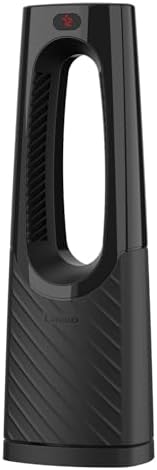
Lasko CW210 vs AR122 ThermaSmart: this comparison is really about premium hardware versus smart control. The CW210 is a bladeless-style 1500W ceramic tower with remote control, digital thermostat, widespread oscillation, an 8-hour timer and tip-over protection. The AR122 is a shorter 22-inch smart ceramic tower with Wi-Fi, app control and voice-assistant support through Lasko’s Aria platform.
Choose the CW210 when you want long-range heat projection and a traditional remote. Choose the AR122 when schedules, phone control and smart-home convenience are more important.
For a model-specific example within Lasko smart-heater options, see our Lasko 751320 Ceramic Tower Heater Review for controls, safety features, heating style, and practical fit.
Affiliate disclosure: This post contains affiliate links. We may earn a commission if you buy through them. As an Amazon Associate we earn from qualifying purchases.
Quick Verdict
CW210 is better for hardware-first comfort: tall bladeless design, long-range Heat Channels, remote control and tip-over switch. AR122 is better for smart-home users: Wi-Fi, Aria app, Alexa/Google voice control, 12-hour timer and a more compact tower. Peak heat is similar, so controls and form factor should decide the purchase.
Lasko CW210 vs AR122 Comparison
| Maximum heat | Both up to 1500W |
| Design | CW210: tall bladeless-style tower; AR122: 22-inch ceramic tower |
| Oscillation | Both oscillate |
| Thermostat | Both adjustable |
| Timer | CW210: 8 hours; AR122: 12 hours |
| Remote | CW210: physical remote; AR122: app-led smart control, no physical remote listed |
| Smart control | CW210: no app; AR122: Wi-Fi / Aria app |
| Voice assistants | CW210: no; AR122: Alexa and Google compatibility |
| Tip-over protection | CW210: yes; AR122: yes |
Why the CW210 Stands Out
The CW210 uses Lasko’s Heat Channels design to project warm air farther from a bladeless-style outlet. That is useful in larger seating areas where a short heater can feel too localized. The physical remote is also valuable if you do not want to pair an app or depend on Wi-Fi.
Read the full Lasko CW210 review for a closer look at its tower format.
Why the AR122 Stands Out
The AR122’s reason to exist is connected control. Lasko’s current product page lists Wi-Fi, app control, Alexa/Google integration, 3 speeds, a 12-hour timer, digital display and coverage up to 300 sq. ft. That coverage figure is a manufacturer claim, so room insulation and outdoor temperature still determine real results.
Our Lasko AR122 ThermaSmart review covers its current smart features in detail.
Which Is Easier to Live With?
For someone who hates apps, the CW210 is easier: use the heater or remote and you are done. For a smart-home user, the AR122 can be easier because temperature changes, schedules and power controls can be handled from a phone or voice assistant. Neither approach is universally better; it depends on how you actually control appliances at home.
Safety
Both models include overheat protection and tip-over protection. Lasko also lists cool-touch housing on both product families. Still, keep either heater on a stable surface, away from combustible materials, and plug it directly into a suitable wall outlet.
Frequently Asked Questions
Which is taller?
The CW210 is the taller tower; the AR122 is 22 inches high.
Does the AR122 include a physical remote?
Lasko’s current product page says no physical remote; control is through the heater and Aria app.
Which has Wi-Fi?
The AR122. The CW210 is not an app-controlled model.
Which has a longer timer?
The AR122 lists a 12-hour timer, while the CW210 uses an 8-hour timer.
Which should I buy for a smart home?
The AR122 is the clear choice because of Wi-Fi and voice-assistant support.

Conclusion
The CW210 is a better fit if you value projected heat, a tall bladeless-style design and a physical remote. The AR122 is the better modern control platform. For most smart-home buyers, AR122 wins; for app-averse users who want a premium tower, CW210 is easier to recommend. Check Lasko’s AR122 product page and the official CW210 support page for current documentation.


