
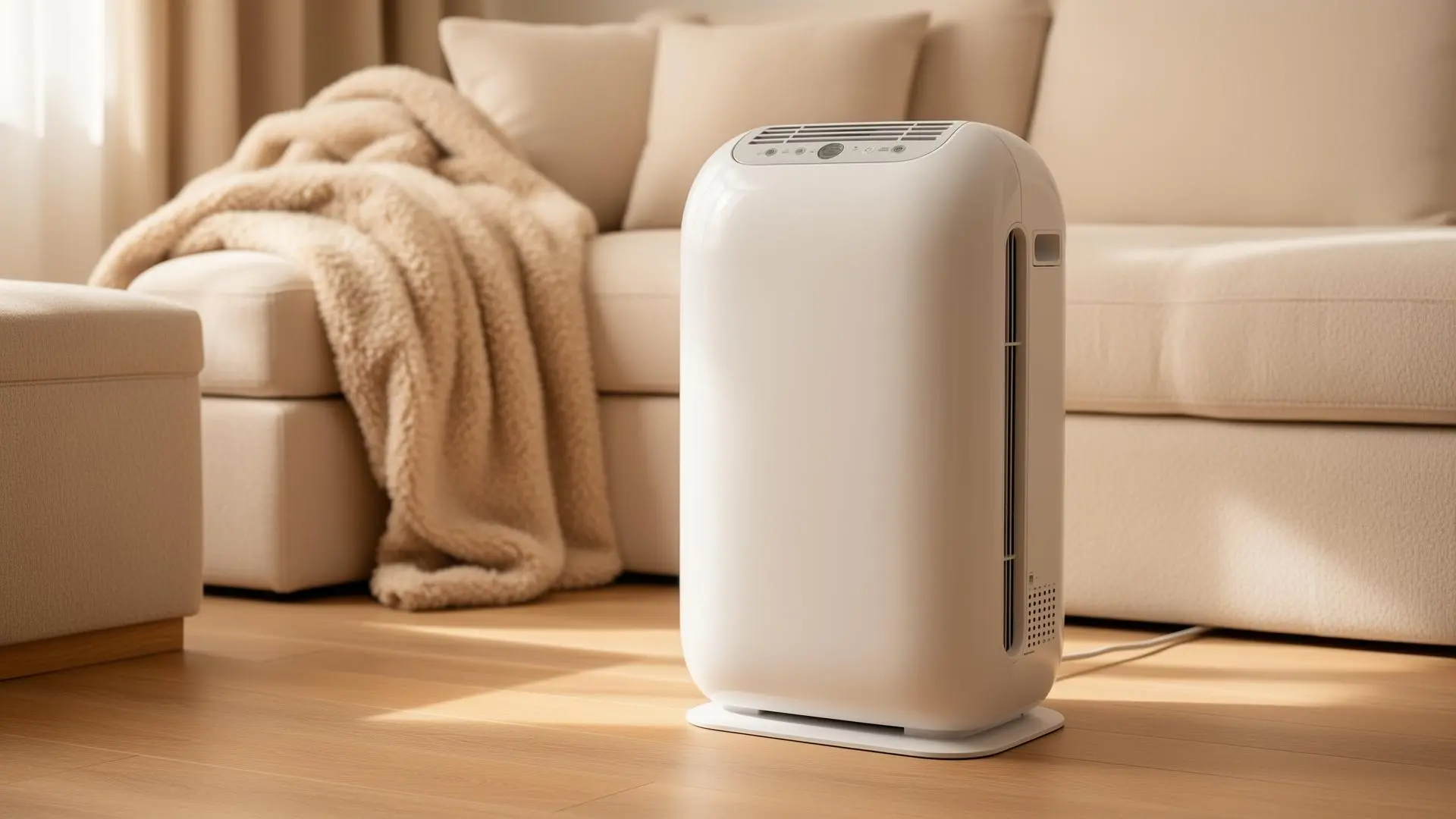


The Dreo Whole-Room Heater 715 is built for shoppers who want more than a narrow stream of hot air. Its main selling point is 3D oscillation: the heater can spread warm air vertically and horizontally instead of aiming at one fixed part of the room.
TL;DR
- The Dreo 715 is a 1500W ceramic heater designed for wider whole-room heat distribution.
- Its main advantage is 3D oscillation with vertical and horizontal airflow, plus ECO temperature control and remote operation.
- It is best suited to bedrooms, offices and living spaces where broad, even heating matters more than simple spot heat.
This post contains affiliate links. We may earn a commission if you buy through them. As an Amazon Associate we earn from qualifying purchases.

Quick verdict
The Dreo 715 is not more powerful than a typical 1500W U.S. ceramic heater; its advantage is how it distributes that heat. The horizontal-and-vertical oscillation can warm a wider occupied zone than a fixed-front heater, while ECO control reduces the need to keep changing settings manually. It is a better fit for shared bedrooms, offices and living rooms than for someone who only wants cheap close-range desk heat.
Dreo 715 key specifications
- 1500W Hyperamics ceramic heating
- 3D horizontal and vertical heat distribution
- Published noise level as low as 34dB
- ECO mode with automatic temperature control
- Remote control plus top-panel controls
- Tip-over and overheat protection
- Model DR-HSH015
Dreo lists these features on the official Whole-Room Heater 715 page and identifies the standard version as DR-HSH015 in its support documentation.
What stands out in real-world use?
What the 3D oscillation actually changes
Dreo markets the 715 around “3D whole-room heating.” The practical benefit is simpler: the heater can sweep heat side to side and also change its vertical aim. That gives you more control over where the warm airflow lands. It can be useful when the heater sits several feet away or when two people occupy different parts of the room. It does not increase the 1500W electrical ceiling, so it should be viewed as a distribution feature rather than extra heating capacity.

Energy-use reality
Dreo advertises energy savings with ECO mode, but the useful way to interpret that claim is thermostat cycling. At full heat, a 1500W heater can draw roughly 1.5 kWh per hour of continuous operation. ECO mode can lower total consumption when the room reaches the target temperature and the heater reduces or stops heating. The actual savings depend on insulation, outdoor temperature, room size and the temperature you choose.
Dreo 715 vs a smaller ceramic heater
Choose the 715 over a smaller Dreo if you want wider air distribution, quieter low-speed operation and more hands-off temperature control. Choose a compact model instead if portability and lower purchase price matter more than room-wide coverage. The 715 is easier to justify when it will stay in one room rather than move between a desk, bathroom and bedroom every day.
The wider oscillation is the feature that separates the 715 from simpler ceramic heaters. It is useful when two people are sitting in different parts of a room or when you want warmth to circulate rather than stay concentrated in front of the grille. Dreo also gives it a fan mode, so the unit can move air when heat is not needed.
The thermostat-controlled ECO mode is useful for maintaining a set temperature, but it does not make a 1500W heater magically use little power at full output. Electricity use still depends on the heat level and how often the thermostat cycles the element.
Strengths
- Wider heat distribution than a fixed-output desktop heater.
- Quiet enough on lower settings for many bedroom and office situations.
- Remote and temperature control reduce repeated manual adjustment.
- Multiple built-in safety protections are documented by Dreo.
Limitations
- It costs more than basic 1500W ceramic heaters.
- Maximum electrical heating power is still in the normal 1500W portable-heater range.
- Open layouts, poor insulation and high ceilings can reduce how quickly a room feels warmer.
Who should buy the Dreo 715?
It is a strong fit for bedrooms, home offices and medium living spaces where you care about broad air distribution and automatic temperature control. If you are comparing Dreo’s lineup, see our best Dreo space heaters guide and our Dreo 714 vs 715 comparison.
Safety and placement
Use the heater on a flat, stable surface with the air inlet and outlet clear. Plug it directly into an appropriate wall outlet and follow the clearance instructions in the manual. Tip-over and overheat protection are backups, not a reason to place the heater close to bedding, curtains or furniture.
Conclusion
The Dreo Whole-Room Heater 715 is most compelling for its 3D heat distribution, quiet operation and thermostat-driven controls. It is not fundamentally more powerful than other 1500W heaters, but it can distribute that heat more evenly and requires less hands-on adjustment.
FAQs
How powerful is the Dreo 715?
Dreo rates it at up to 1500W for rapid ceramic heating.
Does the Dreo 715 oscillate vertically and horizontally?
Yes. Dreo markets the 715 around 3D whole-room heating with both directions of air distribution.
Is it quiet enough for a bedroom?
Dreo publishes a 34dB figure under its quiet-operation claim. Actual perceived noise depends on the mode and room.
Does it have tip-over protection?
Yes. Dreo documents tip-over and overheat protection for this model.


