

Nothing is worse than sitting in a room where your face is freezing but your feet are sweating. Many people buy a heater only to find out it warms one tiny spot while the rest of the room stays like an ice box. This happens because most cheap heaters just blast air in one direction.
That hot air hits your legs and stays there. The rest of the air in the room remains cold and heavy. This is a common pain point for anyone working in a home office or relaxing in a large living room. You want warmth that fills the space. You want to walk from one side of the room to the other without feeling a sudden chill. For the buying decision behind this topic, compare our Best Tower Space Heaters for Large Rooms.
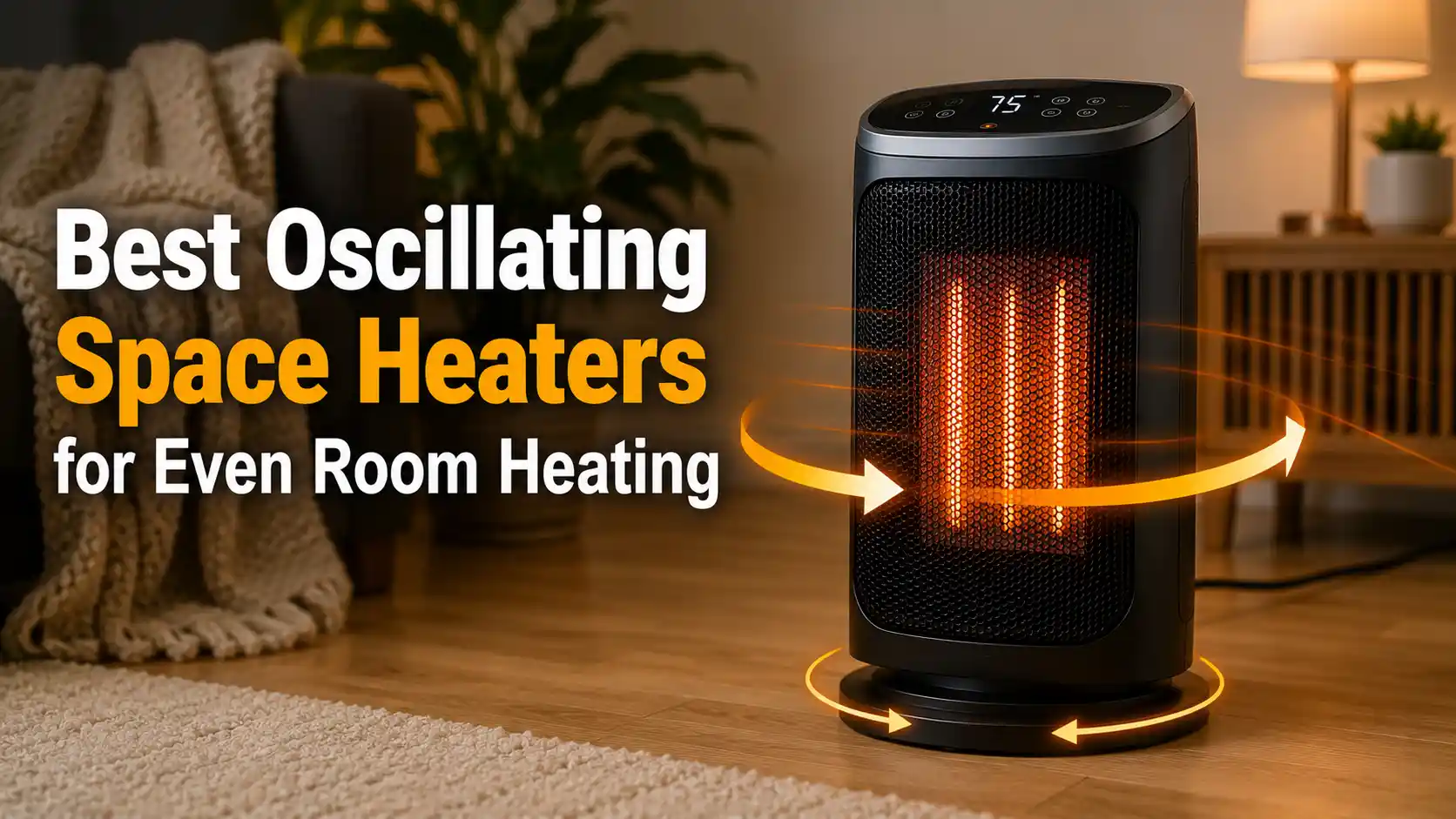
The secret to solving this problem is finding the best oscillating space heaters. Oscillation is just a fancy word for turning from side to side. When a heater moves, it spreads the warm air across a wider area. It mixes the cold air with the hot air so the whole room reaches a steady temperature. This is much better than a stationary heater that creates one hot zone.
In this guide, we will look at the top models that help with even room heating. We have tested these units for speed, noise, and safety. We also looked at how real owners feel about them after months of use. Whether you have a drafty basement or a nursery that needs a gentle touch, there is a perfect match here for you.
For a model-specific example within oscillating heaters, see our JIBUFI 1500W Space Heater Review for controls, safety features, heating style, and practical fit.
Paid link. As an Amazon Associate, we earn from qualifying purchases at no extra cost to you.

TL;DR
- If you are in a hurry, this table shows the best options for different needs. Every one of these heaters was chosen because it excels at moving air and keeping temperatures stable.
- Choose by the room and use case first, then compare wattage, thermostat control, noise, safety features, size and current warranty/model details.
- A higher price does not automatically mean lower electricity use; for electric resistance heaters, runtime and thermostat control matter more than marketing claims.
- Before buying, verify the exact model, safety listing, current price and manufacturer instructions because retailer listings can change.
Quick Picks for Your Home
If you are in a hurry, this table shows the best options for different needs. Every one of these heaters was chosen because it excels at moving air and keeping temperatures stable.
| Product Name | Best For | Key Strength |
| Dreo Solaris Slim H3 | Overall Performance | Whisper quiet and very fast |
| Lasko FH500 | Year-Round Comfort | Tower fan and heater combo |
| Dr. Infrared DR-968 | Large Open Spaces | Heats up to 1,000 square feet |
| Vornado OSCTH1 | Whole Room Mixing | Uses vortex and oscillation |
| Lasko CW210 | Households with Pets | Bladeless and safe to touch |
| Shark 3-in-1 Max | Sensitive Sinuses | Heats and purifies air |
| Pelonis 30-Inch Tower | Budget Buyers | Wide 75 degree oscillation |
| Heat Storm Phoenix | Small Offices | Wall mounted with WiFi |
| Honeywell HCE322V | Desk Side Use | Simple digital thermostat |
| Dreo Solaris 818 | Master Bedrooms | Extremely quiet at 25dB |


Detailed Product Reviews
Choosing the right model means understanding how it fits into your life. Here are the top 10 oscillating heaters that provide the most even room heating.
Dreo Solaris Slim H3
Lasko FH500 All Season Comfort
Dr. Infrared Heater DR-968
Vornado OSCTH1 Tower Heater
Lasko CW210 Bladeless Heater
Shark 3-in-1 Max Air Purifier
Buying Guide: How to Choose the Best Space Heater
Finding the right heater is about more than just picking a brand. You need to match the heater to your specific room. Every home is different. A drafty old house needs a different kind of warmth than a new apartment. Here is what you need to look for before you buy.
Understand the Different Types of Heat
Most portable heaters use one of three methods to keep you warm. Knowing the difference helps you get the most even room heating for your space.
Calculate the Wattage You Need
Most heaters in the US are 1500 watts. This is because most home electrical circuits can only handle about that much power before the breaker trips. A good rule of thumb is that you need about 10 watts of power for every square foot of space in your room.
Key Features that Matter
When you are looking at different models, keep an eye out for these features. They make the heater much easier and safer to use.
Safety First
Safety is the most important part of owning a space heater. Modern heaters are much safer than the ones from 20 years ago, but you still need to be careful. Always look for these three safety features:
Why Even Heating Matters for Your Health
When a room is heated unevenly, it can actually affect how you feel. Drastic changes in temperature can make your body work harder to stay comfortable. This can lead to feeling tired or getting headaches. In very cold rooms, the air near the floor is often much colder than the air near the ceiling. This is why your feet always feel like ice.
By using an oscillating heater, you break up these layers of air. The moving fan helps push the warm air down to the floor where you actually live. This leads to a much more comfortable environment. It also helps prevent condensation on windows, which can lead to mold growth in the winter. A well-circulated room is a healthier room.
Frequently Asked Questions
Is it okay to leave a space heater on all night?
No portable space heater should be treated as safe to leave running while you sleep or when it is unattended. CPSC recommends turning portable heaters off when sleeping, plugging electric heaters directly into a wall outlet, and keeping them at least three feet from bedding, curtains, furniture, and other combustible materials.
What kind of heater is best for a large room?
For large rooms, an oscillating tower heater with 1500 watts of power is usually best. Models like the Dr. Infrared or the Lasko FH500 are designed to move a lot of air across bigger spaces.
Do space heaters use a lot of electricity?
A 1500 watt heater uses about 1.5 units of electricity per hour. To save money, use the ECO mode and only heat the room you are in. It is much cheaper than running your whole-house furnace.
Why does my heater make a clicking noise when it turns?
A soft clicking noise can happen as the plastic parts expand and contract with the heat. However, if it is a loud, mechanical click, it might mean the oscillation gears are stuck. Check for any dust or hair that might be blocking the base.
How do I know if my outlet can handle a space heater?
If the outlet feels warm to the touch or if your lights flicker when the heater turns on, your circuit might be overloaded. Avoid plugging other large appliances into the same circuit as your heater.
Can I use a space heater in a bathroom?
Only use a heater specifically rated for bathroom use. These have special safety plugs (ALCI) that prevent electric shocks if the heater gets wet. Standard tower heaters are not safe for bathrooms.
How long do space heaters usually last?
A good quality heater should last between 5 and 10 years if you keep it clean and store it properly. Ceramic and infrared models tend to last longer because they have fewer moving parts than traditional coil heaters.
Why does my space heater have a plastic smell?
This is usually just the protective coating on the heating element burning off. It is very common with brand new heaters. If the smell continues for more than a few days, contact the manufacturer.


