
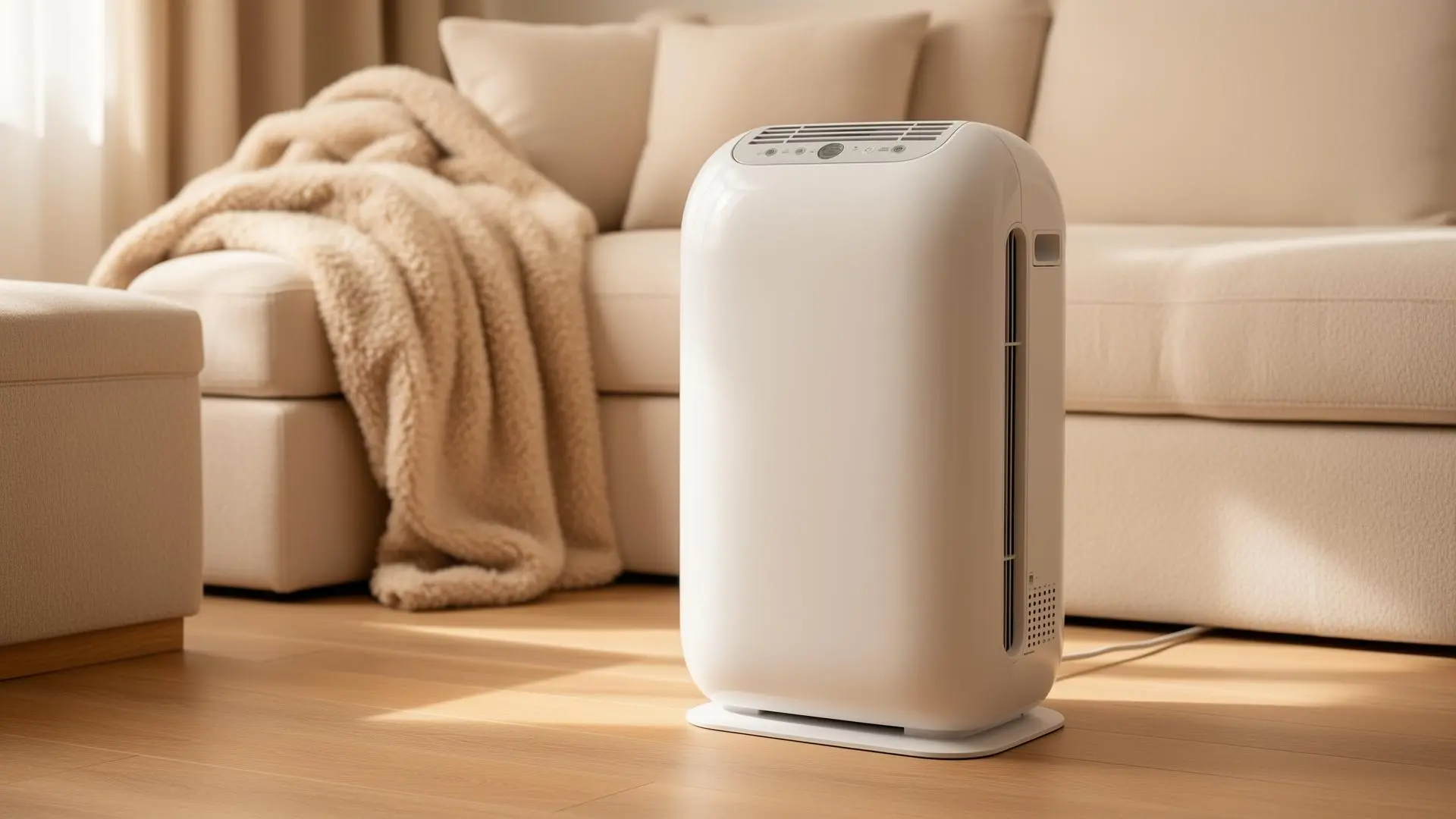


The best space heater for a drafty room needs more than a high wattage label. Drafts continuously replace warmed air with colder air, so airflow pattern, thermostat control and room heat loss matter as much as the heater itself.
For 2026, I would favor a 1500W heater with strong air circulation or steady radiant/convection output, then fix obvious air leaks where possible. A portable heater can improve comfort, but it cannot compensate indefinitely for poor weather-sealing.
Affiliate disclosure: This post contains affiliate links. We may earn a commission if you buy through them. As an Amazon Associate we earn from qualifying purchases.
Best Space Heaters for Drafty Rooms: Quick Picks


Dreo Whole-Room Heater 714: Best for Moving Heat Around the Room
Dreo’s Whole-Room Heater 714 uses 1500W PTC heat with horizontal and vertical oscillation. Dreo currently lists 34 dB operation, a 41–95°F thermostat range and 161–269 ft² heating coverage for this model. The wider airflow pattern is useful when one side of a drafty room feels much colder than the rest. Check Dreo’s current specifications.
Vornado AVH10: Best for Whole-Room Circulation
Vornado’s current AVH10 uses Vortex Heat Circulation and Auto Climate Control to adjust heat and airflow around a target temperature. Vornado also lists two heat settings, fan-only mode, a cool-touch case and an automatic safety shutoff system. That circulation-first approach is useful when cold air enters from windows or an exterior wall. See the current AVH10 page.
DeLonghi EW7707CM: Best for Quiet, Steady Heat
An oil-filled radiator warms more slowly than a fan-forced ceramic heater, but it provides quiet, steady convection and radiant heat after the oil and metal body warm up. DeLonghi’s EW7707CM is a 1500W radiator with ComfortTemp control and no fan to create noticeable airflow noise.

Dr Infrared DR-968: Best Cabinet-Style Alternative
The DR-968 combines infrared quartz and PTC heating with a blower, electronic thermostat and remote. It is a heavier cabinet-style option, but it can be useful where you want a strong 1500W portable heater that moves warm air across the room.
Why Drafts Change Heater Performance
A drafty room loses heat faster, so the heater has to run longer to maintain the same temperature. That is why weather-stripping, window sealing and closing unused gaps can improve comfort more effectively than simply buying a heater with more features. If the room is large as well as drafty, compare our large-room space heater guide and best 1500W heaters.
Safety in a Drafty Room
Do not move a heater closer to curtains, bedding or upholstered furniture just because a window area feels cold. CPSC recommends at least three feet of clearance from combustibles and direct connection to a wall outlet.
Practical rule: if the room feels cold mainly near one window or door, fix that leak first and use the heater to warm the occupied zone. If the whole room stays cold even after obvious drafts are sealed, compare the room’s heat loss and insulation before assuming a different 1500W portable heater will solve the problem.
Frequently Asked Questions
Will a 1500W space heater fix a drafty room?
It can improve comfort, but it does not stop the heat loss. Sealing obvious air leaks usually makes the heater more effective and can reduce runtime.
Is a ceramic heater or oil-filled radiator better for drafts?
Ceramic and circulation heaters feel faster because they move warm air. Oil-filled radiators are slower but quieter and provide steadier heat once warmed.
Should I place the heater beside the drafty window?
Only if the manufacturer allows that placement and you can still maintain safe clearance from curtains, furniture and other combustible materials.
Fix the Draft Before Asking the Heater to Work Harder
A portable heater cannot repair air leakage. If cold air is entering around a window or exterior door, weather-stripping, a door sweep, removable window film or repairing an obvious gap can reduce the heat load more effectively than moving from one 1500W heater to another. The heater then spends less time replacing heat that immediately escapes.
Use the heater to improve comfort in the occupied zone, not to fight an open leak indefinitely. That is especially important in older rooms where the coldest area may be the wall or floor rather than the air in the center of the room.
Which Heating Style Works Best With Drafts?
Strong air circulation helps when temperatures are uneven across a room. Dreo 714 and Vornado AVH10 are therefore sensible when one side of the room stays colder. An oil-filled radiator works differently: it does not chase cold air with a strong fan, but it can provide steady background warmth near an occupied area without adding fan noise.
Infrared or cabinet-style heaters can feel effective when you sit in their direct path because radiant heat warms people and nearby surfaces. That does not mean they stop the underlying draft. Choose the heat-delivery style for the way you use the room, then address air leakage separately.
Sizing a Heater for a Drafty Room
Manufacturer square-foot figures assume conditions that may not match an older drafty room. Ceiling height, window area, insulation and outdoor temperature all change the heating load. If a 1500W portable heater cannot maintain comfort with doors closed and obvious leaks sealed, the solution may be insulation or a higher-capacity installed heating system rather than another portable heater.

