
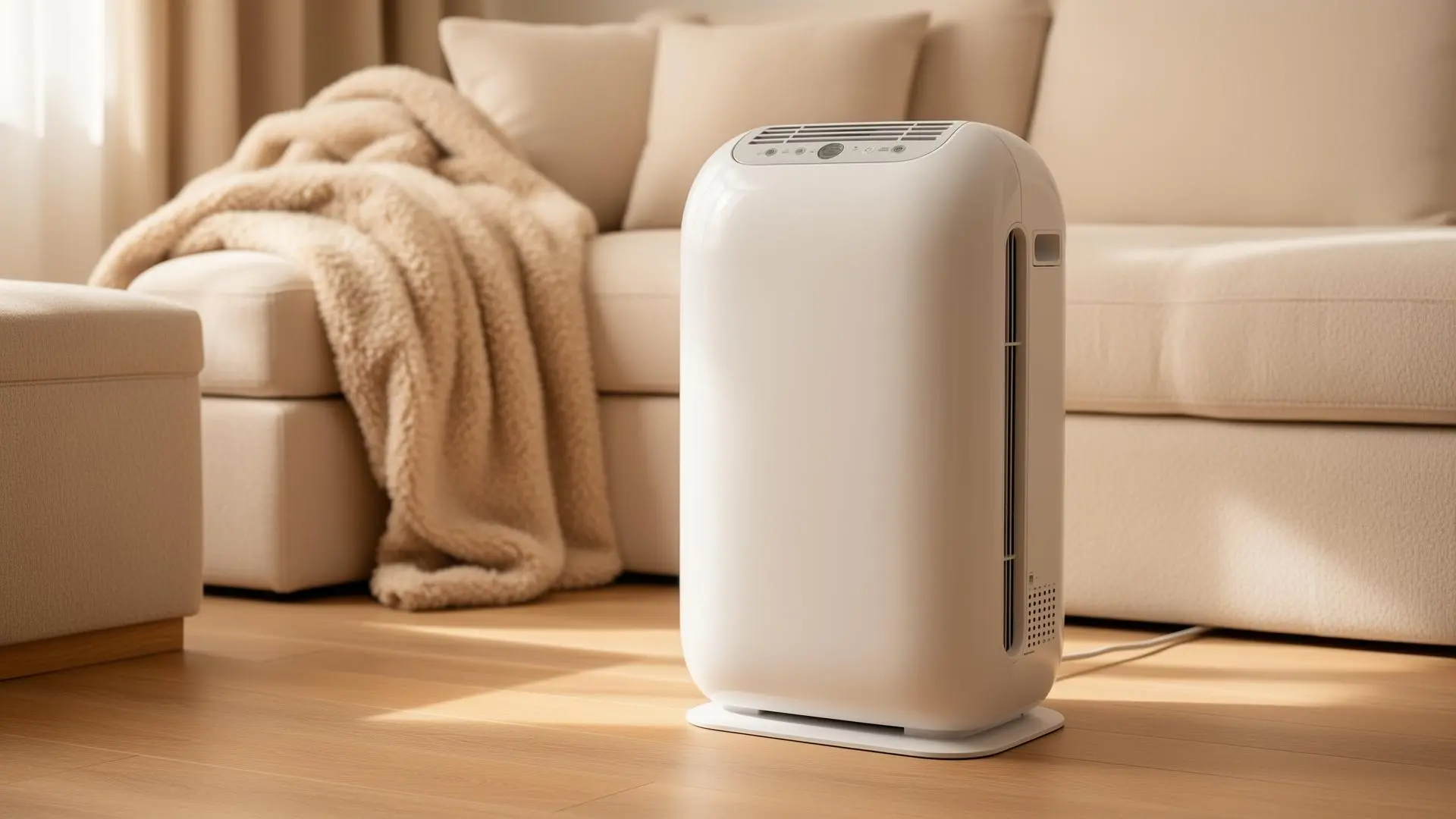


The best space heater for a home office should warm the area you actually use without becoming a distraction. For most desks and small offices, I would prioritize quiet operation, a thermostat, tip-over and overheat protection, and controls you can adjust without interrupting work.
For this 2026 guide, I checked current manufacturer specifications and matched them with products already available through our Amazon integration. A 1500W heater gives you more headroom for a cold room, while a 500W personal heater can make more sense when you only need close-range warmth at a desk.
Affiliate disclosure: This post contains affiliate links. We may earn a commission if you buy through them. As an Amazon Associate we earn from qualifying purchases.
Best Home Office Space Heaters: Quick Picks
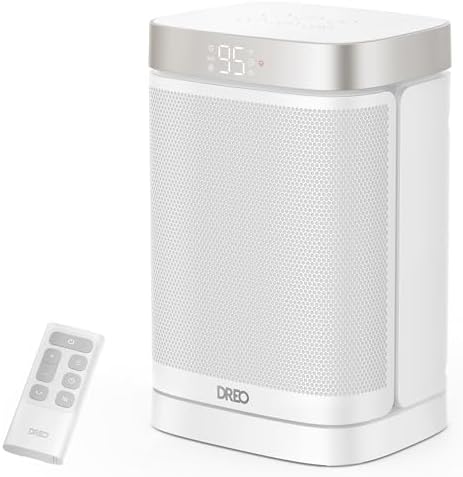


Dreo Atom One: Best Overall for a Home Office
Dreo Atom One combines up to 1500W PTC heat with a 41–95°F digital thermostat, 70° oscillation, remote control and a timer. Dreo currently lists the Atom One in its portable-heater lineup, and the combination of precise temperature control and compact size makes it a strong fit for a desk-side office setup. See Dreo’s current heater lineup for the latest model details: Dreo portable heaters.
Vornado VC-01: Best for Directed Airflow
The Vornado VC-01 is built around selectable personal and whole-room modes plus a 15° tilt. Vornado lists tip-over protection, automatic overheat shutoff, a cool-touch exterior and a five-year guarantee. It is a good option when you want focused warm airflow without a tall tower footprint.
Honeywell Slim Ceramic Tower: Best Space-Saving Tower
Honeywell’s HCE317B uses a narrow tower design with digital controls, a programmable thermostat, oscillation and 1/2/4/8-hour timer settings. Honeywell also documents a 360° tip-over switch, two layers of overheat protection and a cool-touch housing. Honeywell’s current product page is the best place to verify those features.

Amazon Basics 500W Mini: Best for Personal Desk Heat
If your office is already reasonably warm and you only need heat close to your hands or legs, a 500W mini heater can be more proportionate than a full-size 1500W unit. The Amazon Basics mini is compact and includes tip-over protection, but it does not offer the same thermostat precision as the larger picks.
How to Choose a Heater for a Home Office
- Choose 500W-class personal heat for close-range use; choose 1500W when the room itself needs meaningful supplemental heat.
- A thermostat matters more than extra modes if you work in the room for hours.
- Quiet operation matters for calls and focused work.
- Keep papers, curtains and other combustibles well away from the heater.
For more desk-focused options, see our best desk and personal space heaters and our quiet space heater guide.
Home Office Space Heater Safety
The U.S. Consumer Product Safety Commission says portable heaters should stay at least three feet from combustible materials, should be plugged directly into a wall outlet rather than a power strip or extension cord, and should be turned off when sleeping. Those rules matter in an office where paper, cables, bags and furniture can easily end up near the heater. Read the 2026 CPSC guidance.
Frequently Asked Questions
Is a 500W heater enough for a home office?
It can be enough for close-range personal heating in a reasonably comfortable room. For a cold office with significant heat loss, a higher-output heater may be more appropriate.
Can I plug a space heater into a desk power strip?
No. CPSC guidance says portable electric heaters should be plugged directly into a wall outlet, not an extension cord or power strip.
What is the best heater type for video calls?
A quiet ceramic or whole-room circulation heater with thermostat control is usually easier to live with than a noisy fan heater running at full speed.
For a closer look at another current option, see our Dyson Purifier Hot+Cool HP2 De-NOx Review: Is It Worth the Premium Price?.
Desk Heat vs Heating the Whole Office
Start with the part of the room that actually feels cold. If your feet and hands are uncomfortable but the office temperature is otherwise reasonable, a 500W personal heater can be more appropriate than running a 1500W heater across the whole room. If the entire office is cold because it has exterior walls, large windows or poor insulation, a thermostat-controlled 1500W model is the more useful class.
This distinction matters for electricity use. A 500W heater draws about 0.5 kWh for every continuous hour at full power, while a 1500W heater draws about 1.5 kWh. A larger heater can still be the better choice if it warms the room quickly and cycles off, but wattage alone is not an efficiency rating.
Noise, Calls and Daily Work
For video calls, look beyond marketing labels such as “quiet.” Fan speed, distance from the microphone and room acoustics all affect what coworkers hear. A compact ceramic heater can be very manageable at low fan speed, while a fanless oil-filled or micathermic heater is the better option when any continuous airflow noise is distracting.
Timers and thermostats are also more useful in an office than extra maximum heat modes. A thermostat prevents repeated manual changes during a long workday, and a timer can end a heating session automatically when your work block finishes. Remote control is convenient if the heater sits across the room, but it should not replace turning the unit off when you leave.


