
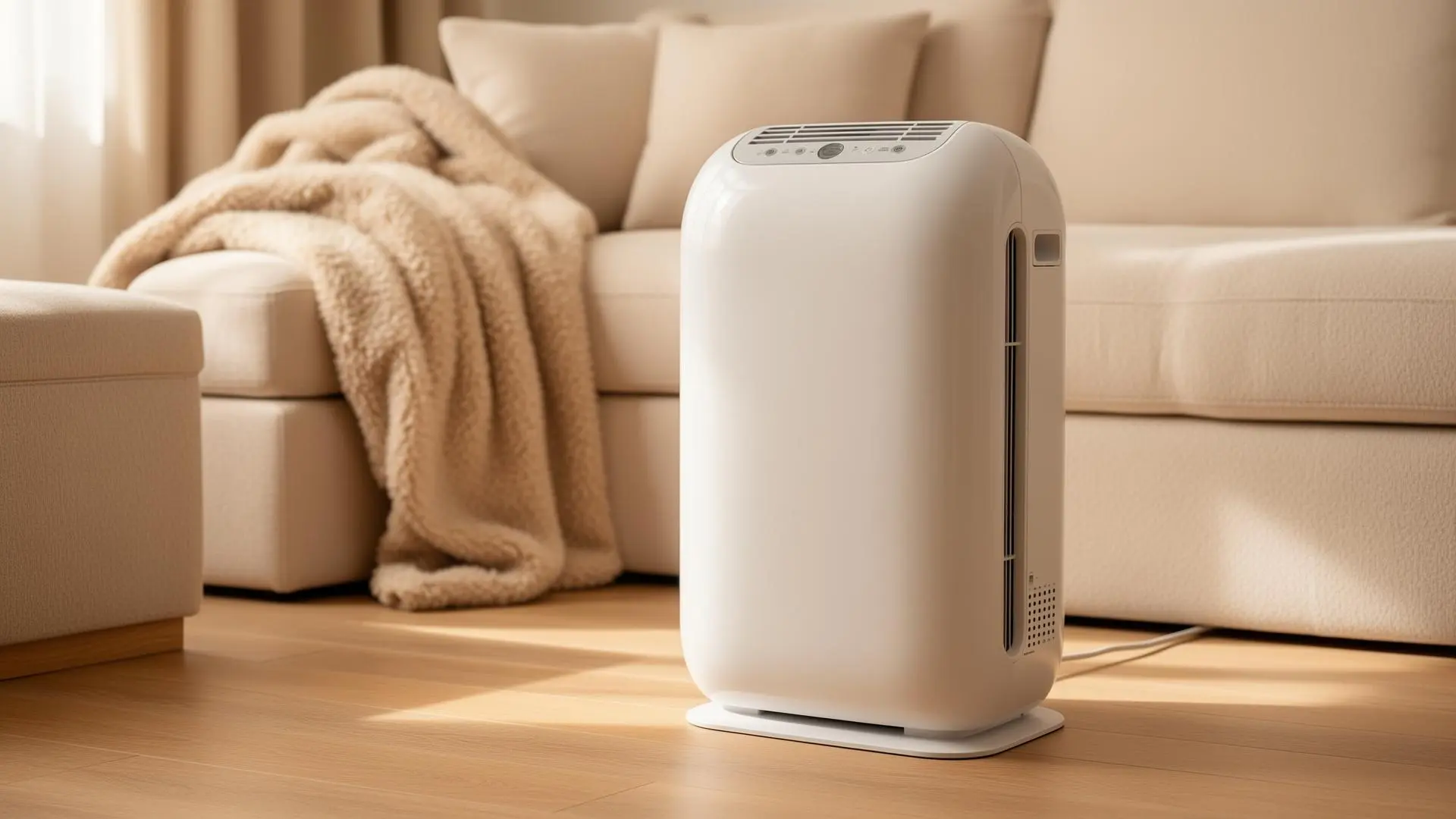

The Dreo Atom 416 is a compact ceramic space heater aimed at bedrooms, offices and other small indoor spaces. Dreo currently lists it as model DR-HSH030, with up to 1500W output and a stated 200 sq. ft. heating coverage. That makes it a direct fit for shoppers who want portable heat without moving to a tall tower heater.
Quick verdict: The Atom 416 makes the most sense for a small room where compact size, precise thermostat control and a remote matter. It is not a substitute for central heating, and the 200 sq. ft. figure should be treated as manufacturer guidance rather than a guarantee in drafty or poorly insulated rooms.
Key Specifications
| Model | DR-HSH030 |
| Heating element | Ceramic |
| Maximum output | 1500W |
| Manufacturer coverage | 200 sq. ft. |
| Thermostat | 41°F to 95°F in 1°F increments |
| Controls | On-unit controls and remote |
| Timer | Up to 12 hours |
| Safety | ETL listed; tip-over and overheat protection; safety plug; UL94 V-0 materials |
Heating Performance
Dreo uses its Hyperamics ceramic heating platform here. The heater has three heat settings plus fan mode, so you can use full output for a cold start and then let ECO mode cycle output around the set temperature. For a bedroom or office, that control is more useful than simply having a high/low switch.
Safety and Everyday Use
The Shield360 safety package includes tip-over and overheat protection, an enhanced safety plug and flame-retardant materials. Those features reduce common heater risks, but normal placement rules still matter: use a stable floor or surface, keep combustibles away and plug the heater directly into an appropriate wall outlet.
Noise and Controls
The Atom 416 is designed for close-range indoor use. The remote and 12-hour timer are useful from a desk or bed, while the 41–95°F thermostat range gives finer control than basic mechanical thermostats. If you need broad oscillation, the Atom Core below is the more relevant Dreo option.
Strengths and Limitations
Strengths include compact dimensions, 1500W maximum output, precise temperature setting, remote control and a documented safety package. The main limitation is scale: this is a personal-to-small-room heater. Large open rooms, high ceilings and heavy drafts can overwhelm any compact 120V heater.
Who Should Buy It?
Choose the Atom 416 for a bedroom, home office or similar small space where portability matters. If you are comparing Dreo compact models, also see our Ceramic Heater 316 review and Atom One vs Ceramic Heater 316 comparison.
Pros and Cons
Pros: compact 3.19 lb body, 1500W maximum output, 41–95°F thermostat, 12-hour timer, remote and documented tip-over/overheat protection. Cons: no oscillation, limited to small-room duty, and real heating performance drops in poorly insulated spaces.
Buying Guidance
For a desk-side or bedroom heater, prioritize placement and thermostat behavior over headline wattage. A 1500W compact heater draws a substantial load at full power, so use a direct wall outlet and avoid sharing the circuit with other high-draw appliances. If you regularly need heat across a wider seating area, an oscillating model is a better fit.
Frequently Asked Questions
Is the Dreo Atom 416 1500W?
Yes. Dreo lists a maximum wattage output of 1500W.
How large a room can it heat?
Dreo lists 200 sq. ft. heating coverage. Real-world results depend on insulation, ceiling height, outdoor temperature and drafts.
Does it have a thermostat?
Yes. Dreo lists temperature adjustment from 41°F to 95°F in 1°F increments.
Does the Atom 416 include a remote?
Yes. The current product listing includes remote control operation.
Does it have tip-over protection?
Yes. Dreo lists tip-over and overheat protection as part of its Shield360 safety system.
Source and Final Take
Specifications were checked against the manufacturer product page. Product availability and pricing can change. The Atom 416 makes the most sense for a small room where compact size, precise thermostat control and a remote matter. It is not a substitute for central heating, and the 200 sq. ft. figure should be treated as manufacturer guidance rather than a guarantee in drafty or poorly insulated rooms.
