
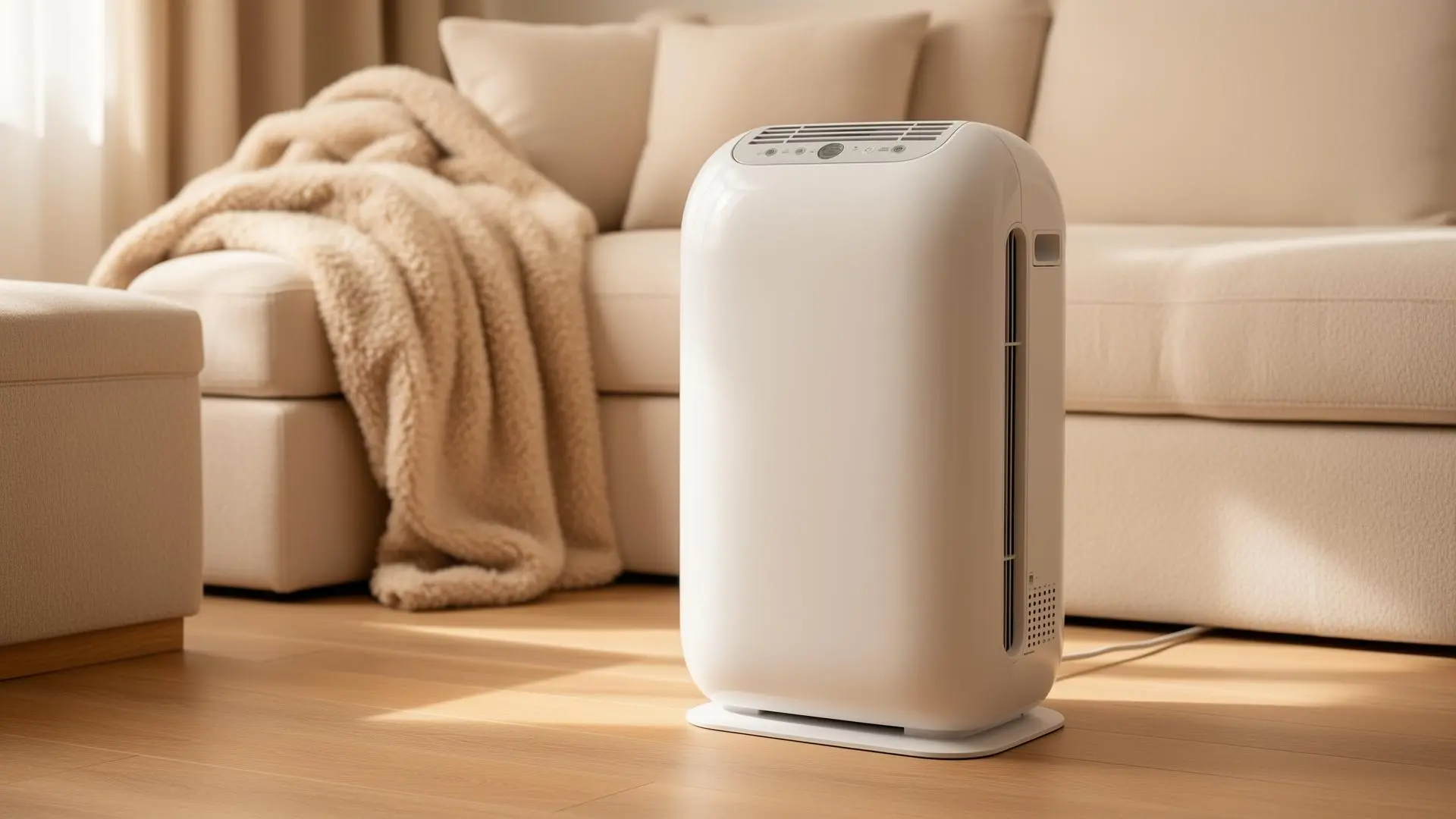


The Dreo Oil-Filled Radiator 153 is a floor-standing, fanless heater aimed at people who prefer slow, steady warmth over a blast of hot air. This review focuses on Dreo’s current specifications, the practical trade-offs of an oil-filled design and how the 153 compares with simpler radiators.
TL;DR: The Oil-Filled Radiator 153 is aimed at people who prefer steady, fanless heat instead of a strong blast of hot air. Dreo lists 1500W output, 250-square-foot coverage and a 41–95°F control range. It makes the most sense for occupied indoor rooms where gradual, even warmth matters more than instant spot heating.
For broader buying context, compare this model with our Best Dreo Space Heaters, Best Oil-Filled Radiator Heaters, and Dreo OmegaHeat Oil-Filled Radiator Review. These guides and reviews help compare heater type, controls, safety features, and room fit before choosing a model.
This post contains affiliate links. We may earn a commission if you buy through them. As an Amazon Associate we earn from qualifying purchases.
Key specifications
| Model | DR-HSH033 |
| Power | 1500W |
| Size | 12.83 x 9.92 x 26.14 in |
| Weight | 17.9 lb |
| Listed coverage | 250 sq. ft. |
| Temperature range | 41–95°F |
What stands out
The Oil-Filled Radiator 153 is aimed at people who prefer steady, fanless heat instead of a strong blast of hot air. Dreo lists 1500W output, 250-square-foot coverage and a 41–95°F control range. It makes the most sense for occupied indoor rooms where gradual, even warmth matters more than instant spot heating.
- 1500W full-power heating
- Fanless heating avoids fan noise
- Seven M-shaped fins are designed to spread heat
- Tip-over and overheat protection are listed by Dreo
Limitations to know before buying
- Oil-filled radiators warm up more gradually than fan-forced ceramic heaters
- At 17.9 lb it is less convenient to carry than compact heaters
- Manufacturer coverage depends heavily on room conditions
Who is it best for?
Radiator 153 is best for a bedroom, office or living room that stays occupied for long periods and where fan noise is undesirable. It is less suitable for a quick five-minute warm-up or for anyone who needs to carry the heater between floors every day.

Buying guidance
Before buying Radiator 153, make sure you have enough open floor space for the fins and casters and a suitable wall outlet nearby. Do not cover the radiator or use it as a drying rack; the thermal mass is useful only when air can circulate around the body safely.
Conclusion
The Oil-Filled Radiator 153 is aimed at people who prefer steady, fanless heat instead of a strong blast of hot air. Dreo lists 1500W output, 250-square-foot coverage and a 41–95°F control range. It makes the most sense for occupied indoor rooms where gradual, even warmth matters more than instant spot heating. Check current availability and the latest manufacturer documentation before ordering, especially when model families have similar names.
FAQs
Is this heater intended to replace central heating?
No. It is best treated as supplemental heat for an occupied room or work area.
Are manufacturer room-coverage figures exact?
No. Dreo’s coverage figure is only a starting point. Oil-filled heat is gradual, and a poorly insulated room can lose heat faster than the radiator can comfortably replace it.
Should a portable heater be used with an extension cord?
Use Radiator 153 from a suitable wall outlet and keep the plug connection accessible for inspection. Avoid ordinary extension cords and power strips unless Dreo’s exact manual explicitly permits a specific setup.
Does this review include a first-party test rating?
No. This Radiator 153 article is a specification-based buying analysis; we do not present a hands-on test score or laboratory performance rating.
Should I check the manual before setup?
Yes. The Radiator 153 manual is the controlling source for clearance, caster setup, cleaning, storage and electrical instructions.
What You Gain With an Oil-Filled Radiator
The Radiator 153 does not try to compete with ceramic heaters on instant airflow. Its advantage is thermal mass. The element heats the sealed oil and metal fins, then the radiator continues giving off heat as the thermostat cycles. That creates a slower, steadier feel and avoids heating-fan noise.
At 17.9 lb, this is a floor appliance rather than a heater you will casually move onto a desk. Casters make room-to-room movement practical on level floors, but buyers who carry a heater upstairs every day will find a compact ceramic model easier.
Electricity Use and Current Oil-Radiator Alternative
At 1500W, continuous operation uses about 1.5 kWh per hour. The thermostat and lower modes can reduce actual consumption, but stored heat in the oil does not create extra energy. It simply continues releasing heat after the element cycles off.
The exact Dreo Radiator 153 is not cached in the Hostinger affiliate catalog. The block below shows a current DeLonghi oil-filled radiator as a same-category comparison product, not as the reviewed Dreo.

Choose the Dreo if its digital controls and current availability are compelling. Choose a simpler DeLonghi radiator when proven mechanical-style controls and brand support matter more than matching Dreo’s feature set.
Best Rooms for the Radiator 153
This design is better suited to a bedroom, home office or living room that stays occupied for several hours. It is less appealing for a bathroom, quick morning warm-up or workshop where you want immediate directional heat. The slow response becomes an advantage only when you value steady background warmth.
Keep the radiator in open floor space with the fins unobstructed. Do not drape clothing or towels over it, and keep children and pets from leaning against hot surfaces. Tip-over and overheat protection are backups; the radiator still needs the clearances and outlet conditions specified in its manual.


