
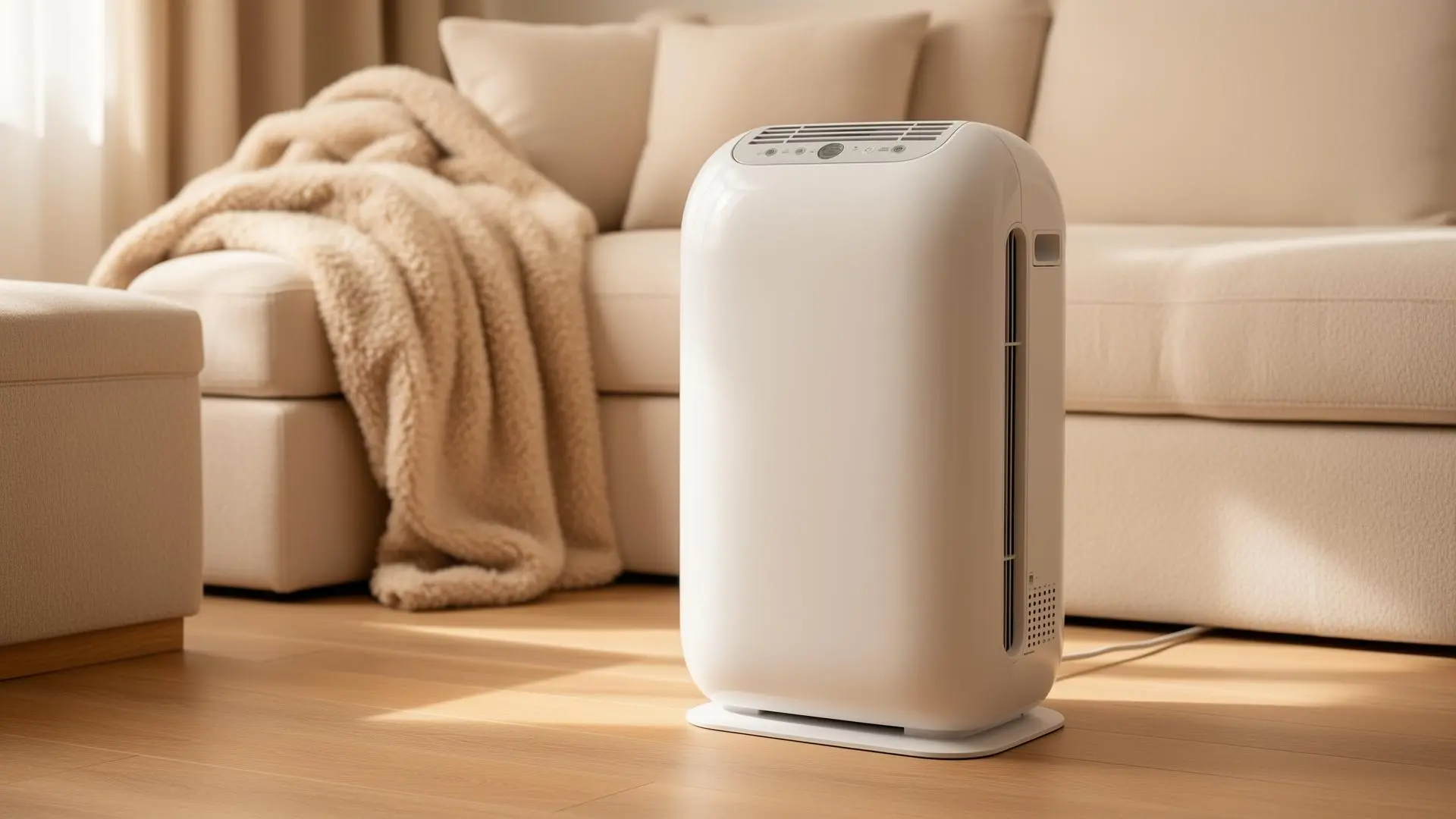


Dyson HP1 vs HP2 De-NOx: both combine air purification, winter heating and fan airflow in a tall bladeless-style machine with 350° oscillation and MyDyson app control. The HP2 De-NOx is the more advanced purifier: it adds a three-stage HEPA H13-grade system, a K-Carbon filter designed to capture more nitrogen dioxide, and a catalytic stage that continuously destroys formaldehyde.
The HP1 is the better value when your priority is HEPA/carbon purification plus heating and cooling. HP2 is worth the premium only if its gas/formaldehyde treatment matters in your home. The heating function alone is not a reason to pay more for HP2.
Affiliate disclosure: This post contains affiliate links. We may earn a commission if you buy through them. As an Amazon Associate we earn from qualifying purchases.

Quick Verdict
Choose HP1 if you want Dyson’s heater-purifier format without paying for the most advanced gas filtration. Choose HP2 De-NOx if indoor air quality is the priority and you specifically want the upgraded K-Carbon and formaldehyde-destroying filtration system. Both provide similar core heating/cooling convenience.
Dyson HP1 vs HP2 De-NOx Comparison
| Main job | Both: purifier + heater + fan |
| Particle filtration | HP1: HEPA + activated carbon; HP2: sealed HEPA H13-grade system + K-Carbon |
| NO2 focus | HP1: standard carbon gas capture; HP2: K-Carbon designed to capture 50% more NO2 than Dyson’s standard carbon reference |
| Formaldehyde | HP1: no dedicated catalytic destroyer; HP2: catalytic formaldehyde destruction |
| Oscillation | Both up to 350° |
| Airflow settings | Both 10 speeds |
| App control | Both support MyDyson in supported markets |
| Best for | HP1: value/multi-function use; HP2: advanced air-quality needs |
Where HP1 Makes More Sense
HP1 already covers the features most buyers notice daily: whole-room purification, winter heating, fan airflow, Auto mode, sleep timer, 350° oscillation and app-based monitoring. Dyson recommends periodic replacement of the HEPA/activated-carbon filter based on use.
Read our Dyson HP1 review for the full feature breakdown.

What You Actually Pay More for With HP2
HP2 is primarily an air-treatment upgrade. Dyson says its K-Carbon filter adsorbs 50% more nitrogen dioxide than its regular activated-carbon reference under the company’s test method, and the machine includes a catalytic formaldehyde stage that does not require replacement. Those features are meaningful if gas pollutants are a major concern; they do not make HP2 a fundamentally stronger space heater.
Our Dyson HP2 De-NOx review looks at the premium model on its own.
Heating and Cooling Expectations
Dyson’s “cooling” function is fan airflow, not refrigerated air conditioning. In winter, both models project heated air and use oscillation to distribute it. In summer, they move filtered room air across your body to create a cooling effect. That distinction matters if you are expecting either model to lower room temperature like an AC.
Which One Is Better for Allergies?
Both use fine-particle filtration and carbon-based gas/odor capture. HP2 has the broader filtration system, but allergy outcomes depend on the pollutant, filter condition, room size and other sources in the home. A purifier also does not replace source control or ventilation where those are needed.
Frequently Asked Questions
Does HP2 heat better than HP1?
HP2’s main upgrade is purification, not a clearly superior heating system.
Which has better gas filtration?
HP2 De-NOx, because its K-Carbon stage is designed for stronger NO2 capture and it adds formaldehyde destruction.
Do both work with the MyDyson app?
Yes, in supported markets and with compatible devices.
Do they actually air-condition a room?
No. Cooling mode is purified fan airflow, not compressor-based air conditioning.
Which is better value?
HP1 for most buyers; HP2 if advanced gas/formaldehyde filtration is worth paying extra for.
Conclusion
HP1 is the sensible all-rounder. HP2 De-NOx is the specialist upgrade for buyers who care enough about NO2 and formaldehyde treatment to justify the higher price. Compare Dyson’s current HP1 support information with the HP2 De-NOx product page before buying.
Filter Ownership Cost Matters
These are not buy-once heaters in the same way as a basic ceramic unit. The particle and carbon filters are consumables that eventually need replacement according to Dyson’s guidance and actual use. HP2’s catalytic formaldehyde stage is designed not to require replacement, but its HEPA/K-Carbon filter system still creates an ongoing ownership cost.
That means the cheaper machine is not automatically the lower-cost machine over several years; compare replacement-filter pricing and availability as well as the initial purchase price. If you already own a separate high-quality purifier, paying extra for HP2’s advanced filtration may duplicate equipment you already have.
Who Benefits Most From HP2 De-NOx?
HP2 is most compelling in a home where gas pollutants or formaldehyde are a specific concern and you want one appliance to provide filtration, fan airflow and electric heat. HP1 is easier to justify when the goal is general particle/odor filtration plus seasonal heating and fan use.
Neither model should be bought solely as a space heater unless you also value purification. A conventional 1500W heater can provide supplemental electric heat for far less money. The Dyson premium is for the combination of sensing, filtration, airflow design, app control and year-round use.
Affiliate note: the Hostinger product block uses the current Dyson product cached by the site’s affiliate plugin. Verify the exact HP1/HP2 model name on the retailer page before ordering because Dyson variants can be visually similar.


