
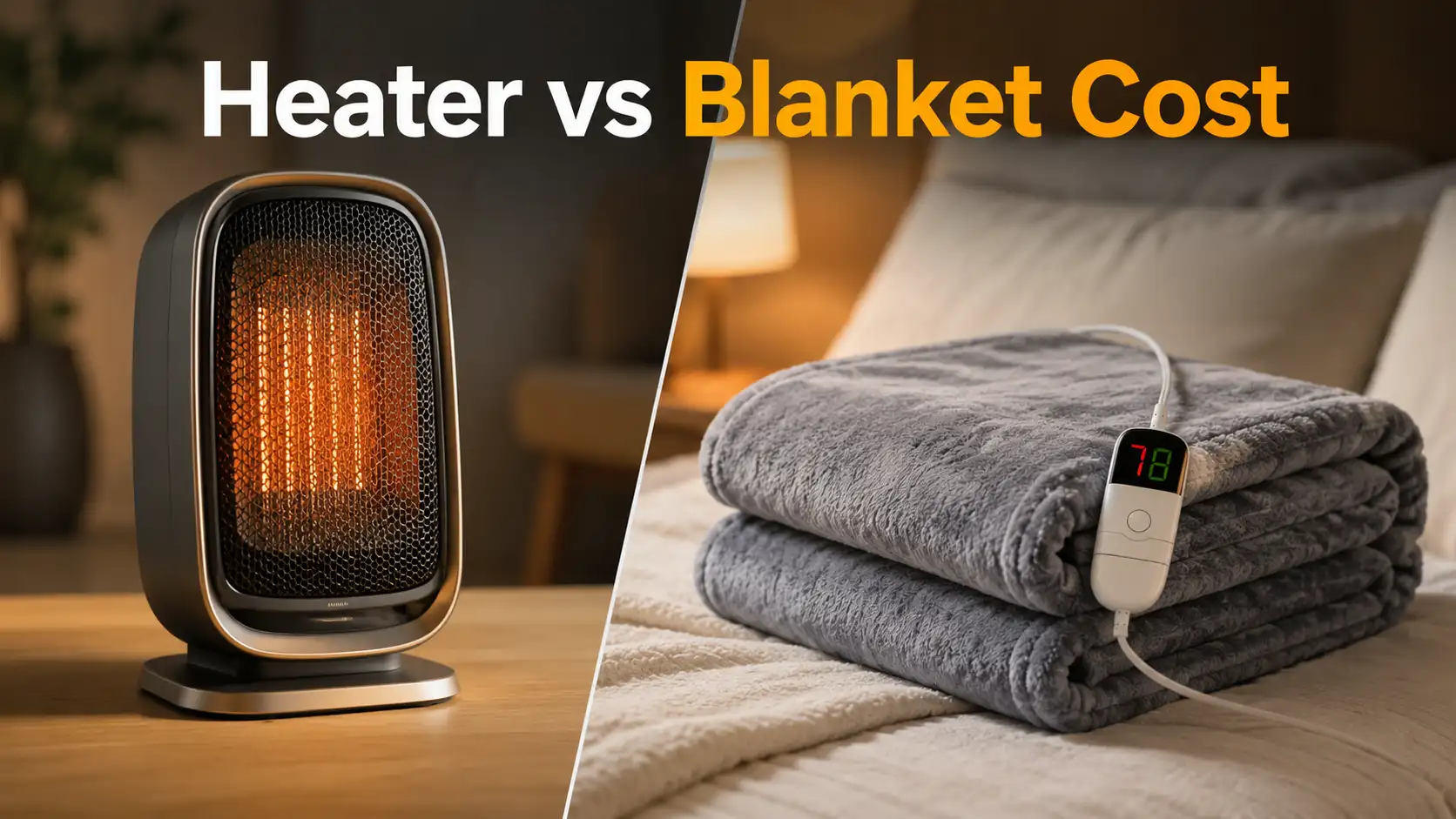
An electric blanket is usually much cheaper to run than a 1,500W space heater because it warms one person instead of heating the air in an entire room. At an example electricity rate of $0.18 per kWh, a 1,500W heater costs about $0.27 per hour at full power, while a 150W electric blanket costs about $0.03 per hour. For the electricity and running-cost side of this topic, see What Uses More Power Space Heater or Electric Blanket.
That does not make an electric blanket a replacement for room heating in every situation. Choose based on what you need to warm: a space heater is useful when several people need comfortable room air, while a heated blanket or throw is more efficient when one person mainly needs direct warmth.
Paid link. As an Amazon Associate, we earn from qualifying purchases at no extra cost to you.
TL;DR
- A 150W electric blanket uses about one-tenth the power of a 1,500W space heater while both are running.
- Choose a space heater for room warmth; choose a heated blanket when one person needs direct warmth.
- Actual cost equals wattage × runtime × your electricity rate. Thermostat cycling can reduce a space heater’s total runtime.
- For either product, follow the manufacturer’s instructions and stop using damaged cords, plugs, controls, or heating elements.
Space Heater vs Electric Blanket Cost Comparison
| Comparison | 1,500W Space Heater | 150W Electric Blanket |
|---|---|---|
| What it warms | Room air / occupied zone | One person |
| Power at full output | 1.5 kW | 0.15 kW |
| Cost at $0.18/kWh | About $0.27/hour | About $0.03/hour |
| 8 hours at that rate | About $2.16 | About $0.22 |
| Best use | Shared room comfort | Personal warmth |
The table uses a simple example rate, not a universal U.S. electricity price. To calculate your own cost, convert watts to kilowatts and multiply by hours used and your local price per kWh.

Why an Electric Blanket Uses Less Electricity
A space heater has to warm moving room air and continually replace heat lost through windows, walls, doors, and drafts. A heated blanket sends heat directly to the person using it, so it can provide comfort with much lower wattage.

This is why a heated blanket can be the cheaper choice when you are reading, watching TV, or sitting at a desk. If you need to walk around a cold room, host several people, or make the room itself warmer, a blanket cannot do the same job.
When a Space Heater Makes More Sense
- Several people share the room: one heater can improve comfort across the occupied space.
- You need warm room air: a blanket only warms the person touching or covered by it.
- You move around: room heat follows you better than a corded blanket.
- The room is suitable for a portable heater: you can maintain safe clearance and use a direct wall outlet.

When an Electric Blanket Makes More Sense
- Only one person needs warmth: direct heat avoids warming unused room air.
- You are sitting still: a heated throw can be effective for a sofa or chair.
- You want lower power draw: many heated blankets use far less wattage than a full-size portable heater.
- The product instructions match your intended use: exact rules vary by blanket design.
Space Heater Safety
CPSC recommends keeping portable heaters at least three feet from bedding, curtains, furniture, and other combustible materials, plugging electric heaters directly into a wall outlet, and turning heaters off when sleeping. See the CPSC portable heater safety guidance. For more detail on this topic, see our guide to is it cheaper to run space heaters or central heat.
- Use a stable, level placement required by the heater manual.
- Do not use an extension cord or power strip.
- Stop using the heater if its plug, cord, or outlet becomes hot or damaged.
- Use built-in timers and controls rather than adding external smart plugs or timers unless the manufacturer permits them.
Electric Blanket Safety
Electric blankets have different hazards. ESFI recommends replacing worn or damaged blankets, never folding or tucking them while in use, keeping objects off the energized blanket, and avoiding extension cords or power strips. See the ESFI electric blanket safety guidance.
Do not assume every heated blanket is approved for overnight use. Follow the exact product manual. If the instructions do not explicitly allow sleep use, turn it off before sleeping.
Which Is Cheaper to Run?
For personal warmth, the electric blanket wins on operating cost because it normally uses a fraction of a space heater’s wattage. For warming a room, however, the comparison is not one-to-one: a blanket cannot raise the room temperature for everyone. For a direct side-by-side decision, see Space Heater vs Heated Mattress Pad: Cost Comparison.
If your goal is to lower heating cost, first decide what actually needs to be warm. Heating one person directly is usually cheaper than heating the room around them. If the room itself needs heat, size the heater correctly and use its thermostat rather than running maximum power continuously.
Frequently Asked Questions
Does an electric blanket use less electricity than a space heater?
Usually, yes. A typical full-size heater can draw 1,500W on high, while heated blankets commonly use a much lower wattage. Check the label on your exact products for an accurate comparison.
Is a 1,500W space heater ten times more expensive than a 150W blanket?
While both are actively drawing full power, the 1,500W device uses ten times the electricity of a 150W device. Real monthly cost also depends on thermostat cycling and total runtime.
Can I leave a space heater on while sleeping?
CPSC recommends turning portable heaters off when sleeping.
Can I leave an electric blanket on all night?
Follow the exact blanket manual. Do not assume sleep use is permitted. Never use a damaged, folded, tucked, or improperly covered electric blanket.
Which is better for one person working from home?
If you only need direct warmth while sitting, a heated throw can use much less power. If you need your hands, face, and the surrounding work area warmer, a properly placed space heater may be more comfortable.


