
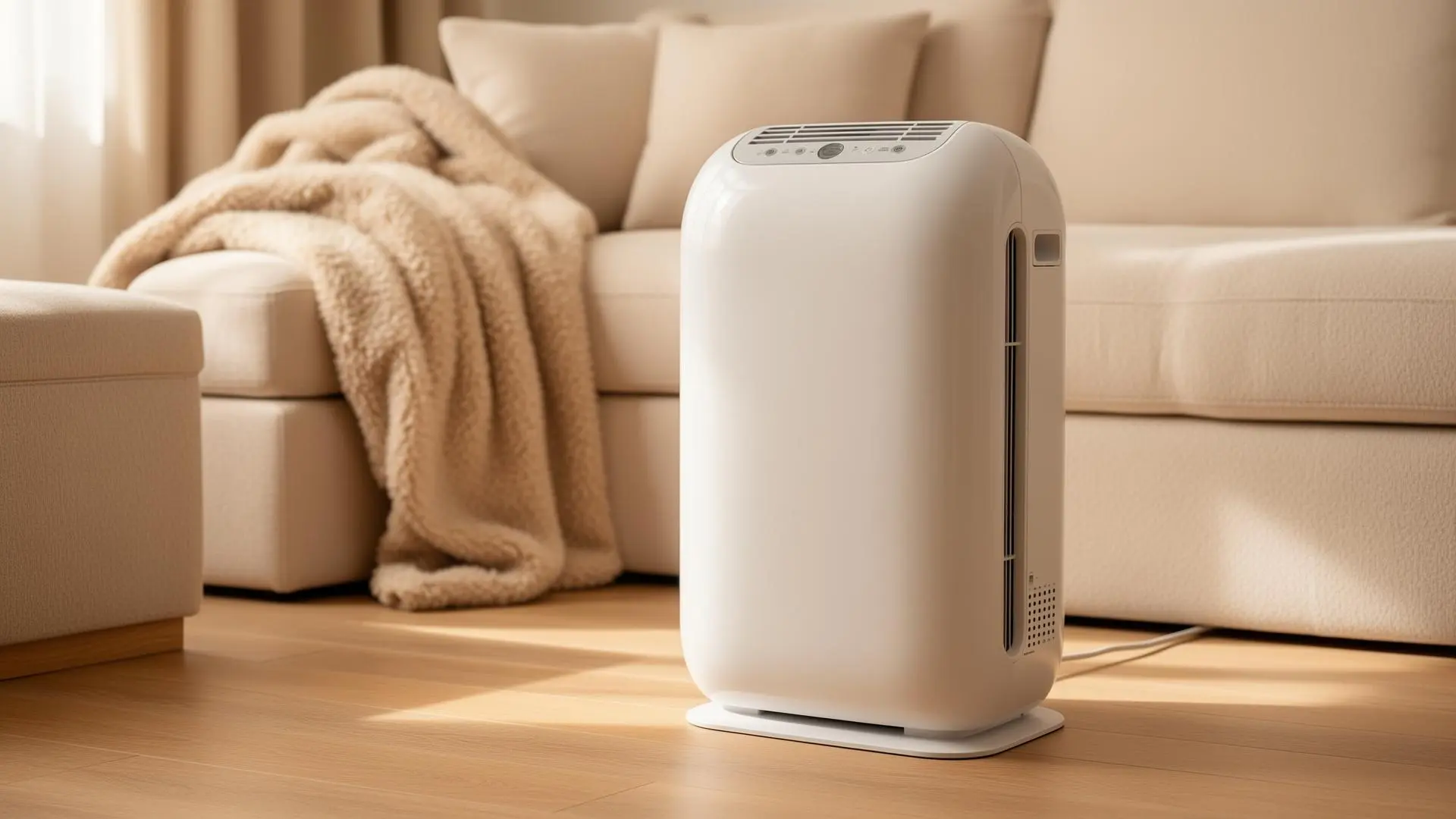


There is nothing worse than buying a shiny new gadget only to find out it does not actually work for you. You spend fifty or sixty dollars on a heater, bring it home, and plug it in. An hour later, you are still wearing a thick sweater and your nose is still cold. You might wonder if the heater is broken, but usually, the problem is simpler. You just bought the wrong size.
Getting the sizing right is the difference between a cozy bedroom and a wasted electric bill. If the heater is too small, it will run constantly and never catch up. If it is too big, you might constantly flip it on and off because the room gets too hot too fast. In this guide, I will help you figure out exactly what size space heater you need so you can finally stop shivering.
Paid link. As an Amazon Associate, we earn from qualifying purchases at no extra cost to you.
TL;DR
- A common sizing rule of thumb is about 10 watts per square foot for a reasonably insulated room with standard ceiling height, but insulation, windows, ceiling height, and outdoor temperature can change the result.
- Match the heater to the room size, insulation and the kind of warmth you want instead of choosing by wattage alone.
- Prioritize appropriate safety features, stable placement, direct wall-outlet use and clear manufacturer instructions.
- Check the exact model specifications before purchase because features and retailer listings can change.
Quick Answer: What Size Space Heater Do I Need?
The standard rule for choosing a heater is the 10-watt rule. You need approximately 10 watts of heating power for every square foot of floor space in your room. For a standard 150-square-foot bedroom, a 1500-watt heater is the perfect fit. If your ceilings are higher than eight feet or your insulation is poor, you should aim for a slightly higher wattage or a more powerful heating technology like infrared.
The Golden Rule of 10 Watts
When you start looking at boxes in the store or listings online, you will see numbers like 750W or 1500W. These stand for watts. Think of watts as the “muscle” of the heater. The more watts it has, the more heat it can pump out.

To find your ideal size, you first need to know the square footage of your room. You can find this by multiplying the length of the room by the width. If your room is 10 feet long and 12 feet wide, that is 120 square feet.
Using the 10-watt rule, you multiply 120 by 10. This gives you 1200. So, for that specific room, you would look for a heater that offers at least 1200 watts. Most full-sized portable heaters have a high setting of 1500 watts, which makes them a safe bet for most average rooms in a modern home.
Why 1500 Watts is the Limit
You might notice that almost every “large” space heater tops out at 1500 watts. There is a very practical reason for this. Most household electrical circuits in North America are rated for 15 amps. A 1500-watt heater takes up a huge chunk of that capacity. If manufacturers made a 2000-watt portable heater, it would likely trip your circuit breaker the moment you turned it on. This is why you rarely see anything higher for standard indoor use.
Matching Heater Types to Your Room Size
Not all watts are created equal. How that energy is delivered can change how a room feels. Choosing the best space heater size often depends on the technology inside the box.
Small Personal Spaces (Under 50 Square Feet)
If you just want to keep your feet warm under a desk or heat a tiny bathroom while you shower, you do not need a 1500-watt giant. A small ceramic personal heater or a “plug-in” wall heater is usually enough. These often run between 200 and 500 watts. They are energy efficient because they focus on a very small area. For more detail on this topic, see our guide to how to read space heater specifications correctly.

Medium Bedrooms and Offices (100 to 150 Square Feet)
This is the sweet spot for most ceramic fan heaters. These heaters are great because they heat up instantly. If you walk into your office and it is freezing, a ceramic heater will make you feel better in minutes. They are easy to move around and usually have a thermostat to help maintain the temperature.

Large Living Rooms and Basements (200 to 300 Square Feet)
For these areas, a single 1500-watt fan heater might struggle to reach the corners. This is where oil-filled radiators or large infrared heaters shine. An oil-filled radiator works like a silent permanent heater. It takes longer to warm up, but it radiates heat in all directions. It creates a “thermal mass” that keeps the large room feeling cozy even after the thermostat clicks off.

Common Sizing Mistakes to Avoid
I have seen many people waste money because they didn’t think through the layout of their space. Here are a few things to keep in mind.
Don’t Buy Too Small for a Shared Space
If you are trying to heat a living room where three people are sitting, a small personal heater will only make the person closest to it happy. For shared spaces, you need a heater with oscillation. This is a feature where the heater turns side-to-side to spread the warmth across a wider area.
Avoid Using One Heater for Multiple Rooms
Space heaters are designed for “zone heating.” They are not meant to replace your furnace. If you try to put one large heater in a hallway hoping it will heat two different bedrooms, you will likely be disappointed. The heat will get trapped in the hallway, and the bedrooms will stay chilly. It is much more efficient to have two smaller heaters, one in each room.
Neglecting the “Eco” Settings
Many people buy a high-wattage heater and run it on “High” all the time. This is a mistake. Most modern heaters have an “Eco” or “Auto” mode. This allows the heater to switch between 750W and 1500W depending on how close the room is to the target temperature. This saves a lot of money on your electric bill and prevents the room from becoming an oven.
Sizing for Safety: A Hidden Requirement
The size of the heater also dictates where it can safely go. A large, heavy oil-filled radiator needs a flat, solid floor. You cannot put it on a shelf or a cramped corner. If you have a very small room, a large heater might be a trip hazard. For a side-by-side comparison, see understanding BTU vs watt in space heaters.
In small rooms like bathrooms, size matters for another reason: moisture. You need a heater that is small enough to stay away from water sources but powerful enough to handle the damp air. Always look for an ALCI safety plug if you are sizing a heater for a bathroom.
Performance Analysis: Watts vs. BTU
Sometimes you will see “BTU” on the box instead of watts. BTU stands for British Thermal Unit. For electric heaters, the math is very simple.
1 watt is equal to 3.41 BTUs.
So, a 1500-watt heater is roughly 5100 BTUs. If you see a heater advertised as “5000 BTUs,” just know it is basically the same as any other 1500-watt heater. Don’t let fancy marketing terms confuse you. The power output is almost always capped by your wall outlet.


Frequently Asked Questions
Can a space heater be too big for a room?
Yes, it can. If you put a high-powered 1500-watt heater in a tiny walk-in closet or a small bathroom, the thermostat will constantly cycle on and off. This can wear out the internal components faster and make the room feel uncomfortably hot very quickly.
What size heater do I need for a 20×20 room?
A 20×20 room is 400 square feet. This is quite large for a single portable heater. Using the 10-watt rule, you would need 4000 watts. Since a standard outlet only gives you 1500 watts, one heater will not be enough to heat the whole room to a toasty temperature. You would likely need two 1500-watt heaters placed at opposite ends of the room.
How do I know if my heater is the right size?
If your heater runs for hours without ever reaching the temperature you set on the thermostat, it is likely too small for the space. If it reaches the temperature in five minutes and then shuts off, only to turn back on two minutes later, it might be too large or positioned in a way that traps heat near its own sensor.
Does a larger heater use more electricity?
Not necessarily. A 1500-watt heater that runs for 20 minutes to heat a room uses the same amount of power as a 750-watt heater that runs for 40 minutes. The key is how long it takes to reach your desired comfort level.
What size space heater do I need for a basement?
Basements are usually colder because they are underground and often have concrete floors. For a basement, I recommend ignoring the 10-watt rule and going higher. Aim for about 15 watts per square foot, or look specifically for an infrared heater that can cut through the damp chill.
Are tower heaters better for large rooms?
Tower heaters are usually ceramic fan heaters that are taller. Because they are tall, they can distribute air at a higher level, which helps heat the “living zone” where you actually sit. They are a great choice for medium-to-large rooms where you want the air to circulate better.


