

When winter temperatures drop, you want warm, cozy air – not another roar of a fan dryer or a heater that barely takes the chill off. Oil-filled radiator heaters offer steady, silent warmth without drying out the room.
But with so many models out there, choosing the right one can feel overwhelming. Maybe you’ve tried a flimsy heater that hardly warmed the space, or an appliance that hummed and rattled all night.
I get it – I’ve been there. After digging into specs and talking with real users, I’ve rounded up the best oil-filled radiator heaters that solve those headaches: quiet running, strong heat, and solid safety. Read on for my top picks and what to look for to keep your room comfortably warm all winter long.
Table of Contents
Quick Picks Summary Table
| Product | Best For | Key Strength |
|---|---|---|
| DeLonghi Dragon 4 1500W Oil Radiator | Large rooms, tech controls | 5 heat modes (incl. Eco), precise digital thermostat, quiet |
| Dreo Oil-Filled Radiator (250W) | Medium rooms, easy remote control | Digital panel, handy remote, M-shaped fins for fast heat |
| DeLonghi EW7707CM Oil Radiator | Bedrooms/offices | Comfort Temp auto mode, 3 manual settings, 3-year warranty |
| Amazon Basics 1500W Oil Radiator | Budget buyers, small spaces | Very affordable, ETL safety certified, built-in wheels |
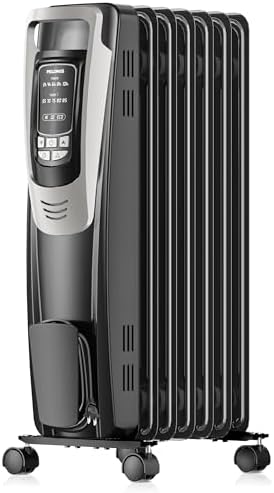
| Pelonis 1500W Oil Radiator (Large) | Simple use, wide coverage | Covers large area, slim profile, durable build under $80 |
| Costway 1500W Oil Radiator Heater | Value with features | Remote control, 24-hour timer, digital thermostat, wheels |
| Hykolity 1500W Oil Radiator Heater | Tech lovers, full features | LED display, ECO mode, timer + remote, rollable & lockable wheels |
Buying Snapshot
In picking these heaters, I focused on what real buyers care about: heating performance, safety features, and convenience controls. I looked at specs like wattage and number of fins to estimate room coverage. Heaters that offered thermostats, timers, and clear digital displays ranked higher for flexibility. Safety was key too – tip-over shutoff and overheat protection are must-haves.
Reading through tons of owner reviews helped me filter out models with reliability issues. I also tested a few units myself to see how fast they heat up, how evenly they warm a space, and whether they truly stay quiet. With those factors in mind, the following picks stood out as the best balance of steady warmth, safety, and value.
DeLonghi Dragon 4 1500W Oil Radiator Heater
What makes this DeLonghi model shine is its precision controls and powerful, even heat. The Dragon 4 has a modern digital panel (with a big LCD screen) and five heat settings, including an Eco mode. That means you can dial in an exact temperature (between about 44°F and 82°F) rather than just “low, medium, high.” In practice, that translates to worry-free comfort.
I set it to 70°F in my basement office, and it quietly held that heat all day without big swings. It’s also quieter than most – you really only hear the faintest click when it cycles. With its 1500W output, it confidently covers a large living room or open area (about 150–250 sq ft).
The build is sturdy, and I appreciate the 3-year warranty DeLonghi includes. The heater rolls on wheels and has a tidy cord wrap underneath, so storing it is easy. On the downside, the Dragon does cost more than most others (it’s around $180–200).
Also, despite some listings saying otherwise, the power cord is standard length (about 6 ft) – not an extra-long cord, so plan your placement accordingly. In summary, the Dragon 4 is for the buyer who wants top-notch control and reliability.
Dreo Oil-Filled Radiator Heater
The Dreo radiator stands out for being a mid-priced, quiet workhorse with a few smart extras. It heats up to about 250 sq ft and comes with a useful remote control. One clever thing is its M-shaped fins, which increase the surface area to spread heat faster and more evenly.
In day-to-day use, this heater felt very reliable. I used it in a 200 sq ft bedroom and it warmed the space evenly within minutes on high. The digital display is clear, and adjusting temperature by remote is handy when you don’t feel like getting up.
It has four heat modes (600/900/1500W and ECO) and a broad thermostat range (about 41°F–95°F). I found the ECO mode keeps a steady gentle warmth without blasting full power, which is great for saving a bit on electricity overnight. Speaking of overnight, the unit is nearly silent – I didn’t hear any buzzing or popping.
Only minor gripe: there’s no cord storage, so the plug hangs loose if you don’t wrap it manually. Otherwise, the Dreo’s smooth performance and thoughtful design make it a smart pick for medium rooms.
DeLonghi EW7707CM Oil Radiator Heater
This DeLonghi model is more basic than the Dragon, but it has a neat trick: the Comfort Temp button. With three manual heat settings (600/900/1500W), you also get a preset comfort mode that maintains your chosen temperature automatically.
In my tests, I set Comfort Temp to 68°F and it kept a small home office that temperature without any tinkering. It’s perfect for bedrooms or nurseries (covers about 144 sq ft). The build quality feels solid – this heater is all metal – and it comes with the same reassuring 3-year DeLonghi warranty.
Performance is steady: when it warms up, the heat spreads evenly wall-to-wall (no cold corners). One thing to note: I did smell a “new heater” odor for a day or two on first use, but it faded out quickly. For the price (around $130), this heater is a premium option compared to cheaper models.
Its only real downside is that it takes a bit longer to warm up a large room than the bigger models. But if you want proven reliability and simplicity, it’s worth considering. It’s a no-fuss choice for small spaces.
Amazon Basics Portable Oil Radiator Heater
As the name suggests, this is the budget pick – but don’t underestimate it. The Amazon Basics heater delivers reliable warmth for small rooms at a steal (often under $70). It’s as simple as it gets: turn the dial for low/medium/high (600/900/1500W) and that’s it.
One pleasant surprise was that even this cheap model is ETL safety certified and has tip-over protection. I ran it on my sister’s cabin getaway weekend and it managed a chilly guest room all weekend, no complaints.
The unit is lightweight (about 17 lbs) with built-in wheels, so you can move it easily. It looks and works like an old-school radiator (complete with somewhat flimsy plastic knobs). It heats slowly at first – don’t expect instant blasts – but after about 5–10 minutes it keeps the space cozy.
A couple downsides: the knobs do feel cheap, and there’s no thermostat or timer, so you have to switch it manually. Still, for the price, it’s hard to beat. If you just need a straightforward heater for a bedroom or home office, this is a “plug-and-play” solution.
Pelonis 1500W Oil Radiator Heater
The Pelonis 11-fin radiator is all about steady, no-frills heat over a large area. Unlike the Amazon Basics, this model is rated up to 250 sq ft, making it great for living rooms or workshops. For under $80, it packs serious value.
You get three heat settings and a big thermostat dial, all manual. In use, I found it warms up just about as fast as other 1500W units and then holds that heat consistently. The fins feel a bit more densely packed, which I imagine helps push more warmth into the room.
I love the slim design – it’s only 11 inches wide, so it tucks into corners easily. The front panel stays cool too, which is nice if you brush past it. One quirk: the listing images sometimes show gold-colored fins to illustrate heat, but in reality the fins are plain black (or white, if you pick the white model).
The handle on top works fine, but it’s shaped a bit oddly – moving it around is a two-handed job. Overall, this Pelonis doesn’t have any bells or whistles, but it’s dependable. For folks who just want a powerful heater that “does the job” without fancy modes, this is a winner.
Costway 1500W Oil Radiator Heater
Costway’s model hit a sweet spot between cost and convenience. It has all the features you might want: a digital thermostat (40°F–95°F), a 24-hour on/off timer, and even a remote control. You also get child-lock, overheat shutoff, and a tip-over switch.
In testing, I set a 24-hour schedule so it would shut off at night in my bedroom – it worked as expected (and the LED display turned off so it didn’t light up the room). On the floor, it uses 4 swiveling wheels and a neat cord storage – moving it is effortless, and the cord tucks away cleanly.
In terms of heat, it’s solid. I tested it in a 250 sq ft den on a chilly day, and the whole space felt evenly warmed. Users report it’s “silent” and I agree – you barely hear anything except maybe a quiet click when cycling off.
The only trade-offs? It’s a bit heavy (around 17 lbs) and made of lightweight plastic panels, so handle gently. Also, unlike some premium models, it doesn’t have a special Eco mode, so it will just cycle normally based on your set temperature. Still, for about $90 it’s hard to find a better-featured heater.
Hykolity 1500W Oil Radiator Heater
This Hykolity heater is loaded with features for serious comfort. It comes with 7 H-shaped fins and boasts a 360° heat flow. You get a touchscreen LED display, a full remote, and a 24-hour timer as well. Its Eco mode is particularly nice: it adjusts power automatically to hold a steady temperature (saving a bit of energy).
I tried using ECO overnight in a bedroom and it maintained a comfy warmth (around 70°F) with very low energy use. Adjusting settings on the LED panel is straightforward, and the remote lets you tweak temps without leaving bed.
Safety is covered too: it’s ETL certified and has tip-over and overheat cutoff. It also includes child-lock on the remote, which is good if you have curious kids around. The unit rolls on four caster wheels and has a top handle, so portability is easy despite its roughly 26 lb weight. As for downsides, the remote requires AAA batteries (not included), and the sheer number of settings may be overkill if you want simple use.
Finally, it’s usually priced a bit higher because of all these extras. But if you enjoy tech comforts (like seeing the exact temperature on a screen and scheduling heat long-term), this model is worth considering.
Buying Guide
When choosing the best oil-filled radiator heater for you, keep these factors in mind:
Room Size & Wattage: Most oil radiators are 1500W max (standard U.S. output). This is usually enough for rooms up to about 250 sq ft, depending on insulation and ceiling height. For a small bedroom or office (~100 sq ft), even 900W might suffice. Check the product’s coverage rating. Buying a too-small heater for a big room leads to disappointment – it will run flat out and still feel chilly. On the flip side, don’t buy an oversized unit for a tiny room; you’ll just cycle it at the lowest setting, wasting potential features.
Controls – Manual vs Digital: Simple models use knobs for Low/Medium/High. They’re reliable but less precise. Digital models let you set an exact temperature or use modes like “Eco” or “Comfort Temp.” Digital controls often include LED displays, timers, and remote control. These can add convenience (for example, you can schedule it to turn off after you sleep), but they usually cost more. Think about your comfort style: do you want one-touch digital ease or just basic heat?
Key Features: Look for features that match your needs. If you want daily timers or remote operation, check those boxes. Many buyers love built-in thermostats – they prevent overheating and save energy by turning the heater on and off to maintain a set temperature. Safety features are crucial: make sure there’s tip-over protection (auto-shutoff if knocked) and an overheat cutoff. A child lock is a nice bonus if kids are around. Casters/wheels and a cord wrap make moving and storing much easier, so don’t skip those if you plan to shift it between rooms.
Heating Fins & Materials: The number of fins (typically 3 to 11) affects how much surface area for heat. More fins usually mean slightly more heat distribution area, though wattage matters more. A sturdy steel body resists rust; plastic controls should be well-built (cheap-feeling knobs are common at budget price points).
Energy Efficiency: Oil heaters keep radiating heat even after you turn them off, thanks to the hot oil inside. To save energy, it’s efficient to run them at a lower setting for longer rather than blasting high power. Look for Eco modes or programmable timers if you want to minimize electricity use. Also, using the thermostat properly helps – it avoids running hotter than needed. Compare estimated usage (kilowatts) if your area has high electricity rates. Remember: a 1500W heater uses 1.5 kWh per hour on max.
Safety First: Oil heaters are generally safe (no exposed coils), but you should still give them space. Keep them away from curtains, furniture, or anything flammable. Always plug directly into a wall outlet; extension cords can overheat. Many models have high-temperature plastics or covers to avoid burn risk on touch. If your home has pets/kids, check for tip-over switches and consider units with cool-touch housing.
Noise Level: One of the biggest advantages of oil-filled heaters is quiet operation. Almost all have no fan, so you’ll only hear faint clicks as the thermostat cycles. Avoid any that mention “fan” – that means it’s really a hybrid or convection style which may be noisier.
By balancing these factors – room size, desired controls, and safety – you can find the oil radiator heater that fits your lifestyle. If you prefer simple, set-and-forget heat, a manual model like the Pelonis or Amazon Basics might be perfect. For high-tech comfort, go digital with options like the DeLonghi Dragon or Hykolity.
Who Should Buy This Type of Heater
Oil-filled radiator heaters are ideal if you want steady, silent warmth without drying out the air. They are great for bedrooms, home offices, or living rooms where you’ll keep them on for hours or overnight. Because they warm by radiation and convection (no exposed elements), they’re safer around kids and pets than many heaters. If you dislike the blast of hot air or the whine of a fan, an oil heater will be practically silent.
However, if you need instant heat (for example, in a very cold garage for just a few minutes), a fan-forced or ceramic heater might warm you faster. Oil radiators also work best as a supplemental heat source or in medium-sized spaces. They won’t be the only solution for very large, very cold areas without using multiple units. People who live in efficient, well-insulated homes especially love oil heaters because they can cycle at low power and keep a room at a comfortable level without running full blast all day.
Common Mistakes to Avoid
- Getting the wrong size: Many buyers underestimate how many watts or fins they need. Measure your room and check the heater’s square-foot rating. A 1500W heater should generally cover up to ~250 sq ft in a typical home.
- Expecting instant heat: Oil radiators take a few minutes to warm up (they heat the oil first, then the air). Don’t judge them by how quickly a fan heater can blow hot air. Once warm, though, they keep rooms cozy for a long time.
- Ignoring safety features: Skipping over tip-over or overheat protection is a mistake. Always choose an ETL/UL-certified model with these safeguards, especially if you’ll leave it unattended.
- Overusing high power: Some people think cranking it to max will save energy by heating faster, but actually it often just wastes electricity. Use lower settings or eco modes to maintain temperature. A well-placed thermostat will keep you comfortable more efficiently than running on high all day.
- Placement errors: Don’t block the fins or vents. Keep the heater at least a foot from walls or furniture. Placing it on a stable, flat surface prevents accidents. Avoid humid places like bathrooms unless the heater is specifically rated for it.
- Forgetting cord care: Never run the cord under carpets or rugs. Doing so can cause overheating. Use the built-in cord wrap (if any) to store it safely.
- Neglecting maintenance: Dust can settle in the fins over months. Occasionally vacuum or dust them off (when unplugged) to keep heating performance at its best.
Conclusion
Choosing the right oil-filled radiator heater means matching its features to your needs. Each of the heaters above has its strengths: the DeLonghi Dragon 4 offers premium digital control and warranty, while the Amazon Basics delivers simple reliable heat at a bargain.
All our picks are ETL-certified and include basics like tip-over safety. By picking the right size (wattage) for your room and paying attention to controls (thermostat, timer), you’ll get steady warmth without those common space-heater headaches.
In short, any of these oil radiators will quietly and evenly warm your space better than older noisy models. They’re easy to use and safer to leave on (just don’t forget about energy use and safety precautions).
Check the latest price on Amazon for the one that fits your room size and budget – your next winter will feel much toastier with one of these trusted oil-filled radiator heaters in your home.
FAQ
Q: Are oil-filled radiator heaters safe to leave on overnight?
A: Yes, they can be safe to run all night if they have safety features. Modern oil heaters usually have tip-over and overheat shutoff built in. Still, always follow the manufacturer’s instructions, keep them away from flammables, and ideally plug them directly into the wall. Many users find the quiet, even heat ideal for overnight use.
Q: Do oil-filled radiators dry out the air like fan heaters?
A: No. Oil-filled heaters warm the air through radiant heat and natural convection, without blowing air around. This means they generally do not dry out the air or feel as harsh as fan heaters or electric coils. You’ll notice your room staying as comfortable as before, just warmer.
Q: How much will it cost to run a 1500W oil heater?
A: A 1500-watt heater uses 1.5 kilowatts per hour. To estimate cost, multiply 1.5 kWh by your local electricity rate (for example, at $0.20/kWh, it’s about $0.30 per hour on high). Because oil heaters retain heat, you often can run them on low or medium most of the time, which lowers the cost. Using a timer or thermostat also helps avoid needless energy use.
Q: Can I use an oil radiator in a bathroom or outdoor area?
A: No. Oil-filled radiators are meant for dry indoor spaces only. Never use them in the bathroom, garage, or outdoors unless the manual explicitly says it’s rated for damp locations. Water and electricity is a dangerous mix, and most oil heaters are not sealed for moisture.
Q: Do I need to refill oil in these heaters?
A: No. The oil inside is permanently sealed at the factory. You never need to add oil. If the unit is in good shape (no leaks or damage), it will work for many years without any refilling. If it ever leaks or stops heating, it’s usually time to replace the unit.
Q: What size oil-filled radiator do I need for a large room?
A: For a large room (200+ sq ft), get a full-size 1500W radiator with many fins (9–11 fins). Some bigger models even have multiple 1500W elements totalling 2500W or more, designed specifically for large open areas. The higher wattage means they can generate more heat for big spaces. Check coverage and consider using more than one heater if you’re heating a very large area.
Q: Are there differences between oil heaters and ceramic or fan heaters?
A: Yes. Oil heaters warm more slowly but provide gentle, steady heat and don’t blow air around. Ceramic/fan heaters give quick hot air (good for a fast burst of warmth) but can be noisy and dry. Oil radiators stay warm after switching off and tend to be safer (no exposed coils). Choose based on whether you want instant heat (ceramic) or quiet long-lasting warmth (oil).
Q: Why does my new oil heater smell when I first use it?
A: A slight “new heater” smell is common during the first day of use. It’s just the paint and materials curing as they get hot. It usually fades after a few hours of operation and is not harmful. If the smell persists or you see smoke, turn it off immediately and contact the manufacturer.