
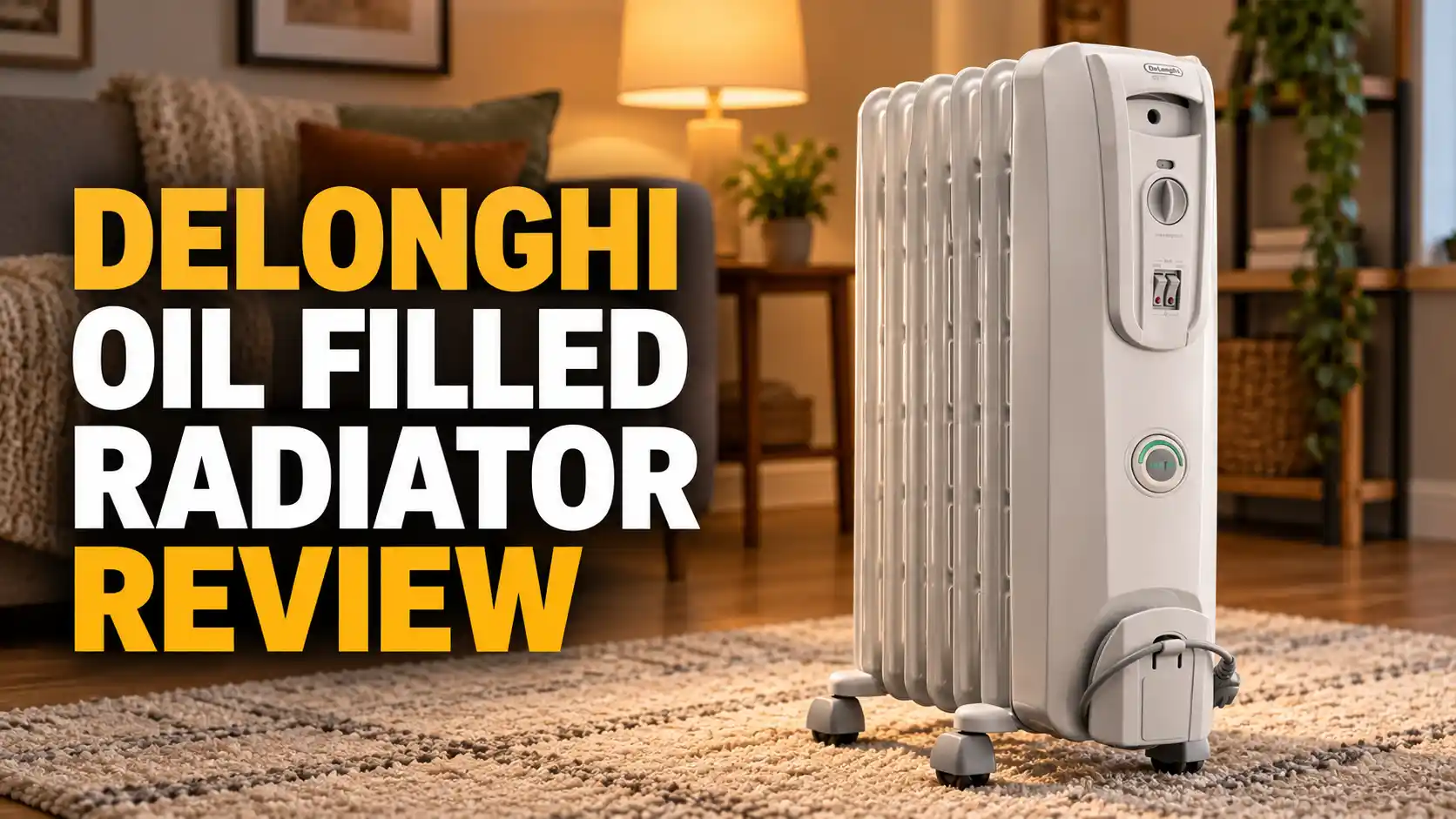


This DeLonghi oil filled radiator review focuses on current DeLonghi radiator models and the reasons buyers choose fanless oil heat: quiet operation, gradual room warming and steady comfort during longer occupied periods. Current U.S. options include the ComfortTemp EW7707CM and Dragon TRD40615T. For more alternatives, see our best oil-filled radiator heaters guide.
A DeLonghi oil radiator is not inherently lower-wattage than another space heater. At full power, a 1,500W model uses the same maximum electrical power as another 1,500W resistance heater. Its advantage is how the oil and steel body store and release heat, not free or extra energy.
Paid link. As an Amazon Associate, we earn from qualifying purchases at no extra cost to you.
TL;DR
- Choose a DeLonghi oil-filled radiator if you want quiet, fanless heat and do not mind a slower warm-up than a ceramic fan heater.
- The ComfortTemp EW7707CM is a simple current 1500W option, while Dragon models use different control layouts depending on the exact variant.
- A 1500W oil-filled radiator does not inherently use less electricity than another 1500W resistance heater; thermostat cycling, room heat loss and runtime determine actual energy use.
This post contains affiliate links. We may earn a commission if you buy through them. As an Amazon Associate we earn from qualifying purchases.
DeLonghi Oil Filled Radiator Review: Quick Verdict
Choose a DeLonghi oil-filled radiator if you want quiet room heat and are willing to wait for the radiator to warm up. It is a better fit for long occupied periods than for someone who wants instant heat the moment they enter a cold room.


Current DeLonghi Oil-Filled Models and Controls
DeLonghi’s current U.S. oil-filled radiator range includes models such as the ComfortTemp EW7707CM-6A and Dragon TRD40615T. Control layouts vary by model, so check the exact product page or manual before comparing thermostat, timer or ECO features.
The oil is permanently sealed inside the radiator. An internal electric element heats the oil, the oil warms the metal fins, and the fins release heat by natural convection and radiation. There is no fan to push air through the room.
Heating Performance and Warm-Up Time
Oil-filled radiators warm more slowly than ceramic fan heaters because the element must heat the internal oil and metal body before the room feels much different. That slower response is normal. Once the radiator is hot, the large metal surface releases heat steadily and continues releasing stored heat after the element cycles off.
Room size still matters. A 1,500W DeLonghi oil-filled radiator can be useful as supplemental heat in a bedroom, office or living area, but insulation, ceiling height, windows and outdoor temperature determine whether it can maintain comfort. Avoid treating one retailer square-foot number as universal.
DeLonghi Oil Heater Electricity Use
A 1,500W setting uses 1.5 kWh for each full-power hour while the element remains on. Thermostat cycling can reduce actual consumption after the room reaches the selected comfort level. Lower heat settings reduce power draw but also reduce heat output.
The stored heat in the oil can make temperature changes feel smoother, but it does not make a 1,500W radiator inherently more electrically efficient than another 1,500W resistance heater. Compare cost using wattage, runtime and your local electricity price.
Noise Level: Why Oil Radiators Are So Quiet
The biggest advantage over ceramic fan heaters is the lack of a blower. You will not hear continuous fan noise. Normal oil-radiator sounds can include thermostat clicks, light ticking or expansion noises as the metal heats and cools. If you hear electrical buzzing, sizzling or see leaking oil, stop using the heater and inspect the issue.
DeLonghi Safety Features
Safety features vary by exact DeLonghi model. Check the manual for tip-over protection, thermal shutoff and control behavior. Regardless of built-in safeguards, keep portable heaters away from combustible materials, use a stable surface and plug the heater directly into a suitable wall outlet.
Do not use an oil-filled radiator as a reason to ignore normal sleep and unattended-use precautions. Portable electric heaters should be turned off when sleeping or leaving the room.
DeLonghi Oil Filled Radiator Pros and Cons
Pros: fanless operation, gradual and even-feeling heat, sealed oil system, sturdy radiator design and current manufacturer support for multiple radiator models.
Cons: slower warm-up than fan heaters, heavier body, hot radiator surfaces during use and a premium purchase price compared with basic ceramic heaters.
DeLonghi vs Pelonis Oil-Filled Radiator
Both brands sell 1,500W-class oil-filled radiators, so maximum wattage alone does not decide the comparison. Pelonis often competes on value and digital convenience, while DeLonghi offers several current radiator families. For model-specific details and trade-offs, see our Pelonis oil-filled radiator review.
Who Should Buy a DeLonghi Oil-Filled Radiator?
- Good fit: bedrooms, offices and living areas where quiet, steady supplemental heat matters more than instant warm air.
- Good fit: people who prefer fanless heat and do not need constant airflow from a blower.
- Less suitable: anyone who wants very fast warm-up, a lightweight heater to move frequently, or strong directed airflow.
DeLonghi Oil Filled Radiator Review: Verdict
A DeLonghi oil-filled radiator is a strong choice for buyers who understand what this heating style does well. It trades speed and light weight for quiet operation and a large thermal mass that releases heat gradually.
It is not automatically the cheapest heater to run, and it should not be sold on unsupported “dry air,” nursery or overnight-safety claims. Buy it because the fanless design, controls, build and current manufacturer support fit your room and use case.
If you are comparing alternatives, see our Dreo vs DeLonghi ceramic vs oil-filled comparison for a model-by-model look at the differences.
Frequently Asked Questions
Do I need to add oil to a DeLonghi radiator?
No routine oil refill is required. The thermal fluid is sealed inside the radiator at the factory.
How long does a DeLonghi oil heater take to warm a room?
Expect gradual warm-up rather than instant heat. The exact time depends on the room, starting temperature, insulation and heater setting.
Is a DeLonghi oil heater cheaper to run than a ceramic heater?
Not automatically. If both are drawing 1,500W, their instantaneous electrical use is similar. Thermostat cycling, room heat loss and total runtime determine the practical cost.
Can I leave a DeLonghi radiator on while sleeping?
Do not treat any portable electric heater as safe to leave running while you sleep. Follow the current model manual and normal portable-heater safety guidance.
Compare more models in our best DeLonghi space heaters guide.
If you are choosing between DeLonghi radiators, our EW7707CM vs Dragon4 TRD40615E comparison breaks down the control and availability differences.


