
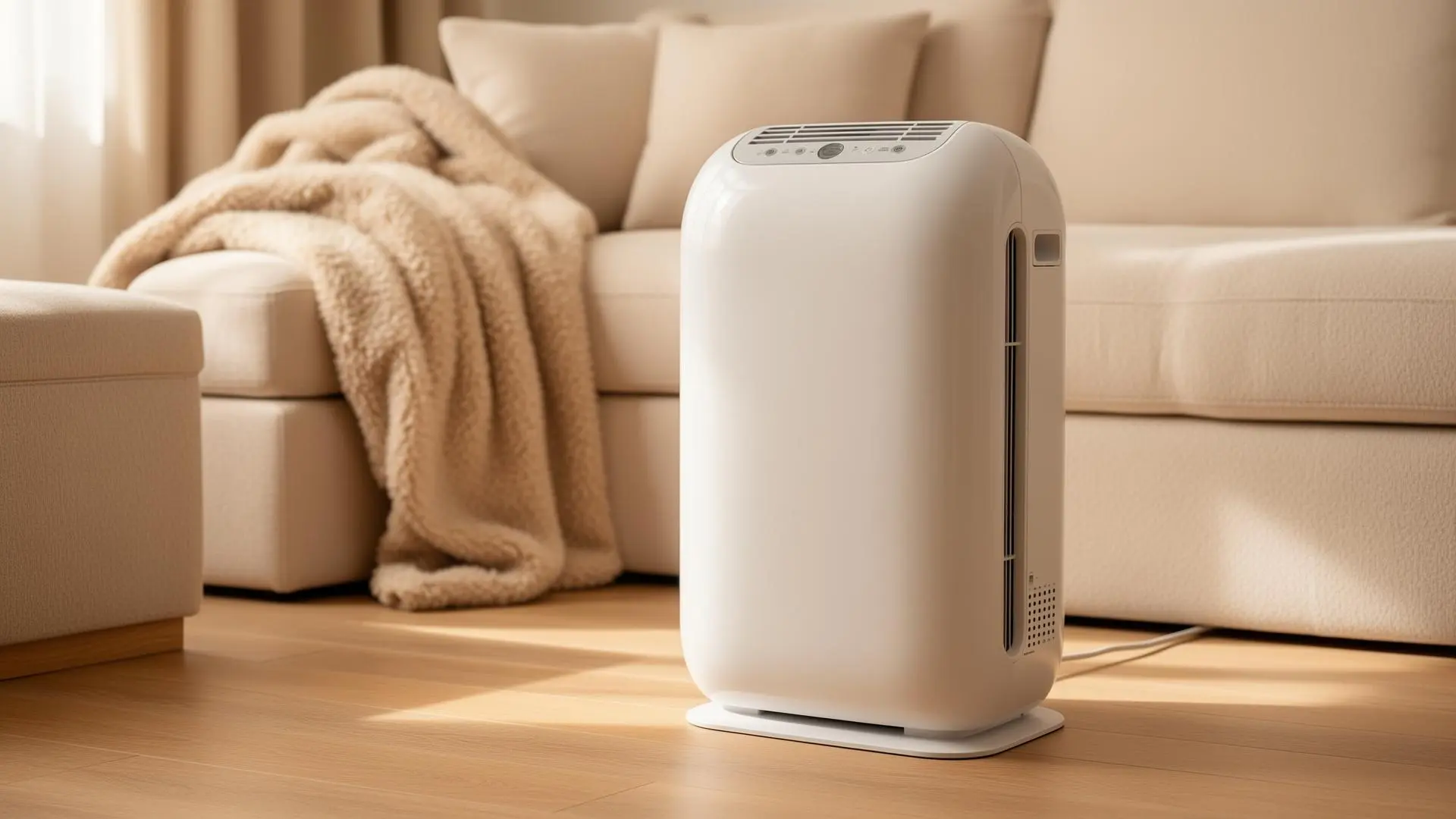


The transition from late autumn to the deep freeze of winter often forces a difficult decision upon the domestic consumer. When the central furnace fails to reach a secluded bedroom or when the electricity bill becomes a source of anxiety, the search for a supplemental heat source begins.
The primary tension in the modern market exists between the premium, high technology offerings of Dyson and the utilitarian, value driven products from Lasko. This Dyson vs Lasko space heater comparison explores the nuances of engineering, safety, and long term value to determine which brand serves the specific needs of different households.
The price gap between these two manufacturers is significant, often exceeding five hundred dollars, which leads many buyers to question whether the sophisticated features of a Dyson justify the investment over a dependable Lasko tower.
Paid link. As an Amazon Associate, we earn from qualifying purchases at no extra cost to you.
TL;DR
- For the consumer seeking immediate guidance, the following table summarizes the superior options within specific performance categories based on technical specifications and user feedback.
- The better heater depends on whether you value fast direct warmth, steadier whole-room comfort, quiet operation, portability or precise controls.
- For electric resistance heaters with the same wattage, electricity draw while the element is on is broadly similar; comfort and total runtime create the practical differences.
- Match the heater type to the room size, insulation and how long you normally occupy the space.
Quick Verdict: Winner Snapshot
For the consumer seeking immediate guidance, the following table summarizes the superior options within specific performance categories based on technical specifications and user feedback.

| Category | Winner | Key Feature |
| Best Overall | Lasko FH500 | Efficient 2-in-1 heating and cooling for most room sizes. |
| Best for Large Rooms | Lasko 5586 | High velocity air circulation and 1500W output. |
| Best Budget Option | Lasko 754200 | Compact, reliable, and highly affordable for personal use. |
| Best Multi-Function | Dyson HP07 | Combines HEPA air purification with precise heating. |
| Best for Safety | Dyson HP1 | Bladeless design with no exposed heating elements. |
| Best Smart Tech | Dyson HP2 | Advanced sensors and mobile app integration for monitoring. |
The deciding factor between these brands typically centers on the requirement for air purification. If the household requires year round air quality management alongside heating, the Dyson ecosystem offers a consolidated solution. If the primary goal is rapid, cost effective thermal comfort, the Lasko product line remains the practical choice.


Side-by-Side Comparison Table
A direct comparison of the most popular models provides a clear picture of the technical disparities and similarities between the brands.
| Feature | Dyson Purifier Hot + Cool HP07 | Lasko All-Season FH500 |
| Heating Element | Positive Temperature Coefficient (PTC) Ceramic | Ceramic Fan-Forced |
| Wattage | 1500W (Heat mode) / 2250W (Max burst) | 1500W |
| Noise Level | 24dB to 62dB (Variable) | 48dB to 52dB |
| Oscillation | 350 Degrees | 70 to 90 Degrees |
| Safety Features | Bladeless, Tip-over, Overheat, Cool-touch | Tip-over, Overheat, Cool-touch |
| Control Methods | Remote, MyDyson App, Voice Control | Remote, Digital Display |
| Filtration | HEPA H13 and Carbon | Permanent washable dust filter |
| Warranty | 2 Years | 3 Years |
Detailed Comparison Sections
Heating Performance and Thermal Dynamics
The fundamental objective of a space heater is to provide localized thermal relief. Lasko and Dyson approach this task with distinct mechanical philosophies. Lasko utilizes a traditional fan forced convection system. This method involves drawing air over a ceramic heating element and pushing it outward using a high velocity fan. The result is an immediate blast of heat that can be felt within seconds of activation. Real world testing indicates that a Lasko tower can raise the temperature of a 150 square foot room by 10 degrees Fahrenheit in approximately 12 seconds when set to high. The air velocity is higher in Lasko models, which makes them effective at pushing heat across long distances, such as in a large living room or a basement with high ceilings.
Energy Efficiency and Operational Costs
The conversation regarding energy efficiency in space heaters is often misunderstood by the general public. Almost all electric space heaters utilize 1500 watts of power on their high setting. Because they are nearly 100 percent efficient at converting electricity into heat, there is no inherent “energy saving” technology that allows one brand to create more heat with less power. A Dyson at 1500 watts and a Lasko at 1500 watts will have the same impact on the raw electricity bill if run continuously.
Noise Levels and Environmental Impact
The acoustic profile of a space heater is a critical factor for use in bedrooms and quiet work environments. Lasko heaters, while not excessively loud, produce a noticeable mechanical sound. The fan must spin at high speeds to push air through the front grill, creating a sound profile that averages 48 to 52 decibels on high settings. This is comparable to the hum of a large refrigerator or the sound of a modern dishwasher. Many users find this sound acceptable for daytime use, but light sleepers may find the cycling of the motor disruptive at night.
Safety Features and Risk Management
Safety is the area of most significant concern for space heater users, as these devices are a leading cause of home fires. Both brands incorporate standard safety features such as tip over switches and overheat protection. If a Lasko or Dyson unit is knocked over by a pet or a child, a physical sensor at the base will immediately disconnect the power.
Build Quality, Design, and Portability
Dyson products are designed with an emphasis on aesthetics and high end materials. The units are often made of reinforced ABS plastic and feature sleek finishes in colors like nickel, iron, and blue. The design is iconic and often serves as a conversation piece in a modern home. The remote control is curved and magnetized to sit perfectly on top of the machine, reducing the likelihood of loss. Dyson units are relatively lightweight, often around 11 pounds, but their tall, loop like structure can be slightly more awkward to carry than a traditional heater.
Ease of Use and Connectivity
Value for Money and Total Cost of Ownership
The primary hurdle for many buyers is the price difference. A high quality Lasko tower heater can be purchased for roughly 60 to 120 dollars. In contrast, the Dyson Purifier Hot + Cool line starts at 499 dollars and can exceed 900 dollars for the latest models.
Who Should Buy a Dyson Space Heater?
The Dyson Purifier Hot + Cool is designed for the modern household that prioritizes safety, air quality, and seamless design. It is the gold standard for parents of young children due to the bladeless design and cool-to-the-touch surfaces. Individuals who live in urban environments with poor air quality or those who suffer from severe allergies will benefit immensely from the 3-in-1 functionality. It is also the preferred choice for those who work from home and require a silent environment for focus and video calls. While the price is high, the ability to use the same machine for cooling in the summer and air purification all year round justifies the cost for users who value a minimalist home with fewer separate appliances. Those looking to invest in a Dyson should view on Amazon for the latest pricing on current and previous generation models.
Final Verdict
The Dyson vs Lasko space heater comparison reveals two very different paths to comfort. Lasko represents the traditional, power-first approach that has defined the American space heater market for decades. It is a brand that offers raw heating performance and excellent value, making it the correct choice for most people who simply need to stay warm without spending a fortune.
Dyson represents a shift toward the “smart home” and integrated health. By combining a heater with a high grade air purifier, Dyson has created a niche for consumers who want more than just warmth. While the high price and filter costs are significant drawbacks, the safety and silence of the Dyson are unmatched by traditional ceramic towers.
The ultimate recommendation depends on the specific room. For a large living room that needs quick heat, a Lasko tower is the superior tool. For a child’s bedroom or a home office where air quality and safety are paramount, the Dyson is the better investment. Both brands are leaders in their respective categories, and choosing between them requires an honest assessment of whether air purification and smart features are worth the 500 dollar premium. Consumers are encouraged to check the latest price on Amazon for both brands to see which fits their current budget and needs. For model-specific details and trade-offs, see our Dyson AM09 Hot + Cool Review.
Frequently Asked Questions
Is a Dyson heater more energy efficient than a Lasko?
The raw energy usage is nearly identical because both typically use 1500 watts of power on high heat. However, Dyson is often more efficient at maintaining a precise temperature due to better sensors, while Lasko provides faster warmth which may allow for shorter run times.
Can Lasko heaters be used in a bathroom?
Most Lasko heaters are not designed for wet environments. However, Lasko does produce specific portable models that are ALCI safety plug equipped and approved for bathroom use. Always check the specific model documentation before using any heater near water.
Do Dyson filters need to be changed even if I only use the heat?
Yes, because the air is always being pulled through the filter before it is heated and projected out. If the filter becomes clogged with dust and pollutants, it can restrict airflow and cause the heater to operate less efficiently or shut down.
Why does my Lasko heater have a strange smell when I first turn it on?
This is usually caused by dust settling on the ceramic heating elements during periods of non-use. When the heater is first activated, the dust is burned off. This smell should dissipate within 15 to 30 minutes. If the smell persists or smells like melting plastic, the unit should be unplugged immediately.
Does the Dyson app work for the heating function?
In many regions, including the United States, safety regulations require the heating function to be activated manually using the physical remote or buttons on the unit. The app can still be used to monitor air quality, adjust fan speed, and change the target temperature once the heat is on.
Which heater is quieter for sleeping?
Dyson is the clear winner for sleep environments. Its night mode is engineered for low noise (as low as 24dB), whereas Lasko fans have a more traditional mechanical sound (around 48-50dB) that may be distracting to light sleepers.
Are there any recalls on current Lasko models?
While Lasko has had significant recalls in the past (notably in 2004, 2007, and 2011), current models sold at major retailers are generally considered safe when used according to the manufacturer’s instructions. Users should always register their product to receive safety updates.
For Dyson’s newer purifier-heater line, read our Dyson Purifier Hot+Cool HP1 review.


