
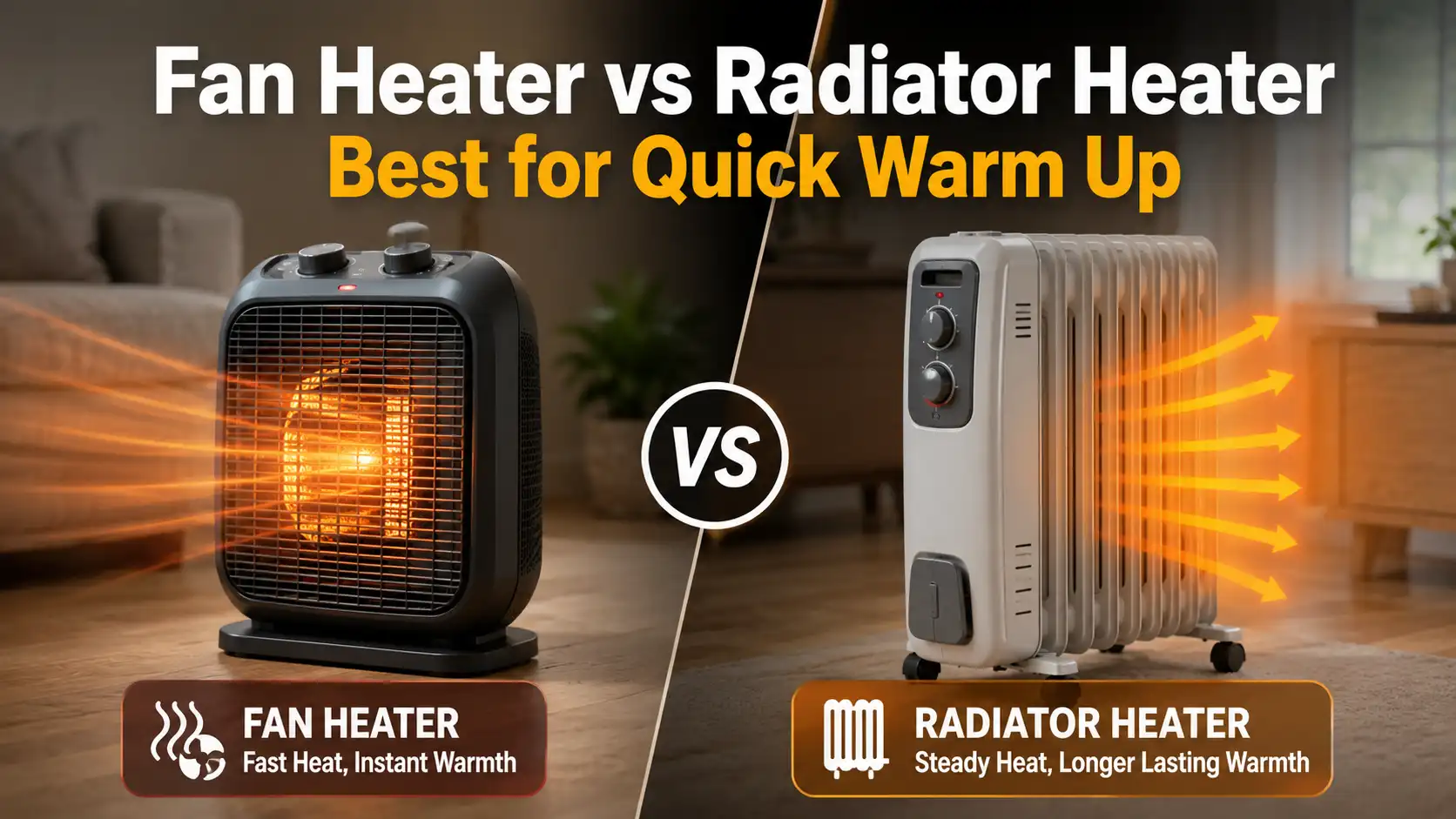


You walk into your home office on a freezing Monday morning. The air is so cold you can almost see your breath. You have exactly ten minutes before your first video call starts. You need heat, and you need it right now. You look at the two heaters in the hallway closet. One is a small plastic box with a fan. The other is a heavy metal unit filled with oil. You wonder about the Fan Heater vs Radiator Heater Best for Quick Warm Up dilemma. For a direct side-by-side decision, see Oil-Filled Radiator vs Fan Heater: Pros and Cons.
Choosing the wrong one could mean shivering through your meeting. If you pick the slow heater, you might not feel warm until your lunch break. But if you pick the fast one, will it keep you comfortable for the rest of the day? Understanding how these two very different technologies work is the secret to staying cozy without wasting money.
As a dedicated reviewer of space heaters, I have tested both styles in drafty rooms and well-insulated bedrooms. They each have a specific job to do. Let’s look at the science of speed versus stability so you can decide which one to plug in when the temperature drops.
Paid link. As an Amazon Associate, we earn from qualifying purchases at no extra cost to you.
TL;DR
- A fan heater is the undisputed winner for a quick warm up. It uses a fan to blow air directly over heated coils, providing instant warmth within seconds.
- Choose by the room and use case first, then compare wattage, thermostat control, noise, safety features, size and current warranty/model details.
- A higher price does not automatically mean lower electricity use; for electric resistance heaters, runtime and thermostat control matter more than marketing claims.
- Before buying, verify the exact model, safety listing, current price and manufacturer instructions because retailer listings can change.
Quick Answer: Which Heater is Faster?
A fan heater is the undisputed winner for a quick warm up. It uses a fan to blow air directly over heated coils, providing instant warmth within seconds. A radiator heater is much slower, often taking 15 to 20 minutes to heat up the oil inside before you feel any significant change in the room temperature.

How Fan Heaters Work: The Speed King
To understand Fan Heater vs Radiator Heater Best for Quick Warm Up, you have to look at the “forced convection” process. Inside a fan heater, there are wire coils or ceramic plates that get red hot almost instantly when you click the power switch.
A fan sits right behind these elements. It pulls in cold air from the floor, pushes it over the hot surfaces, and blasts it out into the room. This creates a focused stream of hot air. If you point it at your feet, you feel warm the second the blades start spinning. This is why fan heaters are the go-to choice for people who hate waiting for comfort.

How Radiator Heaters Work: The Slow Burn
Radiator heaters, often called oil-filled radiators, take a completely different approach. They do not have a fan. Instead, they use electricity to warm a reservoir of thermal oil inside their metal fins.
The oil then transfers that heat to the metal casing, which slowly warms the air around it. This is a passive process. The heat rises naturally and spreads through the room. While this creates a very comfortable and even warmth, it is not a “fast” technology. You are essentially waiting for a heavy metal object to soak up energy before it can share it with you.

Comparison Insights: Real World Performance
In my years of testing, I have found that “speed” is only one part of the story. Here is how they compare in different home scenarios.
The Morning Rush
If you have five minutes to get dressed in a cold bathroom, the fan heater is your best friend. It acts like a blow dryer for the whole room. You get a direct hit of warmth that makes the morning bearable. In this scenario, a radiator heater is useless. By the time it gets hot, you will already be in your car driving to work.
The All-Day Home Office
If you are sitting at a desk for eight hours, the fan heater can actually become annoying. The constant noise of the fan can be distracting. The air it blows can be dry and itchy. This is where the radiator heater wins. Even though it starts slowly, it provides a silent, “gentle” warmth that stays steady all day long.
Pros and Cons of Fan Heaters
Pros
- Instant Heat: You feel the warmth in seconds.
- Portable: They are usually very light and have handles.
- Affordable: They are often the cheapest heaters on the market.
- Targeted: You can point the heat exactly where you need it.
Cons
- Noisy: The fan creates a constant whirring sound.
- Drying: They can dry out your skin and sinuses quickly.
- Cold Aftermath: The room gets cold the moment you turn it off.
- Dust Movers: They blow dust and allergens around the room.
Pros and Cons of Radiator Heaters
Pros
- Silent: There are no moving parts, so they are perfectly quiet.
- Even Heat: They don’t create “hot spots” in the room.
- Energy Efficient: They stay warm long after the power is cut.
- Skin Friendly: They don’t dry out the air like fan heaters do.
Cons
- Very Slow: You have to plan ahead to get the room warm.
- Heavy: They are difficult to move between floors.
- Hot Surface: The metal fins can get very hot to the touch.
- Bulky: They take up more floor space than compact fans.
Cost Breakdown: Which Is Cheaper?
When debating Fan Heater vs Radiator Heater Best for Quick Warm Up, you must consider your electric bill. Almost all portable heaters use 1,500 watts on their high setting. This means they cost the same amount of money to run for one hour.
However, the radiator heater is often cheaper for long-term use. Because the oil holds heat so well, the thermostat can turn the power off while the heater continues to radiate warmth. The fan heater has no “thermal mass.” It must pull electricity the entire time you want to feel warm. If you plan to heat a room for more than three hours, the radiator is the smarter financial choice.
Safety Considerations: Protecting Your Home
Safety is the most important part of any heater review. Both styles have specific rules you should follow to avoid fire risks.
Fan heaters are a higher risk for nearby objects. Because they blast hot air out of a small vent, they can scorch curtains or furniture if they are too close. You must maintain at least a three-foot clearance at all times.
Radiator heaters are generally safer for overnight use because they don’t have exposed glowing elements. However, they are heavy and can be a tip-over hazard for pets. Always ensure your unit has a tip-over switch and overheat protection.
Comparison Insights: Which Should You Buy?
Who Should Buy a Fan Heater?
- People who only need heat for short periods.
- Office workers who want to warm their feet under a desk.
- Anyone on a tight budget looking for a secondary heat source.
- Households that need a very light, portable unit to move around.
Who Should Buy a Radiator Heater?
- Families who want to heat a bedroom for the entire night.
- People who are sensitive to noise or dry air.
- Anyone who wants the most “natural” feeling warmth.
- Users who want a set-it-and-forget-it heater for a living room.
Buying Factors to Watch For
Before you spend your money, look for these three things on the box.
- Digital Controls: These allow you to set an exact temperature. This prevents the heater from running on “High” when the room is already warm.
- Safety Certifications: Only buy heaters with a UL or ETL seal. This proves the unit has been tested for fire safety by independent labs.
- Eco Mode: This setting automatically adjusts the power level to maintain your comfort with the least amount of electricity.
Common Mistakes to Avoid
One of the biggest mistakes is putting a fan heater in a bathroom without a GFCI outlet. Moisture and electricity do not mix. If you want a bathroom heater, look for models specifically rated for high-moisture areas.
Another mistake is buying a tiny fan heater for a giant living room with high ceilings. It will feel hot if you stand right in front of it, but it will never warm the room. For large spaces, you need the “volume” of heat that only a large radiator or a high-powered tower fan can provide.

Frequently Asked Questions
Can I leave a fan heater on all night?
No portable space heater should be treated as safe to leave running while you sleep or when it is unattended. CPSC recommends turning portable heaters off when sleeping, plugging electric heaters directly into a wall outlet, and keeping them at least three feet from bedding, curtains, furniture, and other combustible materials.
Why does my radiator heater make clicking sounds?
This is perfectly normal. As the metal fins and the oil inside expand and contract with the heat, you will hear small clicks or pops. It is not a sign that the heater is broken or dangerous.
Which heater is better for people with allergies?
The radiator heater is much better for allergies. Fan heaters blow air around, which kicks up dust, pet dander, and pollen. Since radiators don’t use a fan, the air stays much cleaner and still.
Do I ever need to change the oil in a radiator?
No. The thermal oil inside a radiator heater is permanently sealed. It is not used as fuel. It is only used to store heat. If you see oil leaking from your heater, stop using it immediately and dispose of it.
Are ceramic fan heaters better than wire coil ones?
Yes. Ceramic fan heaters are generally safer because the ceramic plates do not get as hot as wire coils. They also tend to last longer and provide a more “consistent” heat that doesn’t feel as harsh.
How long does a radiator heater stay warm after you turn it off?
A high-quality oil-filled radiator can stay warm to the touch for 30 to 45 minutes after you unplug it. This “free heat” is one of the biggest benefits of the technology.
What is the most energy efficient way to use a fan heater?
Use the “Low” or “Eco” setting. Once you feel warm, drop the wattage down to 750 watts. This uses half the power but is usually enough to maintain your comfort in a small room.


