
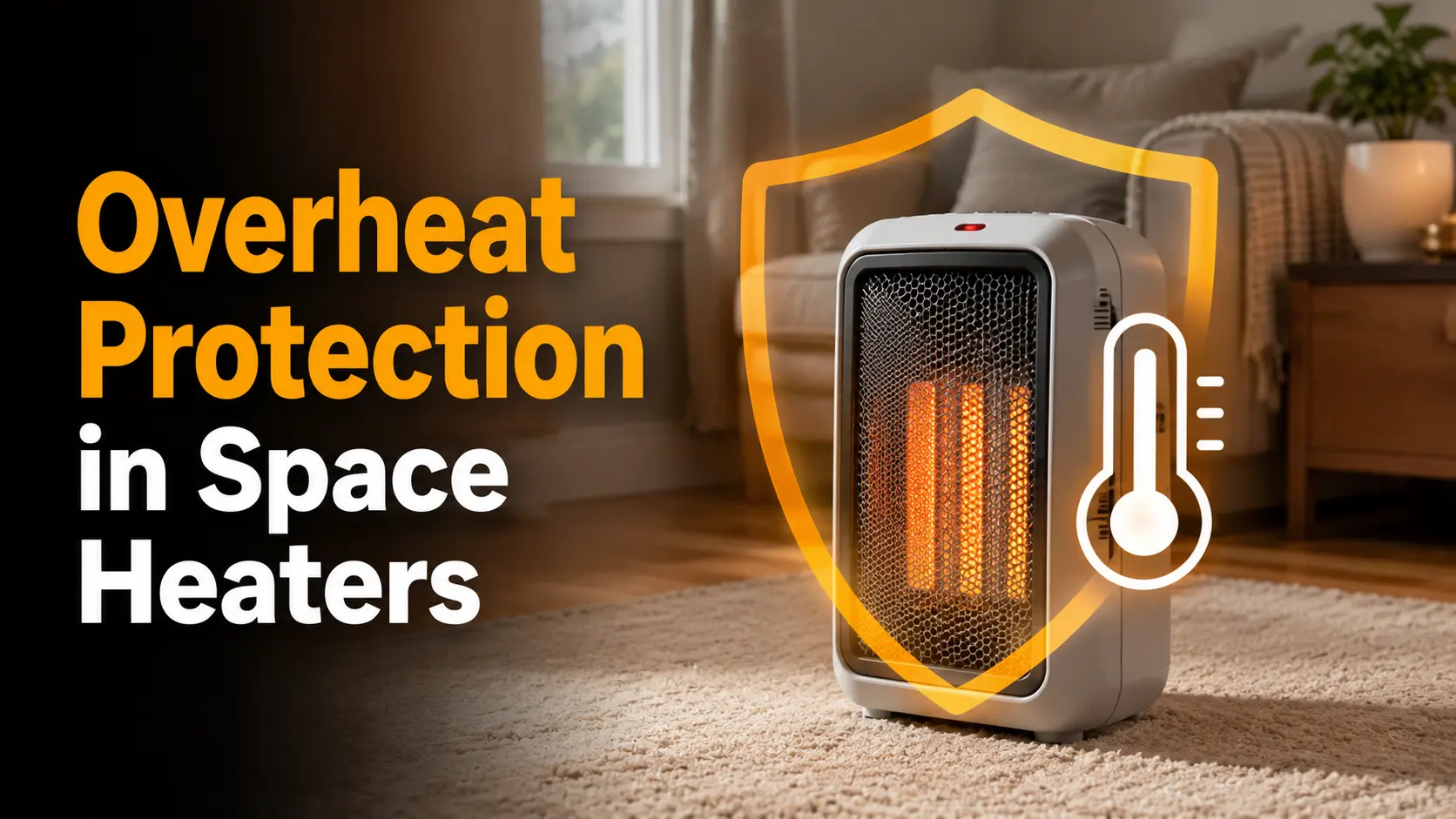

Overheat protection is a safety system that shuts a space heater down when internal temperatures rise beyond the heater’s safe operating range. It is designed to reduce the risk of damage or fire when airflow is blocked, the heater is covered, a fan fails or another condition causes excessive heat.
Overheat protection is important, but it is a backup feature. It does not make it safe to cover a heater, block its vents, use a damaged outlet or place the heater too close to bedding, curtains or furniture.
If your heater repeatedly trips its overheat protection, treat that as a problem to diagnose rather than simply resetting it over and over.
Paid link. As an Amazon Associate, we earn from qualifying purchases at no extra cost to you.
TL;DR
- Overheat protection is a safety system that shuts a space heater down when internal temperatures rise beyond the heater’s safe operating range.
- Common triggers include blocked vents, dust buildup, restricted airflow, fan failure or operating the heater in an unsuitable location.
- Let the heater cool, clear obstructions and follow the manufacturer’s reset instructions before restarting it.
- Repeated overheat shutdowns, melting, burning smells or a hot plug or outlet are reasons to stop using the heater and investigate the fault.
What Is Overheat Protection in a Space Heater?
Overheat protection is a safety feature that uses an internal sensor to monitor the temperature of the heater’s internal components. If the unit reaches a dangerous temperature due to blocked vents or a mechanical failure, the sensor automatically cuts the power to the heating element. This prevents the plastic housing from melting and reduces the risk of a house fire. For the related safety issue, our Can Space Heaters Overheat and How to Prevent It covers the specific risks and safer checks.



How Space Heater Overheat Protection Works
To understand what is overheat protection in space heaters, you have to look inside the machine. Most heaters use a small component called a thermal switch or a thermistor. This part is designed to react to heat.
When the heater is running normally, electricity flows through the switch to the heating coils. However, if the air cannot escape the unit, the internal temperature rises rapidly. The thermal switch is programmed with a specific “limit.” Once the heat hits that limit, the switch physically opens or changes its resistance.
This action breaks the electrical circuit. It is like a fuse that blows to save the rest of the system. In most modern heaters, this happens in a fraction of a second. The heater stops producing heat immediately, even if the fan continues to run for a few seconds to cool the internal parts down.
Why Space Heater Overheat Protection Trips
If your heater keeps shutting off, it is usually doing its job correctly. Here are the most common reasons why the overheat protection might kick in.
Blocked Air Intake or Outlet
This is the number one cause of heater failure. Dust, pet hair, or a stray sock can block the vents. If the fan cannot pull in fresh air or push out the hot air, the heat builds up inside the housing. The sensor detects this instantly and cuts the power to prevent damage.+2
Using the Heater on Thick Carpet
Many people place their heaters on plush rugs or carpets. These soft surfaces can “swallow” the bottom of the heater where the air intake is often located. This suffocates the unit. Always use your heater on a hard, flat surface to ensure proper airflow.
Mechanical Fan Failure
If the internal fan stops spinning due to a motor failure, the heating elements will get extremely hot very fast. Since there is no air movement to carry the heat away, the overheat protection is the only thing preventing a fire. This is why you might hear the heater “click” and turn off even if nothing is blocking it.
High Ambient Temperatures
Sometimes, if the room is already very warm or if the heater is sitting in direct sunlight, the internal sensor might get a “false” reading. It thinks the unit is overheating even when it is just reacting to the environment.
Types of Overheat Protection
When you are shopping for a safe unit, look for these specific variations of overheat technology.
Manual Reset vs. Auto Reset
Some heaters will turn back on once they cool down. This is called an auto-reset. Others require you to unplug the unit and wait before it will work again. This is a manual reset. Manual reset is generally considered safer because it forces you to investigate why the heater got too hot in the first place.
Dual Safety Sensors
High-end heaters often have multiple sensors in different locations. One might be near the heating element, while another is near the power cord. This provides 360-degree protection against any part of the unit getting too hot.
Audible Alarms
Some modern heaters don’t just shut off. They also beep loudly to let you know there is a problem. This is very helpful if the heater is in another room or if you are distracted. It alerts you to go check for a blocked vent immediately.
What to Do When Overheat Protection Shuts the Heater Off
If your heater suddenly dies, do not panic. Follow these steps to handle an overheat situation safely.
- Unplug the Unit: Always pull the plug from the wall immediately. Do not just turn off the switch.
- Check for Obstructions: Look for blankets, furniture, or dust that might be blocking the vents.
- Let it Cool: Wait at least 15 to 30 minutes. The internal components need time to return to a safe temperature before the sensor will reset.
- Inspect the Plug: Look at the wall outlet and the heater plug. If they feel hot or look discolored, you may have an electrical problem rather than a simple overheat.
- Restart on Low: Once cool, plug the heater back in and start it on the lowest setting to make sure the fan is spinning correctly.
Overheat Protection Does Not Replace Safe Use
While learning what is overheat protection in space heaters, you must remember it is only one part of a safety plan. You still need to be a responsible user.
- The 3-Foot Rule: Keep the heater three feet away from everything. This prevents the unit from overheating and keeps flammable items safe.
- Direct Wall Plug: Never use an extension cord or power strip. These can overheat before the heater’s internal sensor even knows there is a problem.
- Avoid Unattended Use: Never leave a heater running when you leave the house or go to bed. Sensors can fail, and it is better to be safe than sorry.
Safety Certification and Overheat Protection
When you see a heater that is UL, ETL, or CSA certified, it means the overheat protection has been tested by professionals. They actually block the vents in a lab to make sure the sensor works every single time. Never buy a heater that doesn’t have one of these safety seals. It is the only way to know the “protection” on the box is real.
Frequently Asked Questions
Can I fix a broken overheat sensor?
No. You should never try to repair or bypass a safety sensor in a space heater. If the sensor is failing, it is time to replace the unit. The risk of a fire is far greater than the cost of a new heater.
Why does my new heater smell like it is burning?
New heaters often have a protective coating on the heating elements. This “off-gassing” is normal for the first hour of use. However, if the smell persists or is accompanied by smoke, turn it off immediately.
Does overheat protection work if the heater tips over?
Not necessarily. Overheat protection reacts to temperature, while a tip-over switch reacts to movement. You should always buy a heater that has both features for maximum safety.
How do I know if my heater has overheat protection?
Check the box, the manual, or the manufacturer’s website. Most heaters made after 2015 include this feature as a standard requirement to meet safety certifications like UL or ETL.
Can dust trigger the overheat protection?
Yes. If enough dust builds up on the internal sensors or blocks the intake vents, the heater will get too hot and shut down. Regular cleaning is the best way to prevent nuisance trips.
What is the difference between a thermal fuse and a thermal switch?
A thermal fuse is a “one-time” safety device. If it blows, the heater is permanently disabled. A thermal switch can be reset once the unit cools down. Both are effective forms of overheat protection.
Is overheat protection the same as a thermostat?
No. A thermostat manages the comfort of the room by turning the heater on and off at a set temperature. Overheat protection is a safety “emergency brake” that only triggers when the unit becomes dangerous.


