
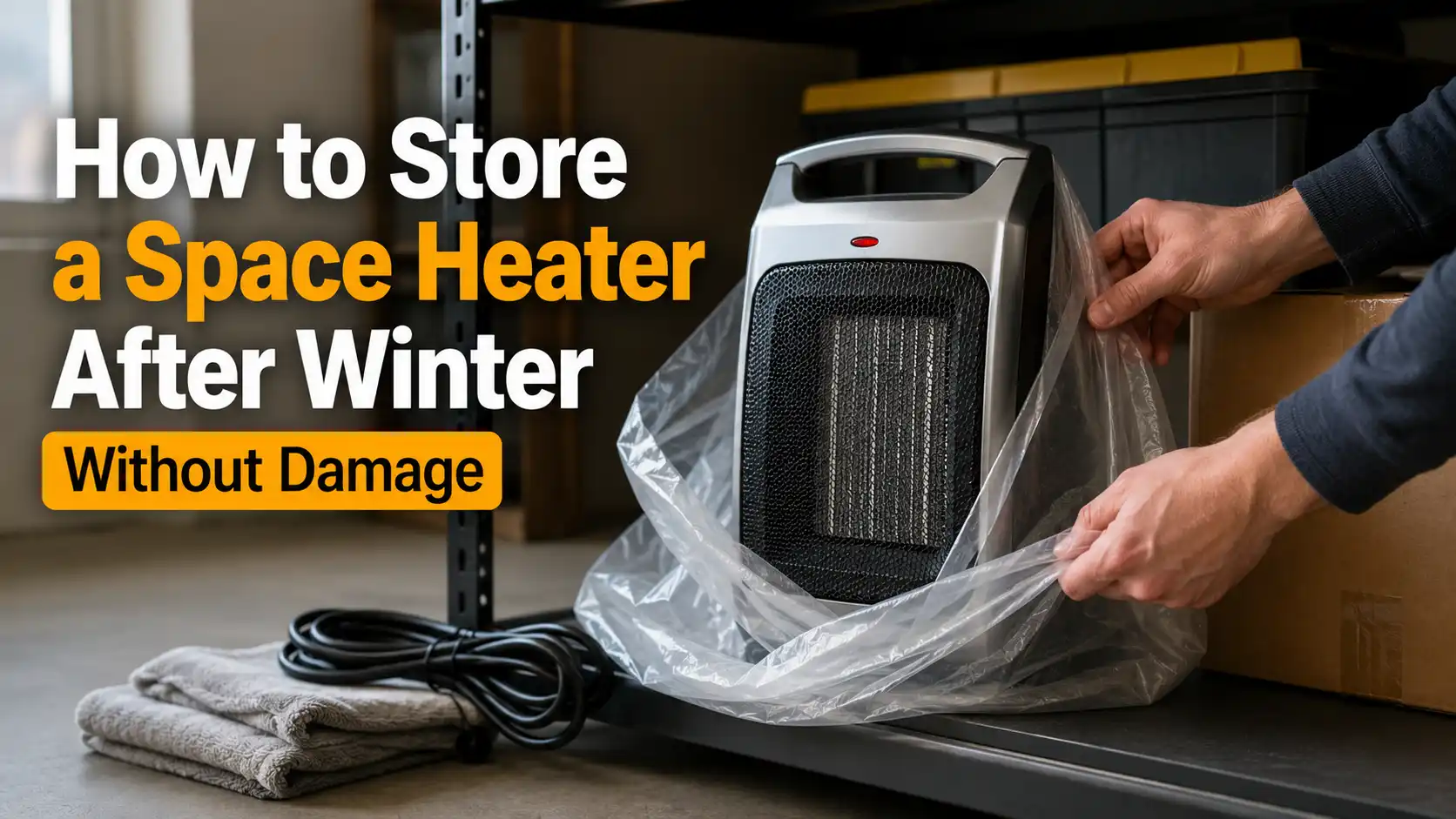


The birds are chirping and the sun is finally staying out longer. You are ready to pack away your heavy coats and thick blankets. You reach for your portable heater that kept you warm all season. You might be tempted to just shove it into the back of a dark closet or a damp garage corner. However, this is exactly how many people ruin their heaters before next year even starts.
If you have ever pulled out your heater in the fall only to find it smells like burning dust or won’t turn on, you know the frustration. Proper storage is the secret to making your investment last for years. Learning how to store a space heater after winter without damage ensures that your device remains safe and efficient for the next cold snap.
As an experienced reviewer of home heating products, I have seen hundreds of units fail due to poor storage. Dust, moisture, and pests are the silent killers of electronics. Let’s look at the right way to put your heater to bed so it wakes up ready to work when you need it again.
Paid link. As an Amazon Associate, we earn from qualifying purchases at no extra cost to you.
TL;DR
- To store a space heater without damage, clean the exterior and vacuum the vents thoroughly to remove dust.
- Start with the simple checks first: wall power, controls, thermostat setting, tip-over switch, overheat reset, blocked airflow and dust buildup.
- Unplug the heater before cleaning or inspecting it, and follow the model’s manual for reset or maintenance steps.
- Stop using the heater if you notice sparks, melting, a persistent electrical or burning-plastic smell, a damaged cord, an oil leak or an overheated plug/outlet.
Quick Answer: How to Store Your Heater
To store a space heater without damage, clean the exterior and vacuum the vents thoroughly to remove dust. Wrap the power cord loosely to avoid internal wire breakage and place the unit in its original box or a sealed plastic bag. Store the heater in a cool, dry place away from high humidity or extreme temperature shifts.

Why Proper Storage Matters
To understand how to store a space heater after winter without damage, you have to think about what happens during the off-season. Your heater will sit for six to eight months. During this time, it is vulnerable to several environmental factors.
Dust Accumulation
Dust is the number one enemy of space heaters. If you leave a heater uncovered, dust settles deep inside the ceramic plates or on the heating coils. When you turn it on next winter, that dust burns off. This creates a terrible smell and can even trigger the overheat protection sensor, causing the unit to fail.
Moisture and Corrosion
Garages and basements are often damp. Moisture in the air can cause the internal metal components to rust. It can also damage the sensitive circuit boards in modern digital heaters. If the internal connections corrode, the heater becomes a fire hazard or simply stops working.
Pest Damage
Spiders and insects love the small, dark crevices inside a heater. They can build webs or nests that block airflow. In some cases, rodents might even chew on the power cord if the heater is left exposed in a shed or attic.
1. Step-by-Step Guidance: The Cleaning Process
You should never store a dirty heater. Follow these steps to prepare your unit for its long summer nap.
Step 1: Unplug and Cool Down
This sounds obvious, but ensure the unit has been unplugged for at least an hour. You want all internal components to be at room temperature before you start cleaning or wrapping.
Step 2: Vacuum the Vents
Use a vacuum with a soft brush attachment. Gently go over the air intake and the exhaust grilles. Move the brush in the direction of the slots. This pulls out the lint and pet hair that accumulated over the winter.
Step 3: Use Compressed Air
For a deeper clean, use a can of compressed air. Give the internal elements a few short bursts. This dislodges the dust that the vacuum cannot reach. It is a vital part of how to store a space heater after winter without damage because it prevents that “burnt smell” later on.
Step 4: Wipe the Exterior
Use a slightly damp microfiber cloth to wipe down the plastic or metal housing. Do not use harsh chemicals or dripping wet sponges. You just want to remove the film of household grime so it doesn’t “set” over the summer.
2. Managing the Power Cord
The cord is the lifeline of your heater. If you treat it poorly during storage, the heater will be useless next year.
Avoid Tight Coiling
Never wrap the cord tightly around the heater body. This puts stress on the internal copper wires and can cause them to snap. It also puts pressure on the spot where the cord enters the heater. Instead, fold the cord loosely in a “figure-eight” pattern.
Use a Cable Tie
Secure the loose bundle with a Velcro strap or a plastic zip tie. This keeps the cord from tangling or getting caught on other items in your closet. Ensure the plug prongs are not pressing against the heater body, as they could scratch the finish.
3. Choosing the Right Container
The goal of storage is to create a barrier between the heater and the environment.
The Original Box
The best way to store a heater is in its original packaging. The box was designed to protect the unit during shipping. It fits perfectly and keeps out dust and light. If you still have the cardboard box, use it.
Plastic Bags or Tubs
If you threw the box away, do not worry. A large, heavy-duty plastic trash bag is a great alternative. Place the heater inside and tie the bag shut. This creates a dust-proof and pest-proof seal. For smaller heaters, a plastic storage bin with a lid is an even better option for protection against bumps.
4. Selecting the Perfect Location
Where you put the heater is just as important as how you wrap it. You want a stable environment.
- Avoid the Garage: Unless your garage is climate-controlled, the temperature swings and humidity are too high.
- Avoid Damp Basements: Moisture leads to rust and mold. If your basement feels “musty,” it is not a good spot for electronics.
- Choose a High Shelf: A closet shelf is usually the best spot. It stays dry and the temperature remains consistent with the rest of your home.
5. Safety Considerations for Fuel-Burning Heaters
If you are storing a propane or kerosene heater, the rules for how to store a space heater after winter without damage are much stricter.
Drain the Fuel
Never store a heater with fuel still in the tank. Kerosene can degrade over the summer and clog the wick or the fuel lines. Propane tanks should be disconnected and stored outside in a well-ventilated area. Never store propane tanks inside your home or garage.
Check the Wick
For kerosene models, this is the time to inspect the wick. If it is charred or thin, replace it now. It is much easier to do this in the spring than to scramble for parts during the first cold week of October.
Practical Tips
- The “Bounce” Test: If you hear anything rattling inside when you move the heater for storage, a screw may have come loose. Tighten it now so you don’t forget.
- Use Silica Gel: Toss a small silica gel packet into the storage bag. This absorbs any tiny amounts of moisture and prevents rust on the internal circuit boards.
- Label the Box: If you have multiple heaters, label the box with the room it belongs in. This makes fall setup much faster.
- Check the Warranty: While you have the heater out, take a photo of the serial number and the receipt. If it fails to start next year, you will have your documentation ready.
Common Mistakes to Avoid
A very common mistake is leaving the batteries in the remote control. Over six months, those batteries can leak acid and destroy the remote. Always remove them and tape them to the outside of the storage bag.
Another mistake is storing the heater while it is still “warm” to the touch. This can trap heat inside the plastic bag and lead to condensation. Finally, do not stack heavy items on top of your heater box. The internal elements are delicate and can be bent or snapped by heavy pressure.

Frequently Asked Questions
Can I store my space heater in the attic?
Attics often experience extreme heat in the summer. This can cause plastic housings to become brittle or warp. It is better to choose a closet inside the living area of your home where the temperature stays stable.
Why did my heater stop working after being stored?
This is usually caused by dust in the sensors or a spider web blocking the internal fan. It can also be caused by moisture that corroded a wire during the summer. A deep cleaning often fixes this issue.
Should I take the filter out during storage?
Yes, you should remove the filter, wash it, and let it dry completely. You can store it inside the bag with the heater, but do not leave a dirty, damp filter in the unit for months.
Is it safe to store a space heater in a plastic trash bag?
Yes, as long as the heater is completely cool and dry. A plastic bag is an excellent way to keep out dust and bugs. Just ensure the bag is tied tightly so nothing can crawl inside.
How do I store the power cord safely?
Fold the cord loosely in a figure-eight pattern and secure it with a soft tie. Never wrap it tightly around the heater body, as this can break the internal copper wires over time.
What if I don't have the original box?
Use a heavy-duty plastic bin or a large cardboard box from a shipping store. If you use a box, fill the extra space with plain paper to prevent the heater from sliding around.
Can I store a kerosene heater in the house?
You can store the heater itself inside, but only after it is completely drained of fuel. Any leftover kerosene will create a strong smell in your home. Never store the actual fuel containers inside your living space.


