
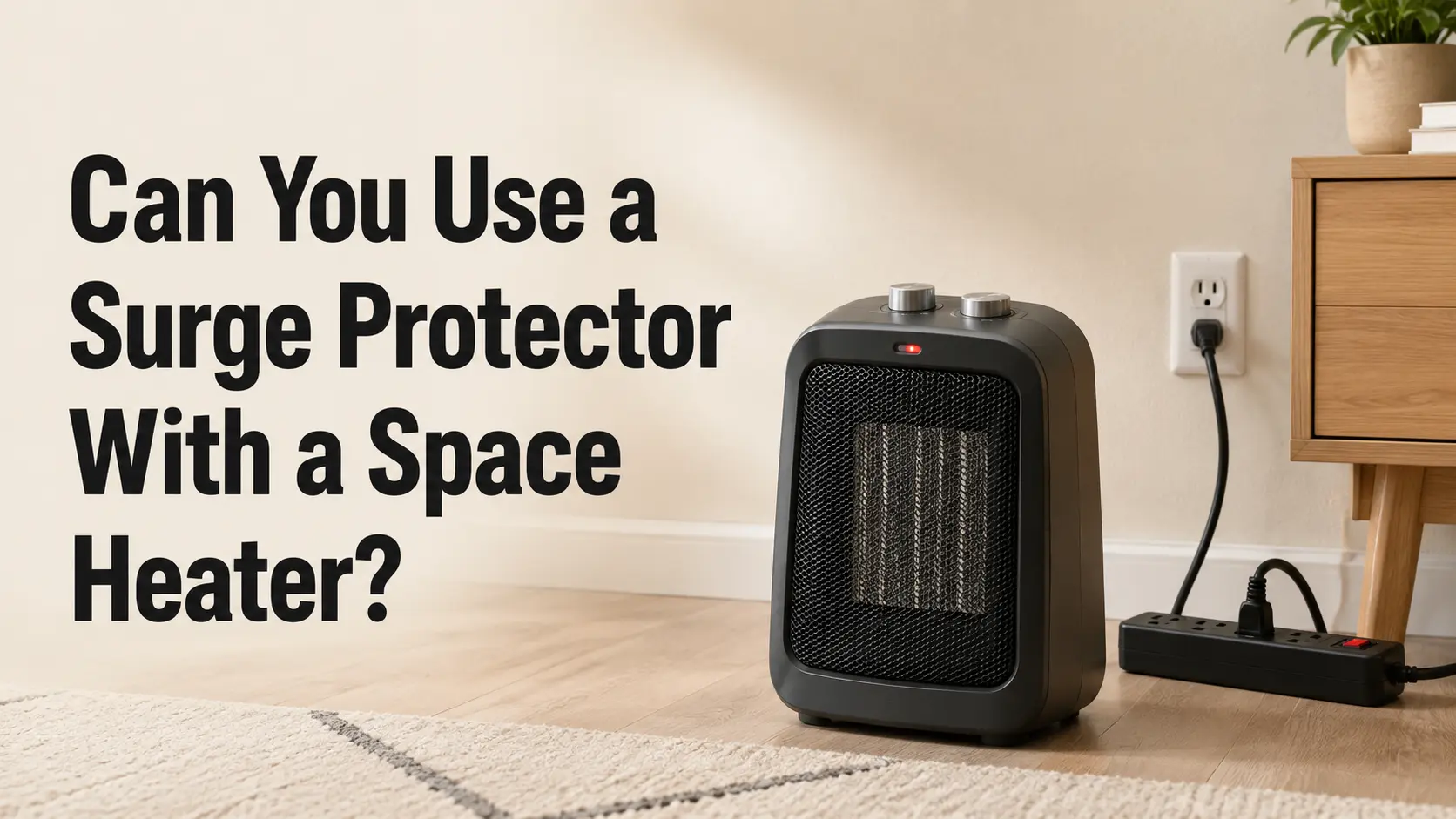

No, you should not use a surge protector with a space heater. A portable space heater should be plugged directly into a wall outlet, not into a surge protector, power strip, extension cord, cube tap, or multi-outlet adapter.
The reason is simple. Most space heaters draw a lot of current for a long time. Many full-size electric heaters run at up to 1,500 watts. That continuous load can overheat a surge protector, damage the plug, melt the strip, trip a breaker, or create a fire risk.
A surge protector protects electronics from voltage spikes. It does not make a high-wattage heater safer to run. If your heater cord does not reach a safe wall outlet, the safer fix is to move the heater, use a different wall outlet, choose another heating setup, or have an electrician install a properly placed outlet.
Paid link. As an Amazon Associate, we earn from qualifying purchases at no extra cost to you.
TL;DR
- No, you should not use a surge protector with a space heater. A portable space heater should be plugged directly into a wall outlet, not into a surge protector, power strip, extension cord, cube tap, or multi-outlet adapter.
- Keep a portable heater on a stable surface with about 3 feet (0.9 m) of clearance from bedding, curtains, furniture and other combustible materials.
- Plug portable electric heaters directly into a suitable wall outlet; stop using a heater if the plug, cord or outlet becomes unusually hot, damaged or discolored.
- Safety features reduce risk but do not replace correct placement, supervision and the manufacturer’s instructions.
Quick Answer
- Do not plug a space heater into a surge protector.
- Do not use a power strip or extension cord with a space heater.
- Plug the heater directly into a wall outlet.
- Use one heater per outlet, with no other devices plugged into the same outlet.
- Stop using the heater if the plug, cord, outlet, or surge protector feels hot.
- Choose a heater with overheat protection, tip-over protection, and ETL, UL, or CSA listing.
Why a Surge Protector Is Unsafe for a Space Heater
A surge protector is made to protect sensitive electronics from sudden voltage spikes. It is useful for computers, TVs, routers, monitors, and gaming systems.

A space heater is different. It is a high-wattage heating appliance. It pulls a heavy electrical load while it runs. A surge protector may have several outlets, but those outlets still share one power source and one cord.
The U.S. Consumer Product Safety Commission says electric space heaters should be plugged directly into a wall outlet and never into an extension cord or power strip. It also warns that portable heaters can cause fires when placed too close to bedding, furniture, or other combustible items.
The Electrical Safety Foundation International gives similar guidance. It says space heaters should be plugged directly into a wall outlet, not an extension cord or power strip, and no other electrical devices should be plugged into the same outlet as the heater.
UL Solutions explains that power strips and surge protectors can be overloaded depending on what is plugged in. It also notes that heating products, especially appliances used continuously, draw more current than many common electronics.
That is the core issue. A surge protector does not remove the heater’s electrical demand. It only adds another connection point that can overheat.
Why Space Heaters Draw So Much Power
Most portable electric space heaters use resistance heating. Electricity passes through a heating element, and that element creates heat.
A common full-size heater uses 1,500 watts on high.
Here is what that means in simple terms:
| Heater setting | Approximate watts | Approximate amps on 120V |
|---|---|---|
| Low heat | 600W | 5 amps |
| Medium heat | 900W | 7.5 amps |
| High heat | 1,500W | 12.5 amps |
Many household circuits are 15 amps or 20 amps. A 1,500-watt heater can use a large part of that circuit by itself. If other devices are running on the same circuit, the total load can become too high.
That is why a space heater should not share a surge protector with other items. It should not share the same outlet with chargers, lamps, TVs, computers, or another heater.
What About Smart Plugs?
Do not use a regular smart plug with a space heater unless the heater manufacturer clearly allows it and the smart plug is specifically rated for that load.
Even then, it is usually better to avoid it.
A smart plug adds another connection point. It may also allow the heater to turn on when no one is nearby. That is a problem because most portable heaters should not be left unattended.
If you want scheduling, choose a space heater with a built-in timer and thermostat instead. Those features are designed as part of the heater’s safety system.
Safe Power Setup for a Space Heater
Use this setup instead of a surge protector.
| Safety step | What to do |
|---|---|
| Outlet | Plug directly into a wall outlet |
| Other devices | Do not plug anything else into the same outlet |
| Cord | Keep the cord visible and uncovered |
| Placement | Keep at least 3 feet from anything that can burn |
| Surface | Place the heater on a flat, level, hard surface |
| Runtime | Turn it off when leaving the room or going to sleep |
| Inspection | Check the plug and outlet for heat or discoloration |
| Safety features | Use a heater with overheat and tip-over protection |
This setup does not make every heater risk-free, but it removes one of the most common unsafe habits.
Can a Space Heater Share an Outlet With Another Device?
It should not.
A space heater should be the only device plugged into that outlet. Even small devices add load and extra plug contact. Large devices can overload the circuit quickly.
Avoid sharing the outlet with:
- Phone chargers
- Lamps
- TVs
- Computers
- Printers
- Microwaves
- Hair dryers
- Air fryers
- Another space heater
- Portable air conditioners
The problem is not only the outlet face. Multiple outlets in one room may also share the same circuit. If the breaker trips when the heater runs, there may be too much load on that circuit.
What to Buy Instead of a Surge Protector Setup
As an Amazon Associate, we may earn from qualifying purchases.
This is a safety guide, not a product roundup. The safer purchase is not a “space heater surge protector.” The safer choice is a properly certified heater used directly in a wall outlet.
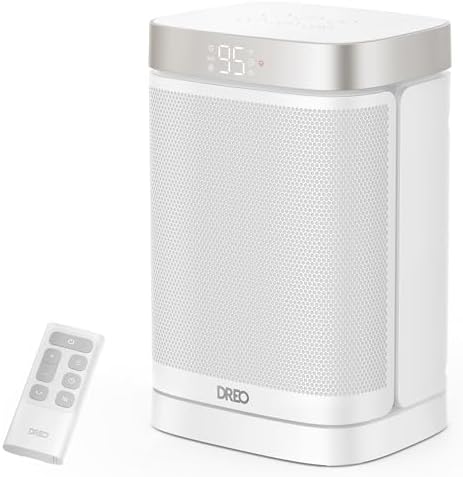
ETL or UL Listed Ceramic Space Heater
Best for: Small rooms, home offices, and quick personal heat

Oil-Filled Radiator Heater
Best for: Quiet, steady heat in bedrooms and offices

Space Heater With Built-In Timer and Thermostat
Best for: Reducing unnecessary runtime
Buying Guide: Choosing a Safer Space Heater
A safer heater setup starts with the outlet. But the heater itself matters too.
Look for ETL, UL, or CSA Listing
Choose a heater that shows a recognized safety certification. Look for ETL, UL, or CSA on the product label, manual, or product page.
This does not make unsafe use safe. You still need to plug the heater directly into the wall. But certification shows the product was tested to applicable safety standards.
Choose Overheat Protection
Overheat protection shuts the heater down if the unit gets too hot.
This is important for every heater type, including ceramic heaters, infrared heaters, oil-filled radiators, micathermic heaters, and tower heaters.
Choose Tip-Over Protection
Tip-over protection shuts the heater off if it falls over or tilts too far.
This matters in bedrooms, offices, apartments, and homes with pets or kids.
Use a Thermostat
A thermostat lets the heater cycle on and off instead of running on high nonstop.
This can improve comfort and reduce runtime. It can also lower energy cost compared with leaving the heater on full power.
Consider a Timer
A timer helps prevent long, forgotten heating sessions.
It is useful for bedrooms, home offices, and evening use. Choose a built-in timer instead of using an external timer plug.
Match the Heater Type to the Room
| Heater type | Best use | Not best for |
|---|---|---|
| Ceramic heater | Fast heat in small rooms | Silent heating |
| Infrared heater | Direct warmth near people | Heating the whole room evenly |
| Oil-filled radiator | Quiet, steady warmth | Instant heat |
| Micathermic heater | Quiet panel-style heat | Rooms where hot panels may be touched |
| Tower heater | Wider air movement | Tight spaces with poor clearance |
No heater type should be used with a surge protector. The safe power rule stays the same.
Space Heater Safety Checklist
Use this checklist before turning on your heater.
- Plug the heater directly into a wall outlet.
- Do not use a surge protector, power strip, extension cord, or adapter.
- Do not plug anything else into the same outlet.
- Keep the heater at least 3 feet away from bedding, curtains, paper, clothing, furniture, and rugs.
- Keep the cord visible and uncovered.
- Place the heater on a flat, hard, level surface.
- Do not use most portable space heaters in bathrooms or damp areas.
- Do not leave most portable heaters unattended.
- Turn the heater off before leaving the room or going to sleep.
- Stop using the heater if the plug, cord, outlet, or wall plate gets hot.
- Follow the manufacturer’s manual.

Frequently Asked Questions
Can you use a surge protector with a space heater?
No, you should not use a surge protector with a space heater. Plug the heater directly into a wall outlet. A surge protector can overheat under the continuous high load of a portable heater.
Why can’t I plug a space heater into a surge protector?
A space heater draws much more power than most electronics. A surge protector adds extra connection points and may overheat, melt, trip a breaker, or create a fire risk. Surge protection does not reduce the heater’s wattage.
Is a power strip safer than a surge protector for a space heater?
No. A basic power strip is not safer. Both power strips and surge protectors should be avoided with space heaters.
Can I use a heavy-duty extension cord with a space heater?
No. The safest guidance is to plug the heater directly into a wall outlet. A heavy-duty cord may look stronger, but it still adds resistance, length, and another plug connection.
What should I do if my space heater plug gets hot?
Turn the heater off and unplug it once safe. Stop using that outlet with the heater. A hot plug, hot outlet, burning smell, or discolored faceplate may mean a loose outlet, damaged plug, overloaded circuit, or wiring problem.
Can I plug a space heater into a smart plug?
Avoid using a regular smart plug with a space heater. Many smart plugs are not designed for continuous heater loads, and remote activation can create safety risks. Choose a heater with a built-in timer instead.
Should a space heater have its own outlet?
Yes, a space heater should be the only device plugged into that outlet. Do not plug other electronics or appliances into the same outlet while the heater is running.
What is the safest way to use a space heater?
Plug it directly into a wall outlet, keep it at least 3 feet from anything that can burn, place it on a level surface, and turn it off when leaving the room or going to sleep. Choose a heater with overheat protection, tip-over protection, and ETL, UL, or CSA listing.


