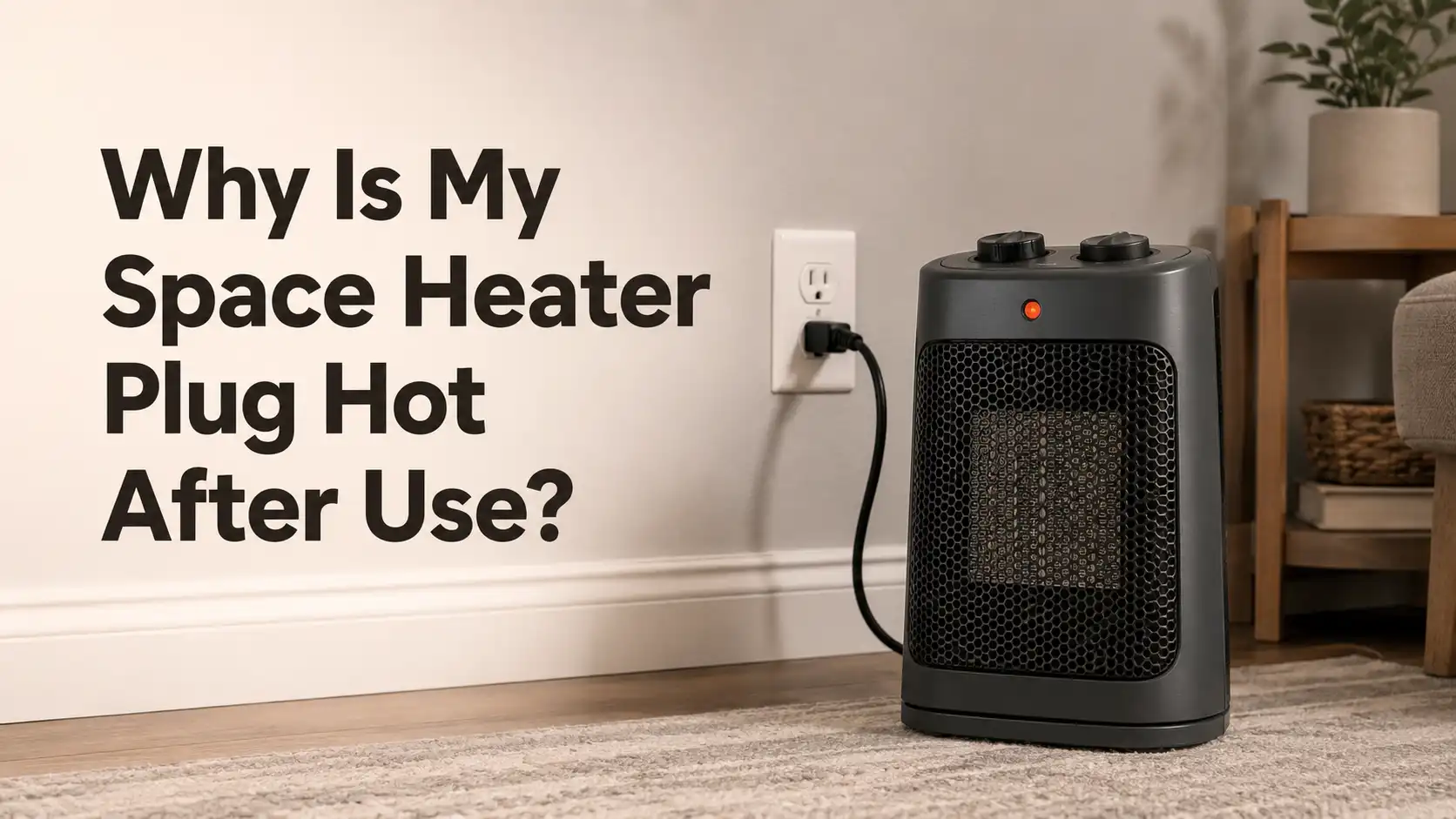

Why Is My Space Heater Plug Hot After Use?

Why Is My Space Heater Plug Hot After Use

If your space heater plug is hot after use, stop using that outlet and unplug the heater once it is safe to do so. A slightly warm cord can happen with a high-wattage electric heater, but a plug, outlet, faceplate, or cord that feels hot is a warning sign. It can point to a loose outlet, damaged plug, overloaded circuit, power strip use, extension cord use, or a failing heater cord.

This is not something to “watch for a few more days.” Space heaters draw a lot of current. Many full-size portable heaters run around 1,500 watts, which is a heavy load for a standard household outlet. If the connection is loose or damaged, resistance builds up and turns into heat.

The safest answer is simple. Do not use a space heater from a hot outlet. Do not move it to a power strip. Do not use an extension cord. Check the heater, plug, and outlet for obvious warning signs, then have the outlet checked by a qualified electrician if the plug or outlet got hot.

Quick Answer

  • A space heater plug should not feel hot after use.
  • Mild warmth on the cord can be normal, but “too hot to hold” is not.
  • The most common causes are a loose outlet, worn receptacle, damaged plug, extension cord, power strip, or overloaded circuit.
  • Stop using the heater if the plug, cord, outlet, or wall plate is hot, discolored, melted, buzzing, or smells burnt.
  • Plug space heaters directly into a wall outlet, never into an extension cord or power strip.
  • If the same outlet gets hot again, stop using it and call a qualified electrician.

Is a Warm Space Heater Plug Normal?

A mildly warm cord can happen because portable electric heaters draw a lot of power. Sunbeam says its heaters operate around 1,500 watts, and that amount of electricity may make the cord warm to the touch. But it also says the cord should not be too hot to hold, and an excessively hot cord can point to an outlet problem. (Sunbeam heater FAQ)

A hot plug is different from a warm cord.

Use this simple guide:

What you noticeWhat it likely meansWhat to do
Cord is slightly warmCan happen with high-wattage useMonitor, keep it uncovered, and follow the manual
Plug is warm but not hotCould be normal, but watch closelyCheck outlet fit and heater condition
Plug is hot to touchPossible loose connection, damaged plug, or overloaded setupStop using it
Outlet faceplate is warm or hotPossible outlet or wiring issueStop using that outlet
Plug or outlet is discoloredHeat damageStop using it and call an electrician
Burning smell, buzzing, sparks, meltingSerious electrical warning signTurn it off and get professional help

The U.S. Consumer Product Safety Commission says to discontinue heater use if the plug, outlet, wall faceplate, or cord is hot, then have a qualified electrician check or replace the faulty outlet or plug. (CPSC portable electric heater safety alert)

Why Does a Space Heater Plug Get Hot?

A space heater plug usually gets hot because electricity is meeting resistance somewhere in the connection. That heat can come from the heater plug, the outlet, the wiring behind the outlet, or something between the heater and wall.

Here are the most common causes.

1. The Outlet Is Loose or Worn

This is one of the biggest causes of hot space heater plugs.

A space heater needs a tight connection between the plug blades and the outlet contacts. If the outlet is old, loose, worn, cracked, or weak, the plug may not sit firmly. That poor contact creates resistance. Resistance creates heat.

A Technical Safety BC incident report on a heater-related electrical fire notes that a warning label stated a loose-fitting outlet can cause the plug to overheat or cause a fire. The same report described damage to the heater cord end, receptacle, branch circuit, and wall area after the incident. (Technical Safety BC incident report)

A simple sign is a plug that slips in too easily or does not feel secure. If the plug feels loose in the outlet, do not use that outlet for a space heater.

2. The Heater Is Plugged Into an Extension Cord

Space heaters should be plugged directly into a wall outlet. Extension cords add another connection point and can overheat under heavy load.

The CPSC tells consumers to plug electric space heaters directly into a wall outlet and never into an extension cord or power strip. It also says portable heaters should be kept at least 3 feet from drapes, furniture, bedding, and other combustible materials. (CPSC winter heater safety guidance)

Even a thick-looking extension cord can be a bad idea for a portable room heater. If the heater cord cannot reach a safe wall outlet, move the heater setup. Do not extend the cord.

3. The Heater Is Plugged Into a Power Strip or Surge Protector

A power strip does not make an outlet stronger. It only gives you more places to plug things in.

That is useful for low-power devices like phone chargers or lamps. It is not safe for a high-wattage electric heater. A space heater can pull close to the safe practical limit of many household circuits when running on high.

If your plug got hot while using a power strip, unplug the heater and stop using that setup. Do not try a “better” power strip as a fix.

4. The Circuit Is Overloaded

A 1,500-watt space heater on a 120-volt circuit draws about 12.5 amps. That is a heavy load.

If other devices are running on the same circuit, the circuit may be overloaded. This can cause heat, tripped breakers, flickering lights, or stressed wiring.

Common problem combinations include:

Same circuit combinationWhy it is risky
Space heater + microwaveBoth draw heavy power
Space heater + toasterBoth are heat-producing appliances
Space heater + hair dryerHigh current draw on one circuit
Space heater + portable ACToo much load for many circuits
Space heater + gaming PC setupContinuous heater load plus electronics
Space heater + power strip full of devicesMore load and more connection points

If the breaker trips, do not keep resetting it and using the heater. A breaker trip is a warning that the circuit is overloaded or has another issue.

5. The Plug Is Damaged

Check the plug blades after the heater is fully off and unplugged. Look for dark spots, pitting, bending, looseness, melting, cracks, or discoloration.

A damaged plug can heat up even if the outlet looks fine. The same applies to a cord that feels stiff, cracked, brittle, crushed, or kinked.

Do not repair a heater cord yourself. Do not wrap damage with tape and keep using it. If the cord or plug is damaged, replace the heater or have it inspected by an authorized repair person.

6. The Outlet Wiring May Be Failing

Sometimes the problem is behind the wall.

Loose terminal screws, backstabbed wiring, old aluminum wiring, damaged receptacles, or poor connections can create heat. You may notice a warm wall plate, buzzing sound, flickering lights, or a burnt smell near the outlet.

That is not a heater problem you can fix by buying another heater. Stop using the outlet and call a qualified electrician.

7. The Heater Is Running Too Long on High

Long high-power use creates more heat in the cord, plug, and outlet.

This does not mean the plug should become hot. But long runtime can expose weak connections faster. A worn outlet may seem fine with a lamp, phone charger, or laptop. Then it overheats when a 1,500-watt space heater runs for hours.

Use the thermostat. Use lower heat settings when possible. But do not treat a lower setting as a fix for a hot plug. Fix the outlet or heater problem first.

What to Check First

Start with safety. Do not open the heater. Do not open the outlet unless you are qualified to work on electrical systems.

Use this safe checklist.

StepWhat to checkWhat it tells you
1Was it plugged into a wall outlet?Power strips and extension cords are unsafe for heaters
2Was the plug loose?Loose fit can create heat
3Is the plug discolored or melted?Stop using the heater
4Is the outlet faceplate warm, brown, cracked, or warped?Stop using that outlet
5Did the breaker trip?Circuit may be overloaded or faulty
6Were other high-wattage devices on the same circuit?Load may be too high
7Does the cord feel hot, stiff, cracked, or damaged?Stop using the heater
8Does another outlet get hot with the same heater?The heater may be unsafe

If the plug was hot, the safest next step is not to “test it a few more times.” Heat damage can get worse. Use another heating method until the outlet and heater are checked.

Safe Fixes for a Hot Space Heater Plug

Plug the Heater Directly Into a Wall Outlet

This is the first rule. No extension cord. No power strip. No surge protector. No cube tap. No adapter.

A space heater should have its own direct wall outlet with a tight plug fit.

Stop Using Loose Outlets

If the plug wiggles, slips out, or feels weak, stop using that outlet for a heater.

A lamp may still work in that outlet, but a space heater draws far more power. A loose outlet should be replaced by a qualified electrician.

Move Other High-Wattage Devices

Do not run another heavy appliance on the same circuit while the heater is on.

This includes microwaves, air fryers, hair dryers, toasters, portable AC units, and other heaters. If using the heater causes lights to dim or a breaker to trip, stop using it there.

Use a Lower Heat Setting Only After the Setup Is Safe

Many heaters have 750W and 1,500W settings. The lower setting draws less current.

This can reduce stress on a safe outlet. But it does not fix a damaged plug, loose outlet, hot faceplate, or burning smell.

Replace a Damaged Heater

Replace the heater if the cord or plug is damaged, melted, cracked, or hot even in a known-good outlet.

A new heater should have overheat protection, tip-over protection, a thermostat, and a recognized safety certification. Intertek says the ETL Listed Mark means a product has been independently tested and certified to applicable safety standards by a Nationally Recognized Testing Laboratory. (Intertek ETL Listed Mark guide)

Have the Outlet Checked

Call an electrician if:

  • The outlet faceplate got hot
  • The outlet is loose
  • The outlet is discolored
  • You smell burning
  • You hear buzzing or crackling
  • The breaker keeps tripping
  • The plug is hot in one outlet but normal elsewhere
  • The home has older wiring and the heater stresses the circuit

This is especially important in bedrooms, home offices, apartments, and older homes where outlets may have seen years of heavy use.

When to Stop Using the Heater Immediately

Stop using the heater if you notice any of these signs:

Warning signWhy it matters
Plug is too hot to holdPossible high resistance or overload
Cord is hot, not just warmPossible cord or internal heater issue
Outlet or faceplate is hotPossible outlet or wiring problem
Brown or black marksHeat damage already happened
Melted plastic smellPossible electrical overheating
Buzzing or cracklingPossible arcing or loose connection
SparksImmediate electrical danger
Breaker trips repeatedlyCircuit or heater may be unsafe
Plug fits looselyPoor contact can overheat
Heater shuts off oddly or flickersPossible internal failure or power issue

Do not keep using a heater with these signs. Do not move it to a power strip. Do not bypass the plug. Do not tape the cord. Do not cut or modify the plug.

Should You Replace the Heater or the Outlet?

It depends on where the heat is coming from.

SituationMore likely problemBest next step
Plug is hot in one outlet onlyOutlet or wiringStop using that outlet and call an electrician
Plug is hot in multiple outletsHeater cord or plugStop using the heater
Outlet feels loose with many plugsWorn receptacleReplace the outlet professionally
Power strip gets hotUnsafe setupStop using power strip with heater
Cord is hot along its lengthHeater cord issueReplace or service heater
Breaker trips with heater on highCircuit load or faultReduce load and get checked if repeated
Plug blades are pitted or darkHeat or arcing damageStop using heater and outlet until checked

If you are unsure, treat both as suspect. A hot plug can damage the outlet, and a bad outlet can damage the plug.

What to Buy If Your Heater or Outlet Setup Is Unsafe

As an Amazon Associate, we may earn from qualifying purchases.

This is a troubleshooting guide, not a product roundup. A hot plug is often an outlet or wiring problem, so buying a new heater alone may not solve it. Still, if your heater cord, plug, or safety features are outdated, replacing the heater can be the right move after the outlet is checked.

ETL or UL Listed Ceramic Space Heater

Best for: Small bedrooms, home offices, and quick personal heat

Short verdict:
A ceramic heater is a practical replacement if you want fast heat in a small room. Look for a model with overheat protection, tip-over protection, a thermostat, and a lower wattage setting.

Key features to look for:

  • ETL, UL, or CSA safety listing
  • 750W and 1,500W heat settings
  • Overheat protection
  • Tip-over shutoff
  • Adjustable thermostat

Pros:

  • Fast heat
  • Compact size
  • Often affordable

Cons:

  • Fan noise may bother some users
  • Not ideal for very large rooms

Who should buy it:
Choose this if you need a portable heater for a desk area, bedroom, or small room. It is also useful if you want a lower setting for less circuit load after confirming the outlet is safe.

Who should skip it:
Skip it if you need silent heating or long heat retention after shutoff.

Oil-Filled Radiator Heater

Best for: Quiet, steady heat in a bedroom or office

Short verdict:
An oil-filled radiator is slower to warm up, but it gives gentle, steady heat without a fan. Look for overheat protection, tip-over protection, thermostat control, and a stable base.

Key features to look for:

  • 1,500W maximum heat output
  • Lower heat settings
  • Adjustable thermostat
  • Overheat protection
  • Stable wheels or feet

Pros:

  • Quiet operation
  • Steady comfort
  • Good for longer room warming

Cons:

  • Slower heat-up
  • Heavier than compact ceramic heaters

Who should buy it:
Choose this if you want quiet heat for a room you use for several hours. It can be a better fit than a fan heater for sleep, reading, or focused work.

Who should skip it:
Skip it if you need instant heat or a lightweight heater you move often.

Heater With a Built-In Timer and Thermostat

Best for: People who forget to turn heaters off

Short verdict:
A timer and thermostat do not fix a bad outlet, but they can reduce unnecessary runtime. That matters because long high-power use adds stress to cords, plugs, outlets, and circuits.

Key features to look for:

  • Timer
  • Adjustable thermostat
  • Lower wattage mode
  • Overheat protection
  • Tip-over shutoff

Pros:

  • Helps limit runtime
  • Better comfort control
  • Useful for offices and bedrooms

Cons:

  • More controls can mean a higher price
  • Still must be plugged directly into a safe wall outlet

Who should buy it:
Choose this if you use a heater regularly and want better control over runtime. It is useful for workdays, study sessions, and evening use.

Who should skip it:
Skip it if your outlet gets hot. Fix the electrical issue first.

Buying Guide: What Matters After a Hot Plug Problem

A hot plug changes what you should care about when buying a heater. Do not focus only on heat output or room size. Focus on electrical safety and control.

Choose Safety Certification First

Look for a recognized mark such as ETL, UL, or CSA. This does not make unsafe use safe, but it shows the heater was tested to applicable safety standards.

Avoid unbranded heaters with unclear certification claims, vague manuals, or no real company support.

Choose Lower Heat Settings

A 1,500W heater is common, but a lower setting can be useful.

A 750W or 900W mode draws less power than full heat. That can reduce load when you only need mild warmth. Still, the heater must be used in a safe outlet.

Look for Overheat Protection

Overheat protection shuts the heater down if internal temperatures get too high.

This is important, but it does not protect every bad outlet scenario. Your wall outlet can still overheat if the receptacle is loose or damaged.

Look for Tip-Over Protection

Tip-over protection shuts off the heater if it falls or tilts too far.

This is important in homes with pets, kids, busy offices, or tight spaces.

Use a Thermostat

A thermostat helps the heater cycle on and off instead of running constantly on high.

This can improve comfort and reduce runtime. It can also reduce energy cost compared with leaving the heater on full power.

Consider a Timer

A timer is helpful if you use a bedroom heater or office heater.

It lets the heater shut off after a set period. That lowers the chance of running the heater longer than needed.

Check Cord Quality and Length

The cord should be thick, flexible, undamaged, and long enough to reach a wall outlet without stretching.

Do not buy a heater that requires an extension cord in your room. Move the heater or choose a safer outlet location.

Match Heater Type to the Room

Different heater types fit different needs.

Heater typeBest forHot plug prevention note
Ceramic heaterQuick heat in small roomsChoose lower heat settings and direct wall plug use
Infrared heaterDirect warmth near peopleStill draws high power on full setting
Oil-filled radiatorQuiet steady heatOften runs for long periods, so outlet condition matters
Micathermic heaterQuiet, fast panel heatNeeds safe clearance and direct wall outlet
Tower heaterWider room circulationOscillation does not reduce electrical load

Space Heater Safety Checklist

Use this checklist every time you run a portable electric heater.

  • Plug the heater directly into a wall outlet.
  • Do not use extension cords, power strips, surge protectors, or adapters.
  • Keep the heater at least 3 feet away from bedding, curtains, paper, furniture, clothing, and rugs.
  • Do not run the heater cord under carpet or rugs.
  • Place the heater on a stable, level surface.
  • Keep it away from water and damp areas unless it is specifically rated for that use.
  • Choose a heater with overheat protection and tip-over protection.
  • Look for ETL, UL, or CSA certification.
  • Turn the heater off when leaving the room or going to sleep.
  • Follow the manufacturer’s manual.

The NFPA’s electric portable space heater safety guidance is a useful reference for safe placement and daily use. (NFPA electric portable space heater safety tip sheet)

Common Mistakes That Make Space Heater Plugs Overheat

Using the Outlet That Is Closest, Not the One That Is Safest

A heater should be placed near a safe wall outlet with enough clearance. Do not pick the outlet behind the bed, behind curtains, or under a desk full of paper just because it is convenient.

Running the Cord Under a Rug

A rug traps heat and hides damage. If a cord is under carpet, you may not notice heat, wear, or melting until it becomes serious.

Sharing the Circuit With Other High-Wattage Appliances

A heater may work fine until someone starts the microwave, toaster, or hair dryer on the same circuit.

If the lights flicker or the breaker trips, stop using the setup.

Ignoring a Loose Plug

A loose plug is not a minor annoyance with a heater. It can create heat at the connection point.

Stop using that outlet until it is replaced or checked.

Thinking a New Heater Fixes a Bad Outlet

A new heater can still overheat a bad outlet.

If the outlet got hot, have the outlet checked before using another high-wattage room heater there.

Final Takeaway

A space heater plug that gets hot after use is a safety warning, not a normal part of heating a room. Mild cord warmth can happen, but a hot plug, outlet, faceplate, or cord means you should stop using the heater setup right away.

In most cases, the cause is a loose outlet, damaged plug, extension cord, power strip, overloaded circuit, or worn wiring connection. The safest fix is to plug the heater directly into a tight wall outlet, remove other high-wattage loads, replace damaged heaters, and have suspect outlets checked by a qualified electrician.

If you replace the heater, choose one with ETL, UL, or CSA certification, overheat protection, tip-over protection, a thermostat, and a timer. But remember the main rule. A safer heater still needs a safe outlet.

FAQs

Why is my space heater plug hot after use?

Your space heater plug may be hot because of a loose outlet, damaged plug, overloaded circuit, extension cord, power strip, or worn wiring connection. Stop using the heater if the plug or outlet is hot. A qualified electrician should check the outlet before you use a heater there again.

Is it normal for a space heater cord to get warm?

A mildly warm cord can be normal with a high-wattage electric heater. It should not be too hot to hold. If the cord, plug, outlet, or faceplate feels hot, stop using the heater.

Can I use an extension cord with a space heater?

No. Plug the space heater directly into a wall outlet. Extension cords and power strips can overheat under the heavy load of a portable electric heater.

Why does only one outlet get hot with my space heater?

That usually points to an outlet or wiring problem. The receptacle may be loose, worn, damaged, or poorly connected behind the wall. Stop using that outlet and have it inspected.

Should I replace my heater if the plug got hot?

Replace the heater if the plug, cord, or heater body shows damage, melting, discoloration, or repeated overheating. If only one outlet gets hot, the outlet may be the main problem. In that case, fix the outlet before using any space heater there.

Can a hot space heater plug cause a fire?

Yes, it can. A hot plug can mean resistance, arcing, overload, or a loose connection. These conditions can damage the plug, outlet, wall plate, or wiring and may create a fire risk.

Why does my breaker trip when I use a space heater?

A breaker may trip because the heater is drawing too much power for the circuit, especially if other devices are running. It can also point to a fault. Do not keep resetting the breaker and using the same setup.

What is the safest type of space heater to buy after a plug problem?

The safest choice is a certified heater that fits your room and has overheat protection, tip-over protection, a thermostat, and a timer. Ceramic heaters work well for quick heat. Oil-filled radiators are better for quiet, steady warmth. Always fix the outlet issue first.