
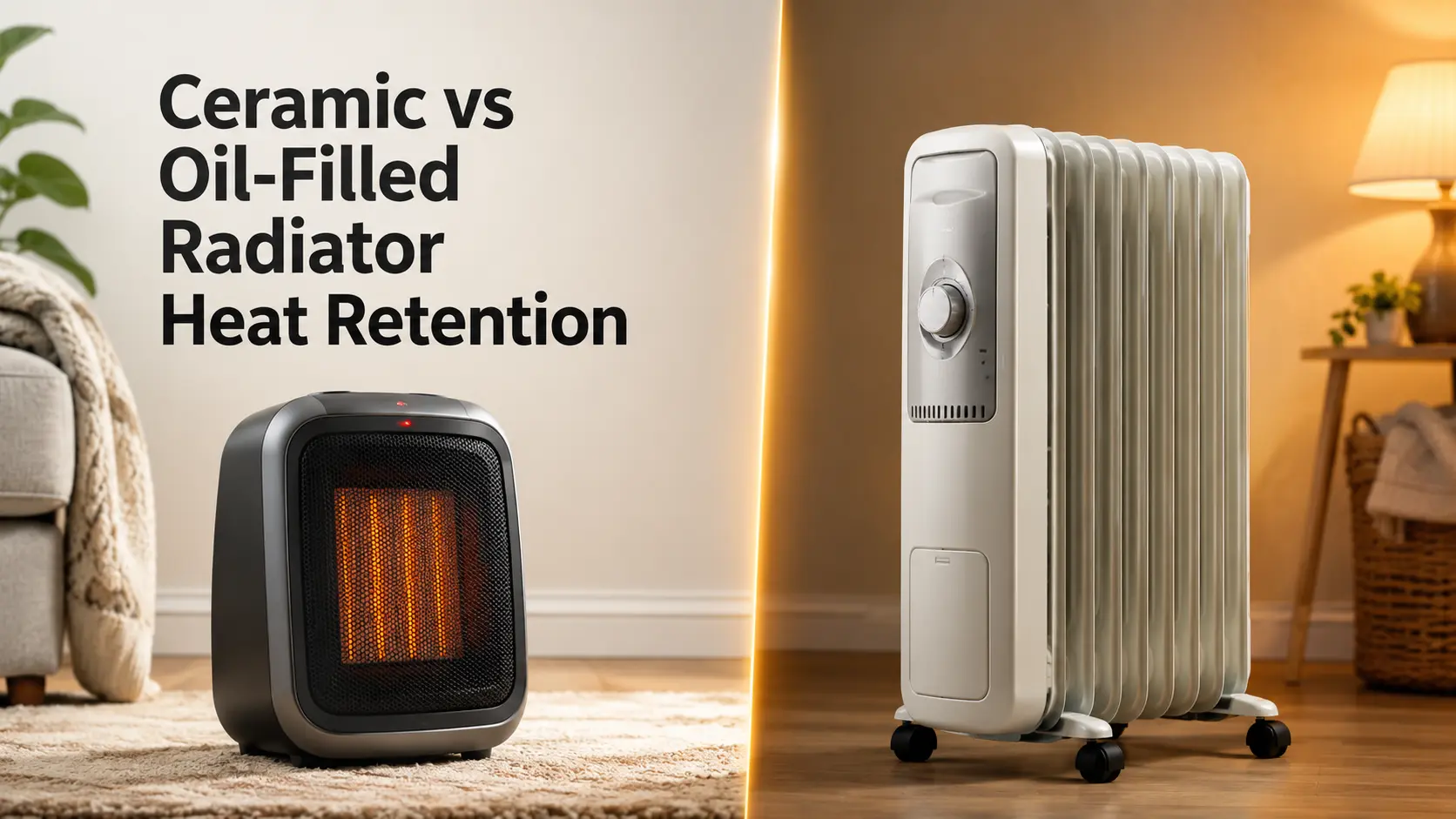


You are standing in your bedroom on a freezing Tuesday night. You want to turn on a heater to take the chill off, but you are worried about the electric bill. You know that some heaters stay warm even after you turn them off, while others get cold the second the power cuts. You want to make the smartest choice for your home so you can stay cozy without wasting money.
This is a common dilemma for anyone looking to survive a long winter. Choosing between these two technologies can be confusing. One looks like a high-tech fan, and the other looks like an old fashioned radiator. If you have been asking about Ceramic vs Oil Filled Radiator Which Holds Heat Longer, you are looking for the secret to lasting warmth.
As an experienced reviewer of space heaters, I have tested both styles in drafty offices and well-insulated bedrooms. The way these units store energy is very different. Let’s look at the science of “thermal mass” and find out which heater will keep you warmer for longer.
For a model-specific example within radiator and ceramic heating, see our Comfort Zone CZ442E Ceramic Heater Review for controls, safety features, heating style, and practical fit.
Paid link. As an Amazon Associate, we earn from qualifying purchases at no extra cost to you.
TL;DR

- An oil filled radiator holds heat much longer than a ceramic heater because it uses a large volume of thermal oil to store energy.
- The better heater depends on whether you value fast direct warmth, steadier whole-room comfort, quiet operation, portability or precise controls.
- For electric resistance heaters with the same wattage, electricity draw while the element is on is broadly similar; comfort and total runtime create the practical differences.
- Match the heater type to the room size, insulation and how long you normally occupy the space.
Quick Answer: Which Holds Heat Longer?
An oil filled radiator holds heat much longer than a ceramic heater because it uses a large volume of thermal oil to store energy. While a ceramic heater gets cold almost instantly after being turned off, an oil radiator can stay warm for 30 to 45 minutes. This makes the oil radiator much better for maintaining a steady temperature over time.
How Each Heater Works
To understand the answer to Ceramic vs Oil Filled Radiator Which Holds Heat Longer, you have to look at how they create warmth. They are built for two very different goals.
The Fast Logic of Ceramic Heaters
Ceramic heaters use electricity to heat up small ceramic plates. A fan then blows air over those plates and into your room. This process is incredibly fast. You feel the heat the second you turn it on. However, ceramic plates have very little “mass.” They cannot store much energy. Once you cut the power, the plates cool down within seconds.

The Steady Logic of Oil Radiators
Oil filled radiators do not use a fan. Instead, they use an internal heating element to warm a special type of thermal oil. This oil circulates through the metal fins of the radiator. The metal and the oil act like a giant heat sponge. It takes a while to get hot, but once it is warm, it stays warm for a long time.

Comparison Insights: Speed vs. Stamina
In my testing, the “feel” of these two heaters is completely different. Here is how they compare in real world use.
Instant Gratification
If you just walked in from the snow and your hands are numb, you want a ceramic heater. It provides a blast of hot air that works as a “spot heater.” It is perfect for a quick fix. An oil radiator would take 15 to 20 minutes just to get warm to the touch.
Long Term Stability
If you are planning to spend the whole evening in your living room, the oil radiator is the winner. Because it holds heat so well, it doesn’t need to run its heating element constantly. It reaches a certain temperature, shuts off, and continues to radiate warmth for half an hour. This leads to a much more stable and comfortable environment.
Pros and Cons of Ceramic Heaters
The Pros
- Fast Heat: It warms you up in seconds.
- Compact Size: They are usually small and easy to move.
- Direct Warmth: The fan allows you to point the heat exactly where you want it.
- Affordable: They are often the most budget-friendly option.
The Cons
- No Heat Retention: The room gets cold as soon as you turn it off.
- Noisy Fans: The fan creates a constant hum that can be annoying.
- Drying Air: The fast moving air can dry out your skin and eyes.
- Inefficient for Large Rooms: They struggle to maintain an even temperature.
Pros and Cons of Oil Filled Radiators
The Pros
- Amazing Heat Retention: They stay warm long after the power is cut.
- Silent Operation: Since they have no fans, they are perfectly quiet.
- Gentle Warmth: They don’t dry out the air as much as fan heaters.
- Energy Efficient: They are great for “set it and forget it” heating.
The Cons
- Slow Start: It takes a while to feel the first bit of warmth.
- Heavy and Bulky: They are harder to carry up and down stairs.
- Surface Temperature: The metal fins can get very hot to the touch.
- Large Footprint: They take up more floor space than ceramic units.
Cost Breakdown: Which Is Cheaper to Run?
When looking at Ceramic vs Oil Filled Radiator Which Holds Heat Longer, you also have to think about your electric bill. Both units usually use 1,500 watts on their high setting. This means they use the same amount of power while they are “on.”
The savings come from the “duty cycle.” A ceramic heater has to stay on almost 100% of the time to keep a room warm because it loses its heat so fast. An oil radiator might only need to be “on” for 30 minutes out of every hour. The oil keeps the room warm while the electricity is off. This can lead to lower bills over a full winter season.
Safety Considerations
Safety is the most important factor in any space heater review. Both styles have specific risks you should know about.
Ceramic heaters are a higher fire risk for curtains or paper because they blow very hot air out of a small vent. You must keep them 3 feet away from everything.
Oil radiators are generally safer for long term use because they don’t have exposed heating elements. However, they are heavy and can be a tip-over hazard for pets or small children. Always look for units with tip-over switches and overheat protection sensors.
Buying Factors to Watch For
Before you buy, look at these specific details on the box.
- Fin Count: For oil radiators, more fins usually mean more surface area for the heat to escape. This helps the room warm up faster.
- Digital Thermostats: Both styles benefit from a precise thermostat. This prevents the heater from “overshooting” your goal temperature and wasting power.
- Eco Mode: Look for heaters with a smart Eco mode. This will automatically manage the power levels to keep you comfortable with the least amount of electricity.
Practical Tips
- The Hand Test: If your oil radiator feels cold after 10 minutes of being off, it might have a low oil level or a leak.
- Clean the Dust: Vacuum the vents of your ceramic heater once a month. Dust buildup makes the fan work harder and uses more power.
- Check the Cord: Both heaters pull a lot of electricity. Never use an extension cord. Plug them directly into the wall to avoid a fire risk.
- Stability Check: Ensure your oil radiator is sitting level. If it tilts, the oil cannot circulate correctly, and the heat retention will suffer.
Common Mistakes to Avoid
A very common mistake is buying an oil radiator for a drafty garage. Because they take a long time to warm up, the cold air will steal the heat faster than the radiator can provide it. In a drafty space, a ceramic or infrared heater is much better.
Another mistake is leaving a ceramic heater on all night. Not only is it expensive, but the noise and dry air can ruin your sleep. If you need all-night warmth, the oil radiator is the superior choice. Finally, don’t ignore the safety certifications. Always look for the UL or ETL seal on any heater you buy.


Frequently Asked Questions
Why does an oil radiator take so long to get hot?
Oil is much denser than air or ceramic. It takes more energy and time to vibrate the oil molecules and get them to a high temperature. Once they are hot, they are very “stubborn” and don’t want to give up that energy, which is why they stay warm so long.
Do I ever need to refill the oil in a radiator heater?
No. The oil inside is permanently sealed. It is not used as fuel. It is only used as a way to move and store heat. If you see oil leaking from your heater, stop using it immediately and dispose of it safely.
Which heater is better for a nursery?
An oil filled radiator is usually the better choice for a nursery. It is silent, so it won’t wake the baby. It also doesn’t have exposed heating elements that could burn a curious toddler as easily as a ceramic fan heater.
Can I dry clothes on an oil filled radiator?
No. Never drape clothes or towels over any heater. This is a major fire hazard. It also blocks the airflow, which causes the heater to overheat and can damage the internal sensors.
Is ceramic heat healthier for your skin?
No. Ceramic heaters use fans that move air very quickly. This fast moving hot air is very good at evaporating the moisture from your skin and eyes. If you have dry skin, an oil radiator or an infrared heater is a much better choice.
How long do oil filled radiators stay warm after shutoff?
Most high quality units will stay warm to the touch for about 30 to 45 minutes depending on the room temperature. This “cooldown period” provides free heat that you have already paid for.
Does the "Eco" button really save money?
Yes. Eco mode uses a digital thermostat to turn the heater off as soon as the room reaches the target. With an oil radiator, this is especially effective because the heater stays warm while the power is off.


