
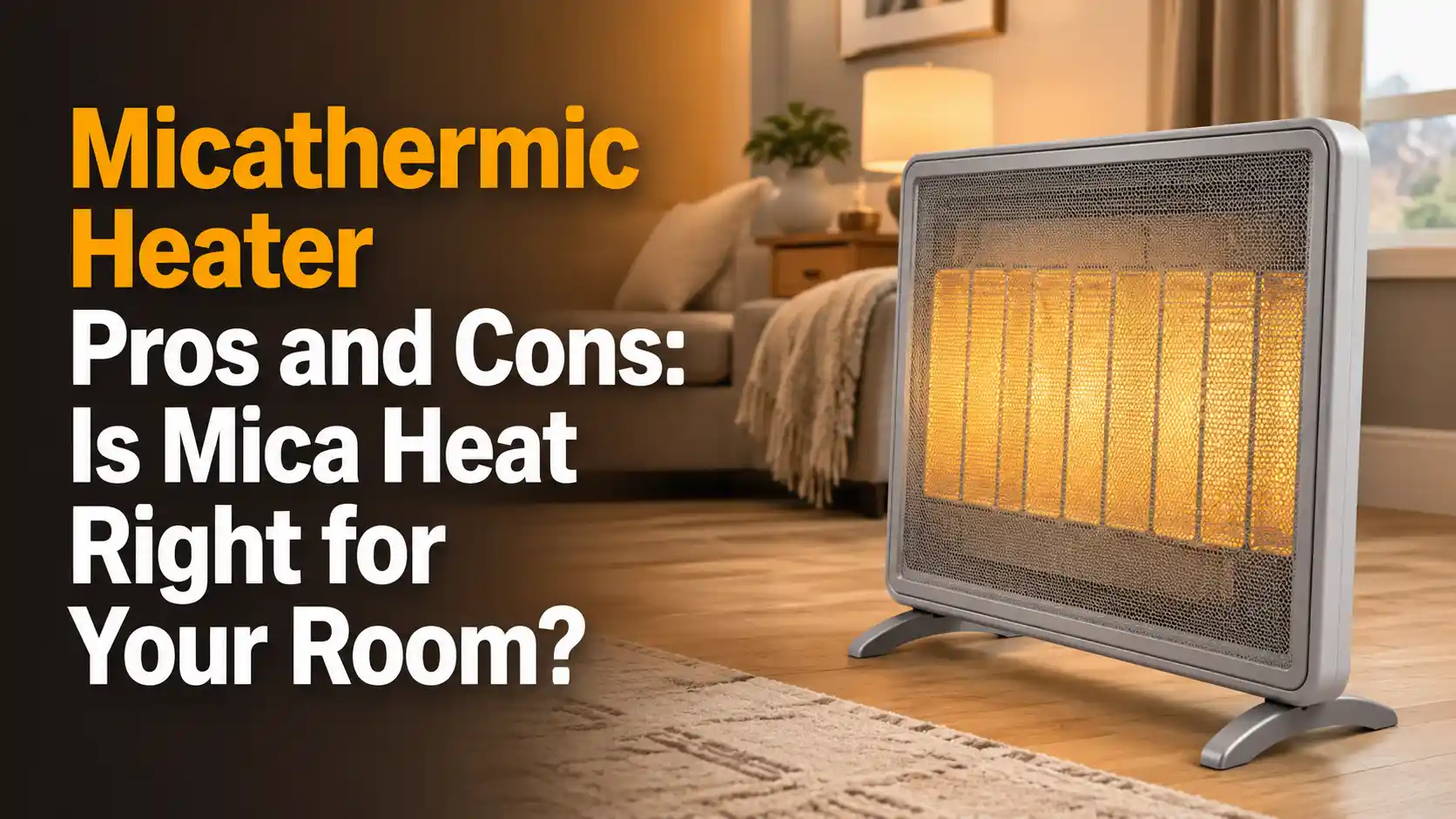


A micathermic heater is a good choice if you want fast, quiet, fanless heat in a bedroom, office, guest room, or small to medium living space. It warms up faster than an oil-filled radiator, runs quieter than a ceramic fan heater, and usually has a slim panel design that fits well in tight rooms. For the buying decision behind this topic, compare our Best Micathermic Space Heaters.
But mica heat is not perfect for every home. The front panel can get hot. It is not the best choice around young kids or pets unless the heater has strong safety features and enough clearance. It also will not magically use less electricity than other 1,500-watt electric heaters. Like most electric resistance heaters, the energy cost depends mainly on wattage, runtime, thermostat use, and your electricity rate. The U.S. Department of Energy notes that electric resistance heating converts incoming electricity to heat, but it can still be expensive compared with other heating systems.
The real question is not “Are micathermic heaters always better?” It is “Does this type of heat match your room, comfort needs, and safety setup?” This guide breaks down the micathermic heater pros and cons in a practical way so you can decide before buying.
Paid link. As an Amazon Associate, we earn from qualifying purchases at no extra cost to you.
TL;DR
- A micathermic heater is a good choice if you want fast, quiet, fanless heat in a bedroom, office, guest room, or small to medium living space.
- Match the heater to the room size, insulation and the kind of warmth you want instead of choosing by wattage alone.
- Prioritize appropriate safety features, stable placement, direct wall-outlet use and clear manufacturer instructions.
- Check the exact model specifications before purchase because features and retailer listings can change.
Quick Answer
- A micathermic heater is best for quiet, fast, supplemental heat in small to medium rooms.
- It uses mica-covered heating panels to create both radiant heat and convection heat.
- It is usually silent because most models do not use a fan.
- It is not automatically cheaper to run than a ceramic heater, infrared heater, or oil-filled radiator with the same wattage.
- It may not be ideal for homes with active pets, toddlers, or tight spaces where the hot panel can be touched.
- Choose one with overheat protection, tip-over protection, a thermostat, and a recognized safety certification such as ETL, UL, or CSA.
How a Micathermic Heater Works
Micathermic heaters are simple. Electricity passes through the heating element. The mica panels heat up. Then the heater spreads warmth through direct radiant heat and natural air movement.

That makes mica heat feel different from three common heater types:
- A ceramic heater uses a heated ceramic element and usually a fan.
- An infrared heater focuses more on warming people and objects directly.
- An oil-filled radiator heats sealed oil inside metal fins, then slowly releases heat.
A micathermic heater sits between these categories. It gives you some direct warmth like an infrared heater, but it also warms room air like a convection heater.

Best Rooms for a Micathermic Heater
| Room | Is mica heat a good fit? | Why |
|---|---|---|
| Bedroom | Yes, with safety care | Quiet, no fan, comfortable pre-sleep warmth |
| Home office | Yes | Fast, silent zone heat while working |
| Small living room | Yes | Good supplemental heat in an enclosed space |
| Guest room | Yes | Slim, simple, and easy to store |
| Nursery | Usually no | Hot surfaces and portable heater risks need extra caution |
| Bathroom | Usually no | Only use heaters specifically rated for Bathroom use |
| Garage | Usually not | Drafts and poor insulation reduce performance |
| Large open-plan room | Maybe | Works near you, but may not heat the whole space evenly |
What Size Room Can a Micathermic Heater Heat?
Most portable micathermic heaters sold for home use are around 1,500 watts. In a typical enclosed room, that often works best for small to medium spaces.
A practical range is around 100 to 200 square feet, depending on insulation, ceiling height, outdoor temperature, and how warm you want the room to feel. TURBRO recommends its 1,500-watt Arcade HR1500 for rooms under about 160 square feet.
| Room condition | Practical expectation from a 1,500W mica heater |
|---|---|
| Small bedroom, insulated | Usually a good fit |
| Home office, door closed | Usually a good fit |
| Medium room with average insulation | Good for supplemental heat |
| Large room with high ceilings | May feel weak |
| Open-plan space | Not ideal as the only heater |
| Drafty room | Fix drafts first or expect longer runtime |
Micathermic Heater Safety Checklist
Use this checklist before buying or using a mica space heater.
| Safety factor | What to check |
|---|---|
| Safety certification | Look for ETL, UL, or CSA listing where available |
| Overheat protection | The heater should shut off if it overheats |
| Tip-over protection | The heater should shut off if it falls |
| Stable base | Wheels or feet should feel secure |
| Thermostat | Helps prevent constant high-power running |
| Timer | Useful if you forget to turn heaters off |
| Cord condition | No cracks, melting, loose plug, or heat marks |
| Outlet setup | Plug directly into a wall outlet |
| Clearance | Keep at least 3 feet from bedding, curtains, paper, and furniture |
| Manual | Follow the manufacturer’s setup and clearance rules |
Do not plug a space heater into an extension cord or power strip. The CPSC warns that extension cords can overheat and cause fires when overloaded or used with appliances that draw more watts than the cord can handle.
What to Buy If Mica Heat Fits Your Room
This article is mainly an informational guide, so you do not need to buy a micathermic heater just because the technology sounds interesting. But if the pros match your room, these are the types of products worth considering.
De’Longhi HMP1500 Mica Panel Heater
Best for: Quiet bedrooms, offices, and slim wall-friendly setups
Reekie 1500W Electric Mica Infrared Convection Panel Heater
Best for: Buyers who want modern controls, timer, and remote operation
TURBRO Arcade HR1500 Electric Mica Space Heater
Best for: Small rooms where simple portable mica heat is enough
Buying Guide: How to Choose a Micathermic Heater
Start With Room Size
A mica heater works best in an enclosed room. Before buying, measure the room and think about insulation.
For a small bedroom or office, a 1,500W heater may be enough. For a big open living space, it may only warm the area near the heater.
Choose the Right Control Style
Manual controls are simple and reliable. Digital controls give you more precision.
Choose manual dials if you want easy operation. Choose a digital thermostat and timer if you want better scheduling and comfort control.
Look for Real Safety Features
Do not buy a heater just because it says “safe” in the title. Look for specific features.
At minimum, choose a model with overheat protection and tip-over protection. Also look for ETL, UL, or CSA certification when available.
Decide If You Need a Timer
A timer is useful in bedrooms and offices. It lets the heater shut off after a set time.
This is especially helpful if you use the heater before sleep or during work hours.
Check Portability
If you move the heater often, look for wheels, a handle, and a stable base.
If you plan to keep it in one room, a wall-mountable panel design may be cleaner.
Think About Kids and Pets
If a child or pet can touch the heater, be careful. Micathermic heaters may have hot surfaces.
Use a stable model, keep it out of reach, and never place it near bedding, curtains, toys, or pet beds.
Avoid Bathroom Use Unless the Heater Is Rated for It
Do not use a regular micathermic heater in a bathroom. Water and portable electric heaters are a dangerous mix.
Only use a bathroom heater that is clearly designed and rated for bathroom use, and follow the manual exactly.
Final Verdict: Is Mica Heat Right for Your Room?
A micathermic heater is worth considering if you want fast, quiet, fanless heat for a bedroom, office, guest room, or small to medium living space. It is especially useful when you want supplemental warmth without the noise and airflow of a ceramic heater.
It is not the best choice for every room. Choose something else if you need to heat a large open area, want strong air circulation, need long heat retention after shutoff, or have a room where kids or pets may touch the heater.
The best way to think about micathermic heater pros and cons is simple. Mica heat is quiet, quick, and slim. But it still uses standard electric heater wattage, needs safe clearance, and works best as a room-by-room comfort tool.
Frequently Asked Questions
Are micathermic heaters good for bedrooms?
Yes, micathermic heaters can be good for bedrooms because they are usually quiet and fanless. Use them safely, keep them away from bedding and curtains, and turn them off when leaving the room or going to sleep unless your specific model’s manual says otherwise.
Do micathermic heaters use less electricity?
Not automatically. A 1,500W micathermic heater uses similar electricity to other 1,500W electric heaters while running at full power. It may cost less only if the thermostat reduces runtime or you use it for zone heating instead of heating the whole home.
Is a micathermic heater better than a ceramic heater?
A micathermic heater is better if you want quiet, fanless heat. A ceramic heater is better if you want forced warm air and faster circulation across a room. For bedrooms and offices, mica heat often feels more comfortable.
Are micathermic heaters safe around pets?
They can be safe when used correctly, but they are not always ideal around active pets. The panel can get hot, and the heater may be bumped. Choose a stable model with tip-over protection, keep it away from pet beds, and never leave it where a pet can knock it over.
Can a micathermic heater heat a large room?
Usually not as the only heat source. A 1,500W micathermic heater works best in small to medium enclosed rooms. In a large open room, it may provide comfort near the heater but struggle to warm the whole space evenly.
Do micathermic heaters dry out the air?
A micathermic heater does not add or remove moisture from the air. It may feel less drying than a fan heater because it does not blow warm air across your skin, but the room’s relative humidity can still drop as temperature rises.
Can I plug a micathermic heater into an extension cord?
No. Plug the heater directly into a wall outlet. Extension cords and power strips can overheat when used with high-wattage appliances like space heaters.
How long do micathermic heaters last?
It depends on build quality, usage, dust buildup, storage, and electrical conditions. Choose a reputable model, clean vents as instructed, avoid overheating, and stop using the heater if the cord, plug, controls, or panel show damage.
Related: See our micathermic heater safety guide for a more focused comparison.


