
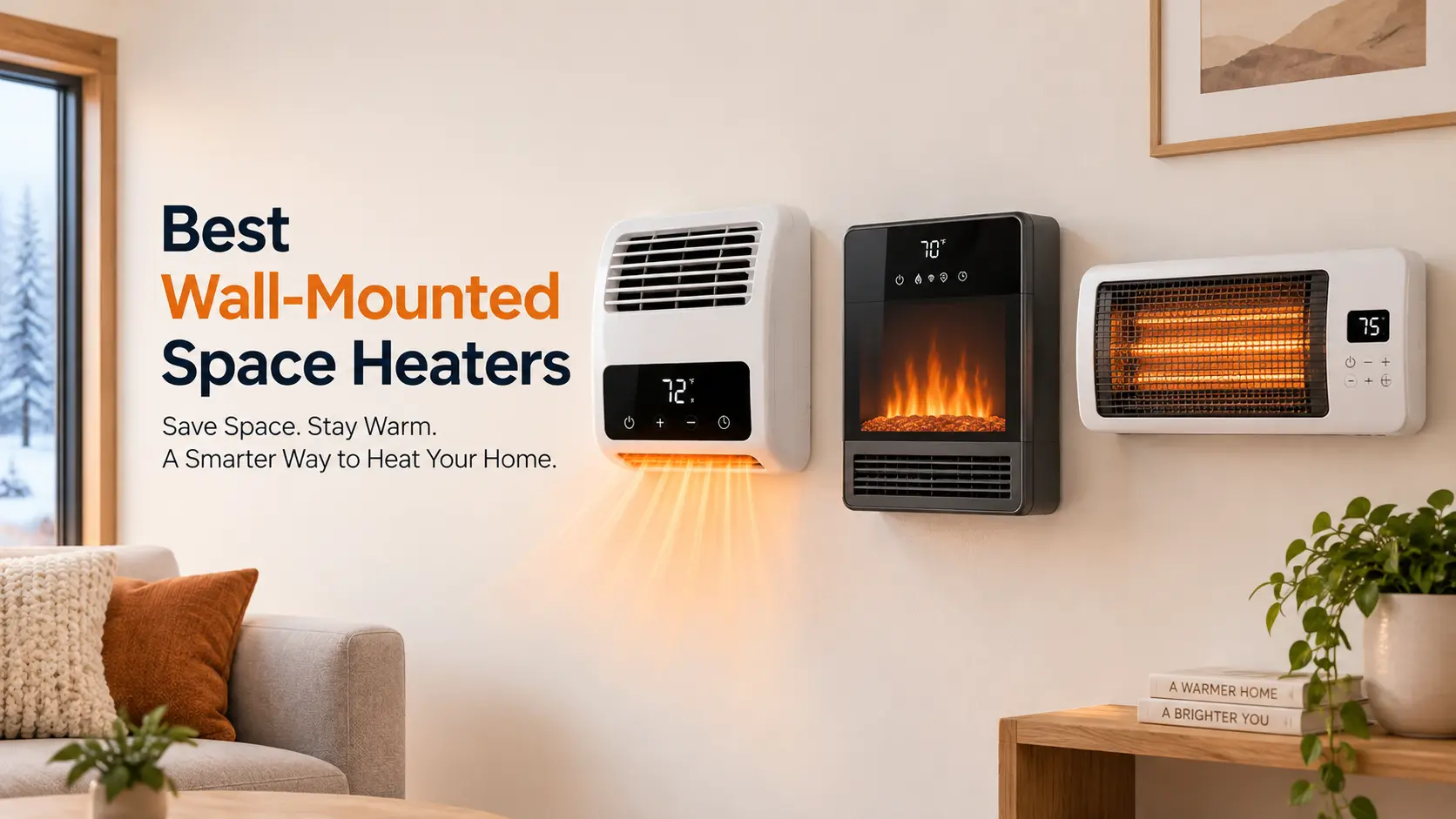


The struggle to maintain a comfortable temperature in every corner of a home often leads to a cycle of frustration and high energy costs. Central heating systems frequently fail to reach remote home offices, finished basements, or drafty bathrooms. This leaves occupants with cold spots that make living spaces unusable during peak winter months. Portable heaters offer a temporary fix but bring their own problems.
They clutter floors, create trip hazards with long cords, and pose fire risks if tipped over by pets or children. The transition to a wall-mounted space heater provides a more permanent and safer solution for consistent zone heating. These units free up floor space while keeping the heating element away from high-traffic areas.
The selection of the best wall-mounted space heaters requires a deep understanding of thermal dynamics and residential electrical capacity. Not all heaters function the same way. Some use fans to blow hot air, while others use infrared waves to heat objects directly.
The efficiency of these units depends on the insulation of the room, the mounting height on the wall, and the local cost of electricity. This report evaluates the current market to help homeowners decide which technology fits their specific needs. For a deeper look at this heater type, see our What Is a Panel Space Heater for Wall Mounting. For the buying decision behind this topic, compare our Best Panel Heaters for Wall Mount.
For model-specific comparisons within wall-mounted heaters, see our Cadet Com-Pak CSC202TW 2000W Wall Heater Review and Heat Storm HS-1500-PHXG Phoenix Heater Review. Both reviews cover controls, safety features, heating style, and where each design fits best.
Paid link. As an Amazon Associate, we earn from qualifying purchases at no extra cost to you.

TL;DR
- The following table summarizes the top choices based on their specific strengths and intended environments.
- Choose by the room and use case first, then compare wattage, thermostat control, noise, safety features, size and current warranty/model details.
- A higher price does not automatically mean lower electricity use; for electric resistance heaters, runtime and thermostat control matter more than marketing claims.
- Before buying, verify the exact model, safety listing, current price and manufacturer instructions because retailer listings can change.
Quick Picks Comparison Table
The following table summarizes the top choices based on their specific strengths and intended environments.
| Product Name | Best For | Key Strength |
| Dreo Smart Wall Heater WH719S | Modern Smart Homes | Fast PTC heat with Alexa support |
| Heat Storm Phoenix Infrared | Large Drafty Rooms | Infrared heat that warms objects |
| Envi Smart Heater 500W | Quiet Bedrooms | Completely silent convection |
| Stiebel Eltron CK 15E | Rapd Bathroom Heat | Down-draft design for warm floors |
| Amaze-Heater Convection | Minimalist Design | Paintable surface to match walls |
| Cadet Com-Pak Series | Permanent Installs | High-durability for long-term use |
| Dr. Infrared DR-910M | Garages and Shops | 10,000 watt heavy-duty output |
| Lasko Ceramic Console | Supplemental Heat | Cyclonic dual blower system |
| Broan-NuTone 174 | Small Bathrooms | High-speed fan for quick shifts |
| DeLonghi Slim Panel | Modern Living Rooms | Lightweight mica technology |


Buying Snapshot and Evaluation Criteria
The evaluation of these heating systems focused on four primary metrics. Safety remained the top priority. This included assessing cool-touch surfaces, automatic shut-off features, and professional safety listings. Heating speed was also measured. This determines how quickly a unit can raise the temperature of a standard room by five to ten degrees. Noise levels were recorded in decibels to ensure the heaters would not disrupt sleep or work. Finally, ease of installation was reviewed. This covered the quality of mounting templates and the clarity of electrical requirements.
The research utilized real-world data from thousands of buyers. It reflected common pain points like cord length limitations and the accuracy of built-in thermostats. These insights ensure the recommendations align with actual user experiences rather than just manufacturer claims.
Individual Product Analyses
Dreo Smart Wall Heater WH719S
The Dreo Smart Wall Heater stands out as a top choice for tech-focused homes. It uses PTC ceramic heating elements to move air quickly through a room. This model is particularly useful in bathrooms because it features an ALCI safety plug. This plug cuts power instantly if it detects a leak. The unit also offers vertical oscillation of up to 120 degrees. This movement spreads heat more evenly than stationary models.
Heat Storm HS-1500-PHX-WIFI
The Heat Storm Phoenix is an infrared heater designed to warm objects rather than just air. This makes it very effective in rooms with drafts or high ceilings. It can be mounted on the wall or used with optional feet as a floor unit. The front of the heater stays cool to the touch. This makes it a safer option for homes with kids or pets.
Envi Smart Heater 500W
The Envi Smart Heater is a low-wattage convection panel. It draws only 500 watts, which is about one-third of a standard space heater. It does not use a fan. This means it is completely silent and does not blow dust or allergens around the room. The unit is very thin. It only sticks out two inches from the wall.
Stiebel Eltron CK 15E
The Stiebel Eltron CK 15E is a German-engineered fan heater designed for permanent installation. It is a hardwired unit. This means it connects directly to the home’s electrical wiring rather than plugging into a socket. It uses a unique down-draft design. It blows warm air toward the floor so the heat can rise naturally and warm the room evenly.
Amaze-Heater Convection Room Space Heater
The Amaze-Heater is a large, flat panel made from ceramic materials. Like the Envi, it uses convection and has no fan. Its standout feature is that it can be painted to match the color of the room. This allows the heater to disappear into the decor. It is an affordable option for those who want silent heating on a budget.
Cadet Com-Pak Series
The Cadet Com-Pak is a classic choice for in-wall heating. These are recessed heaters, meaning they sit inside the wall cavity rather than on the surface. They are very powerful and can be used as the primary heat source for a whole room. The unit features a fast-heating coil and a high-efficiency fan.
The Dr. Infrared DR-910M is built for large, unheated spaces like garages or workshops. This is a massive 10,000 watt heater that runs on 240 volts. It is powerful enough to be the primary heat source for a 300 square foot garage even in freezing weather. It is a heavy-duty unit made of steel. If you are comparing options, see our guide to the best panel heaters for wall mount.
The Lasko Ceramic Console is a unique wall-hugging heater. It is designed to sit flat against a wall, but it is not permanently mounted. This makes it a great middle ground between a portable heater and a wall unit. It uses a “Cyclonic Action” dual blower system. Cool air is pulled in from the front and warm air is blown out from the top.
The Broan-NuTone 174 is a compact, high-speed fan heater often used in bathrooms. It is versatile because it can be wired for different voltages. At 120 volts, it provides 1500 watts of heat. It uses a nickel-chromium heating element for rapid warmth.
The DeLonghi Mica Heater is a lightweight panel that uses micathermic technology. This combines convection and radiant heat. It is thinner and lighter than traditional oil-filled radiators. It can be mounted on the wall or used as a portable unit with the included wheels.
Buying Guide: How to Choose the Best Wall-Mounted Space Heater
Choosing the right heater is not just about the price. It involves matching the heater’s technology to the room’s needs.
Understanding Heating Methods
There are three main ways these heaters work. Convection heaters warm the air. They are often silent and great for long periods. Radiant or Infrared heaters warm objects. They are better for drafty rooms. Fan-forced heaters blow air. They are the fastest but also the noisiest.
Wattage and Room Size
A standard rule is to have 10 watts of heating power for every square foot of space.
| Room Size (Sq Ft) | Suggested Wattage | Common Usage |
| 50 – 100 | 500W – 1000W | Small bathroom, pantry, walk-in closet |
| 150 – 200 | 1500W | Standard bedroom, home office |
| 300+ | 1500W – 2000W+ | Living room, basement, garage |
Safety Features to Look For
Safety is vital for a wall-mounted heater since it stays in one place. Look for overheat protection, which turns the heater off if it gets too hot. Tip-over switches are good if the unit is not permanently mounted. For bathrooms, ensure the unit has an ALCI or GFCI plug to prevent shocks. Always check for UL or ETL certifications to ensure the unit meets safety standards.
Installation: Surface Mount vs. Recessed
Surface-mounted heaters are easy to install. They sit on the face of the wall and usually just need a few screws into a stud. Recessed heaters require you to cut into the wall. They sit between the studs and look more professional, but they are a permanent choice.
Smart Features and Efficiency
Newer heaters include WiFi and app control. This helps with efficiency because you can schedule the heat to turn off when you leave the house. Some units have an Eco mode. This mode automatically adjusts the power to keep the room at a set temperature without wasting energy.
Frequently Asked Questions
Can I leave a wall heater on overnight?
No portable space heater should be treated as safe to leave running while you sleep or when it is unattended. CPSC recommends turning portable heaters off when sleeping, plugging electric heaters directly into a wall outlet, and keeping them at least three feet from bedding, curtains, furniture, and other combustible materials.
Do these heaters increase the electric bill significantly?
It depends on the wattage. A 1500W heater uses about 1.5 units of electricity per hour. Using it for zone heating can actually save money by letting you turn down the main furnace for the rest of the house.
How high should I mount my heater?
Most manufacturers suggest mounting the heater 18 to 24 inches from the floor. This helps the thermostat read accurately and ensures the heat circulates through the living space rather than staying at the ceiling.
Can I paint any wall heater to match my walls?
No. Only specific convection panels like the Amaze-Heater or EconoHome are safe to paint. Painting a metal fan-forced heater can be a major fire hazard and will void your warranty.
Do wall heaters need a dedicated circuit?
For 1500W heaters, a dedicated circuit is highly recommended. If you have other high-power devices on the same circuit, like a vacuum or a hair dryer, you will likely trip the breaker.
Are infrared heaters better than ceramic ones?
Infrared is better for feeling instant warmth and for drafty rooms. Ceramic is better for heating the actual air in a small, enclosed room like a bedroom.
For a current smart option, see our Dreo Smart Wall Heater review covering WiFi, Alexa and thermostat controls.


